Daydreaming about travel likely has hit a record high, and popular destinations such as London are undoubtedly on the minds of many clients, as well. For a future trip back to the capital of England and the U.K., consider recommending that clients tack on daytrips to quaint nearby towns also worth a visit.
The following five destinations are reachable by train or, more advisably, by car (a safer option following the COVID-19 outbreak). From St. Albans to Brighton, they also can offer much-needed respite — and perhaps more personal space — compared to bustling London.
Note
While travel to the U.K. is not currently possible, its government has begun to take measured steps toward reopening tourism. In a recently published COVID-19 recovery strategy document, incoming international travelers will be subject to measures and restrictions at the border, as well as a requirement to self-isolate in their accommodations for 14 days on arrival into the U.K.
Brighton
This seaside resort town is known for its shingle beach (with pebbles instead of sand) and pier full of amusement rides and games. There’s also much to explore, from an eclectic art scene to an array of antique shops, cafes and pubs.
Clients can tour the Royal Pavilion, once used as a retreat for former King George IV. Then, they can make their way over to Brighton Palace Pier, a 1,722-foot-long Victorian pier built in 1899 featuring rides, games and food.
End the day in the bohemian North Laine quarter, where flea market enthusiasts will revel in its many thrift shops and brightly colored houses.
www.visitbrighton.com
Cambridge
The University of Cambridge isn’t the only attraction that makes a visit to the town worthwhile. Nestled on the banks of River Cam in eastern England, Cambridge is the perfect example of English Gothic architecture, including the stunning King’s College Chapel. While inside the chapel, take time to admire its stained-glass windows and the rood screen — a gift from Henry VII, former King of England, to his wife, Anne Boleyn, that followed the early Renaissance style of architecture instead.
For some fun, try out the local tradition of punting on the River Cam. Introduced to the city in the early 20th century, punting is when a flat-bottomed boat on a shallow waterway is propelled using a pole. Scudamore’s Punting Company is perhaps one of the more well-known local operators, offering tours on the River Cam by punt, kayak or Canadian canoe.
www.visitcambridge.org
Canterbury
To experience a quintessential English village, Canterbury has clients covered. Cobblestone-lined streets, timber-framed houses and a towering cathedral all add to Canterbury’s charm.
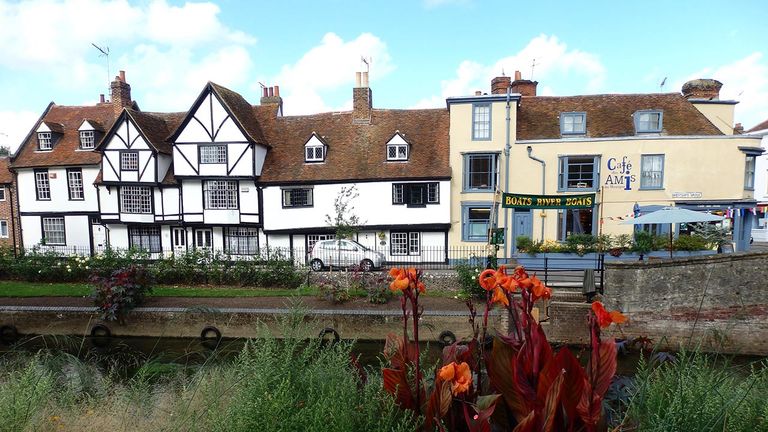 The city of Canterbury is situated on the River Stour.
Credit: 2020 Creative Commons user wirewipingStroll through Canterbury’s Westgate Gardens and marvel at the ancient trees — including a 200-year-old plane tree — and brick homes lining the Great Stour River.
For a spectacular view, clients also can stop by the Westgate Towers Museum and Viewpoint. This section of the city wall stands 60 feet tall and is the largest surviving city gate in England.
www.canterbury.co.uk
Oxford
The town of Oxford’s beauty revolves around the medieval architecture of its famed, eponymous university’s 38 colleges (located in the city center).
The Radcliffe Camera building is a can’t-miss stop. The domed English Palladian-style library was completed in 1749 to house the Radcliffe Science Library. Today, it is considered to be the center of Oxford, due to its position in the city and distance from other buildings.
Bookworms will love Blackwell’s Bookshop on Broad Street. While it may appear small from the outside, guests will discover room after room of books — more than 250,000 books, in fact. The establishment even holds the Guinness World Record for the largest single room selling books in the world, as its measures 10,000 square feet and has 3 miles worth of shelving. Plus, the bookshop has a cafe where clients can relax after exploring this Oxford institution.
A hidden gem worth mentioning is Port Meadow, a large area of common land beside the River Thames. Travelers can take a moment here to sit back and watch the grazing cattle and horse.
www.ox.ac.uk
St. Albans
This medieval town in Hertfordshire county shines with relics of Britain’s Roman past. A centuries-old cathedral is the main attraction here, and it contains a magnificent display of medieval wall paintings — one of the most extensive collections today.
On a sunny day in St. Albans, clients can head to Verulamium Park and the nearby Verulamium Museum. The park spans 100 areas of scenic green space including an ornamental lake at its center. Stroll along the River Ver, which connects a series of trails complete with wildlife habitats.
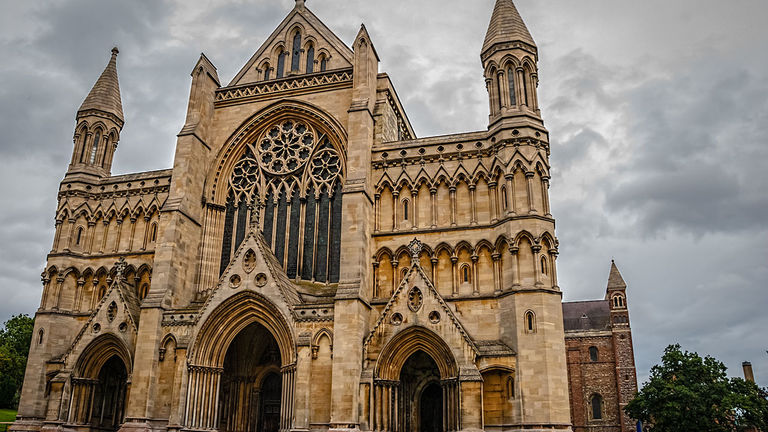 St. Albans Cathedral was built using Roman bricks from the ruins of ancient city Verulamium in 1077.
Credit: 2020 Creative Commons user garyullahAdjacent to the park is the museum. Exhibitions showcase objects from the old city, such as eye-catching mosaics and replicas of typical Roman rooms.
www.enjoystalbans.com
