Hawaii Governor David Ige decided last week to extend the state’s mandatory 14-day quarantine for transpacific travelers through July 31, frustrating many industry stakeholders who hoped the governor would instead announce a target date for the restart of North American tourism.
At a June 10 press conference in Honolulu, Ige said his administration is “working on opportunities to engage in safe transpacific travel as quickly as we can.” But he indicated the continued global spread of coronavirus remains a concern: “We are at different stages within the United States.”
“Key markets that we’re monitoring here domestically include California, Oregon, Washington State, Nevada and Phoenix, Ariz.,” Ige continued. “And all of these Western states are now seeing spikes in the number of COVID-19 cases.”
We’re getting calls from travel advisors from Seattle to San Diego, telling us there is a lot of pent-up demand, but that their clients won’t book until there is a definitive travel date.
Through June 14, 723 confirmed COVID-19 cases and a total of 17 related deaths have been reported in Hawaii, according to Hawaii’s Department of Health.
Those low figures can be credited, at least in part, to Ige’s decision to enact on March 26 a mandatory 14-day quarantine for travelers arriving on transpacific flights. But the restriction crippled a Hawaii tourism industry that in 2019 welcomed more than 10.4 million visitors who spent $17.75 billion across Hawaii’s islands.
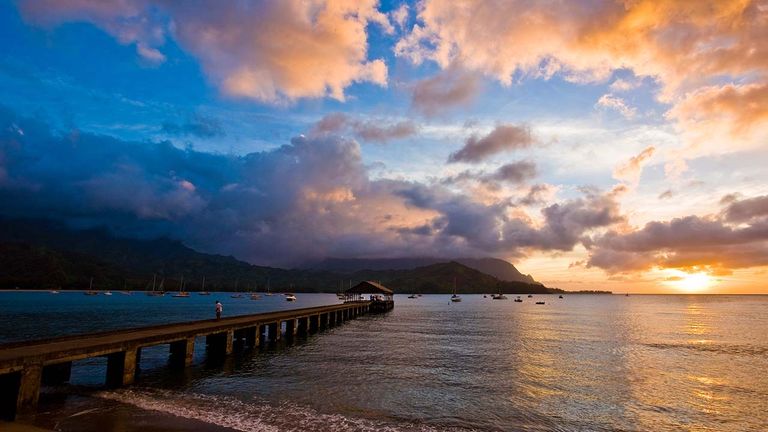 Hawaii’s charm, shaped by photogenic locations such as Kauai’s Hanalei Bay (pictured here), remains attractive to North American travelers.
Credit: 2020 Hawaii Tourism Authority (HTA)/Tor Johnson“I was very disappointed and frustrated,” said Jack Richards, president and CEO of Pleasant Holidays, of Ige’s decision to extend the mandatory quarantine last week without announcing a restart date for North American tourism. “We’re getting calls from travel advisors from Seattle to San Diego, telling us there is a lot of pent-up demand, but their clients won’t book until there is a definitive travel date.”
Kari Mollan, an advisor at Stellar Travel in Bellevue, Wash., who has sold Hawaii vacations for nearly 30 years, says some clients she has booked to the islands are growing frustrated.
“They haven’t given up,” she said. “But I think everybody is a little hesitant because they don’t want to rebook for the third and fourth time.”
Calvin Kanoho, who was raised on Kauai and is now the owner of Travel Leaders-affiliated Inner Circle Travel in San Francisco, says Ige’s announcement last week was tough.
“I was crossing my fingers that he would lift the quarantine,” Kanoho said. “This puts me in a position where I need to contact my clients and let them know Hawaii’s not going to happen for summer.”
According to Keith Vieira, a former Starwood Hawaii executive who is a principal at Honolulu-based hospitality consulting firm KV & Associates, there has been “huge frustration” within the Hawaii hotel industry in recent weeks because the governor still has not chosen a restart date for transpacific tourism.
“For the hotels, there are about 140 of around 160 that are closed,” Vieira said. “Collectively, they’re losing about $150 million a month.”
This puts me in a position where I need to contact my clients and let them know Hawaii’s not going to happen for summer.
Earlier this month, Ige announced his decision to end the 14-day mandatory quarantine for interisland travelers on June 16. But the governor’s cautious steps toward a transpacific tourism restart have been reflective of prevailing sentiment in Hawaii, according to Vieira, who noted the islands are home to an older population. Fear of a COVID-19 spike resulting from an influx of U.S. mainland visitors remains a major concern for many residents.
“I don’t think the pain felt across the board is like what the visitor industry has experienced,” Vieira said. “That may change at the end of July when the stimulus checks end. But right now, public sentiment has been to err on the side of safety as opposed to revitalizing the economy.”
David Hu, president of Classic Vacations, says the luxury wholesaler has “quite a number” of Hawaii bookings on hand, and people continue to want to travel to the islands. But, Hu says, he understands the Hawaii governor’s decision to wait a while longer.
“Hearing Governor Ige talk, you realize it’s not about Hawaii — it’s about the rest of the U.S.,” Hu said. “Frankly speaking, if you’ve got a bunch of people on the West Coast who are all infectious, you just can’t let them in at this point.”
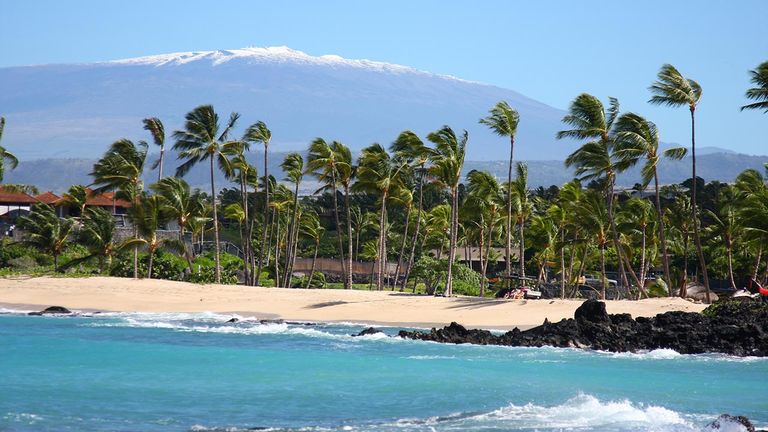 West Coast travel advisors are seeing demand for the Aloha State, including the Island of Hawaii.
Credit: 2020 Hawaii Tourism Authority (HTA)/Kirk Lee Aeder Frankly speaking, if you’ve got a bunch of people on the West Coast who are all infectious, you just can’t let them in at this point.
During last week’s press conference, Ige said his administration continues to consider the idea of creating travel corridors with nations where COVID-19 outbreaks are now better contained, such as Japan, South Korea, Australia and New Zealand. He also indicated he’s thinking about travel corridors with certain U.S. states, where virus counts are low.
In recent days, however, a proposal allowing North American travelers who pass COVID-19 testing before boarding a plane to Hawaii to bypass the mandatory quarantine appears to be gaining traction. Vieira has participated in recent discussions with Joshua Green, Hawaii’s Lieutenant Governor, about that plan. He says it’s based in part on pretesting protocols in place in Alaska and French Polynesia.
“It’s difficult for planning, and especially for families, when you have this test requirement,” Vieira said, noting that a major concern is the $180 per person fee for the exam. “On the other hand, we’ve got to do something to get things moving in the right direction.”
Vieira says there’s talk of initiating some version of the COVID-19 pretesting for visitors beginning July 15, contingent upon Governor Ige’s approval. He also adds that Hawaii hotels will need 30 days to get up and running.
Ray Snisky, executive vice president and chief commercial officer for Apple Leisure Group Vacations, says there would be efficient administration and scalability challenges for any pretesting protocol for Hawaii, but it would provide some travelers peace of mind.
“What we all are trying to do is give travel advisors and clients confidence,” Snisky said. “The idea of being tested prior to departing for a destination would make some customers feel more confident.”
Travel corridors and COVID-19 pretesting protocols aside, most with an interest in Hawaii tourism seem unified about the growing need for Governor Ige to at least announce a target restart date for transpacific tourism.
“If I had a specific date to work with, where there is a guarantee that we could avoid the 14-day quarantine, I would be booking flights right now,” Kanoho said.
