Nunavut in Canada's Far North Should Be on Your Bucket List
Spectacular adventures and indigenous cultures are waiting for those who venture to arctic Nunavut
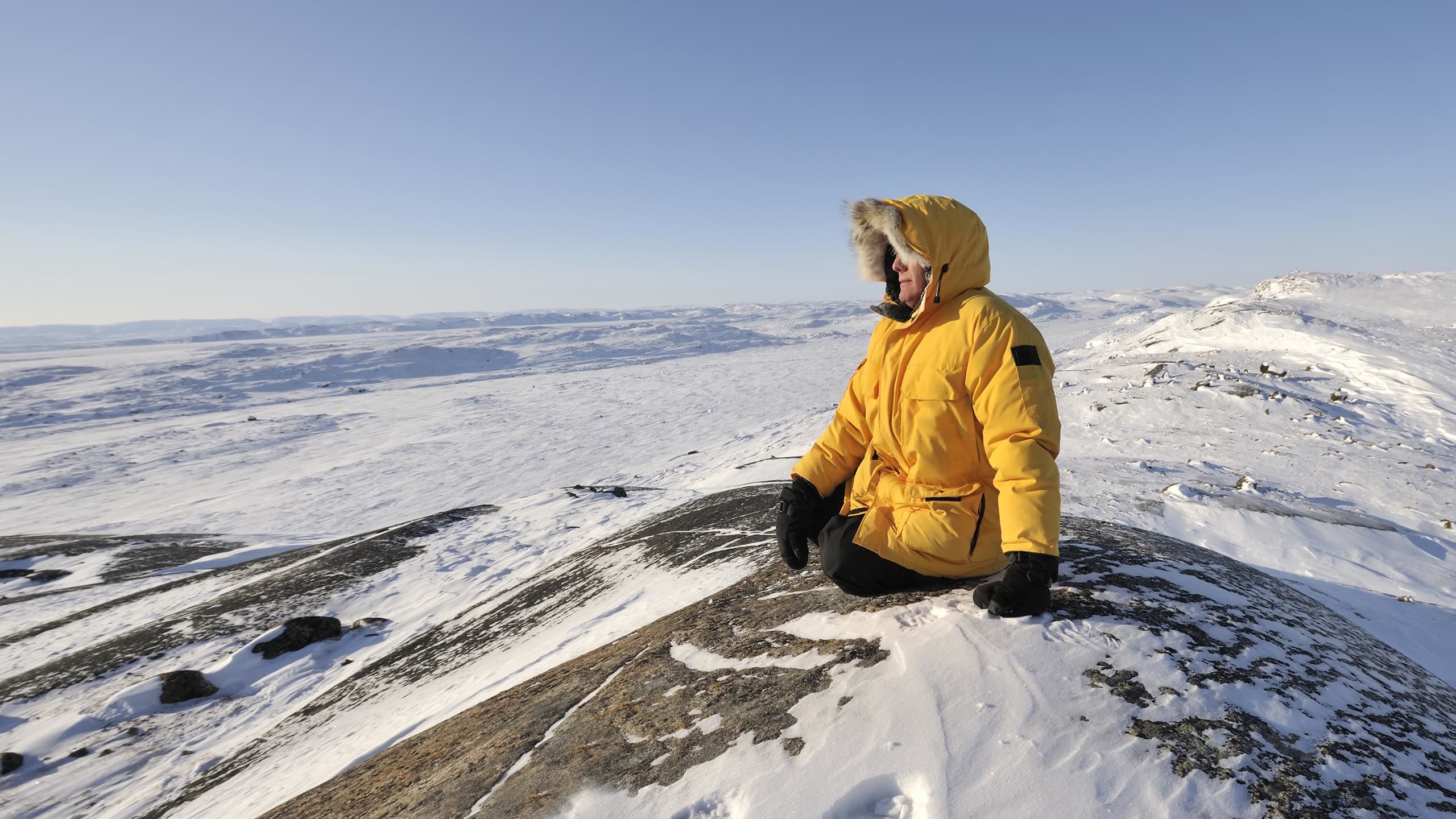

"Are you ready?"
This was the question I heard most on my five-day trip to Nunavut, Canada. In this case, it came from Louis-Philip Pothier, one of the co-owners of Inukpak Outfitting.
He was sitting in the driver’s seat of a snowmobile that was pointed toward the blinding white snow and ice of the Canadian Arctic. He looked relaxed and excited, like he had done this a million times — which, in fact, he has.
But this was my first time. I was sitting in the driver’s seat of the snowmobile beside him, the size of the machine and the responsibility for driving it already weighing heavily on my mind. I had some comfort in the fact that my only job was to follow his lead.
“Ready!” I called back to him; the scarf wrapped around my mouth muffled the sound of my voice.
I raised two double-mittened thumbs as a backup.
Catching a glimpse of myself in the reflection of his mirrored ski goggles, I was pleased to see that there would be no way he could tell that I was lying. I wasn’t ready. Who could be?
That morning, we were in Iqaluit, the capital city of Nunavut, Canada’s northernmost territory. This is the Canada that travelers think of when they refer to the country as the “Great White North.” In the few days I was there, I saw my first igloos; lusted over the giant fur-lined hoods and beautifully embroidered parkas of the indigenous Inuit; and marveled at kids who seemed oblivious to the biting winds.
Despite all its snowy whiteness, Iqaluit is a colorful place, with modern homes painted in bright, bold hues that pop against the natural landscape. The territory felt fresh and new, and that’s because it is: Nunavut is Canada’s baby.
Once upon a time, there were only two Canadian Territories — the Yukon and the Northwest Territory. But in April 1999, the Inuit were given control of the land that had really always been theirs, and Nunavut — the Inuktitut word for “our land” — was born. The change meant redrawing the Canadian map to give more than 800,000 square miles of mainly Arctic land back to the people. Twenty years later, the largest, newest and most northern part of the country remains a mystery to many.

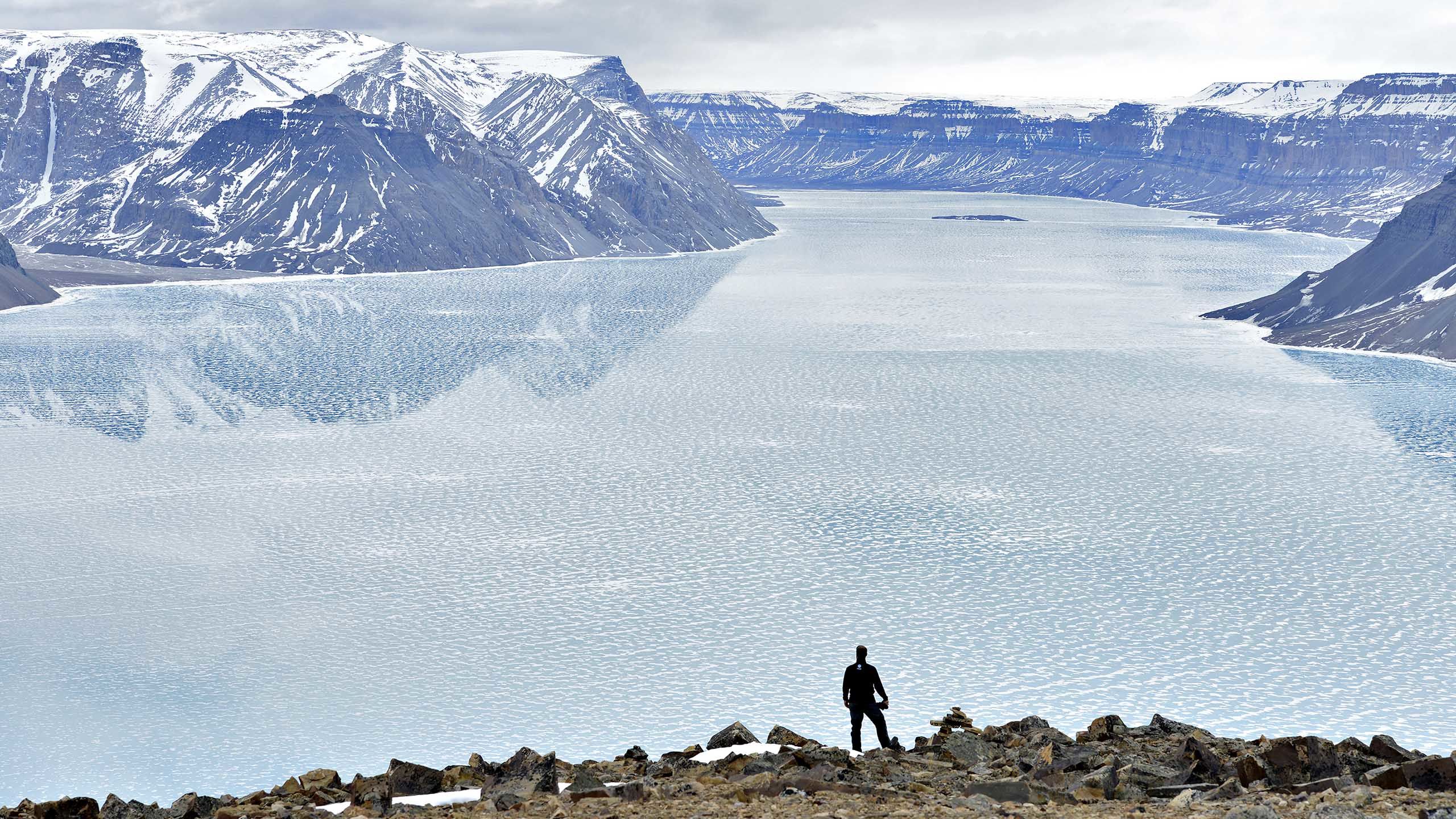
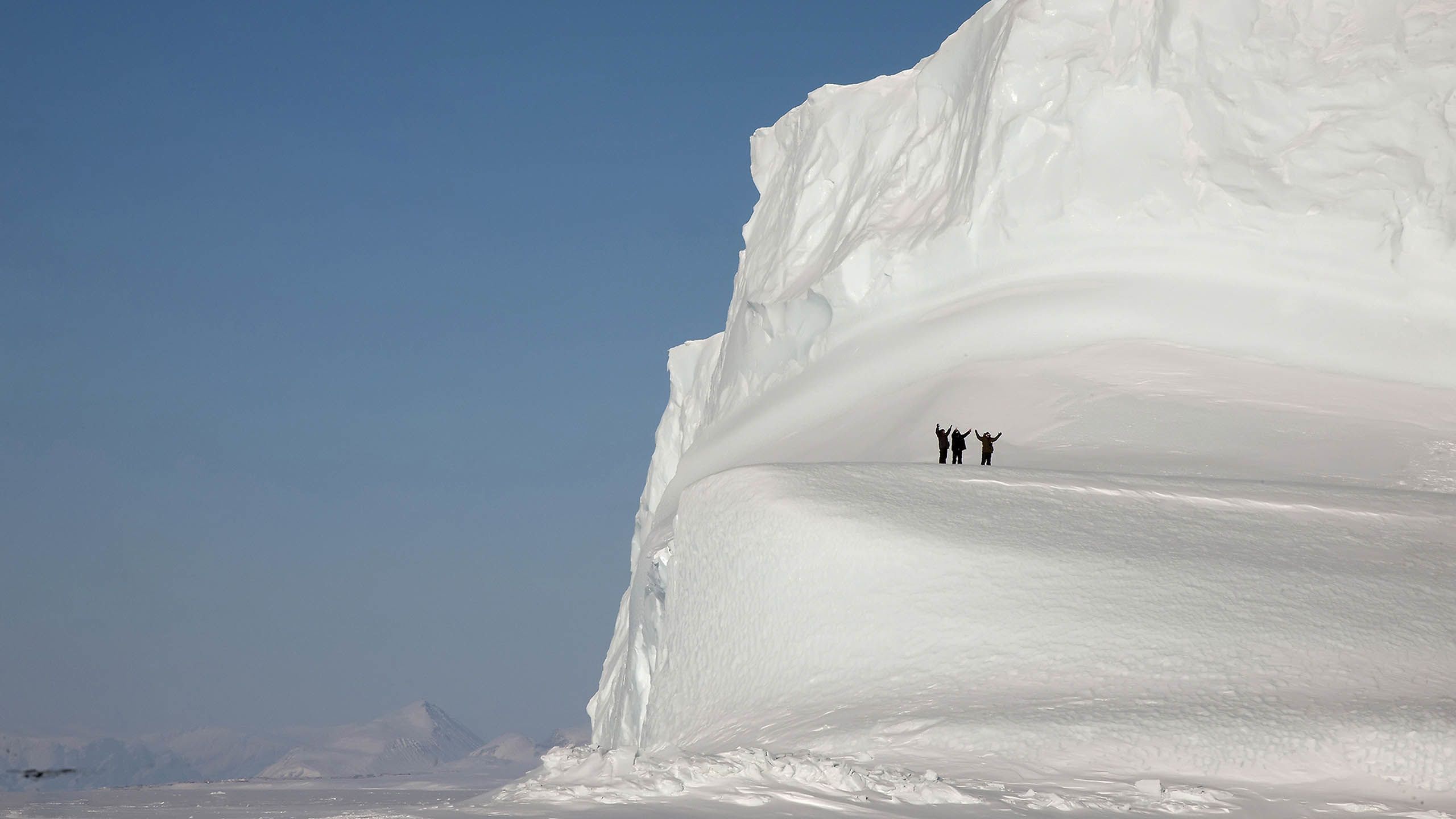
Take in unspoiled views of the Arctic landscape. © 2019 Michelle Valberg/Travel Nunavut
Take in unspoiled views of the Arctic landscape. © 2019 Michelle Valberg/Travel Nunavut

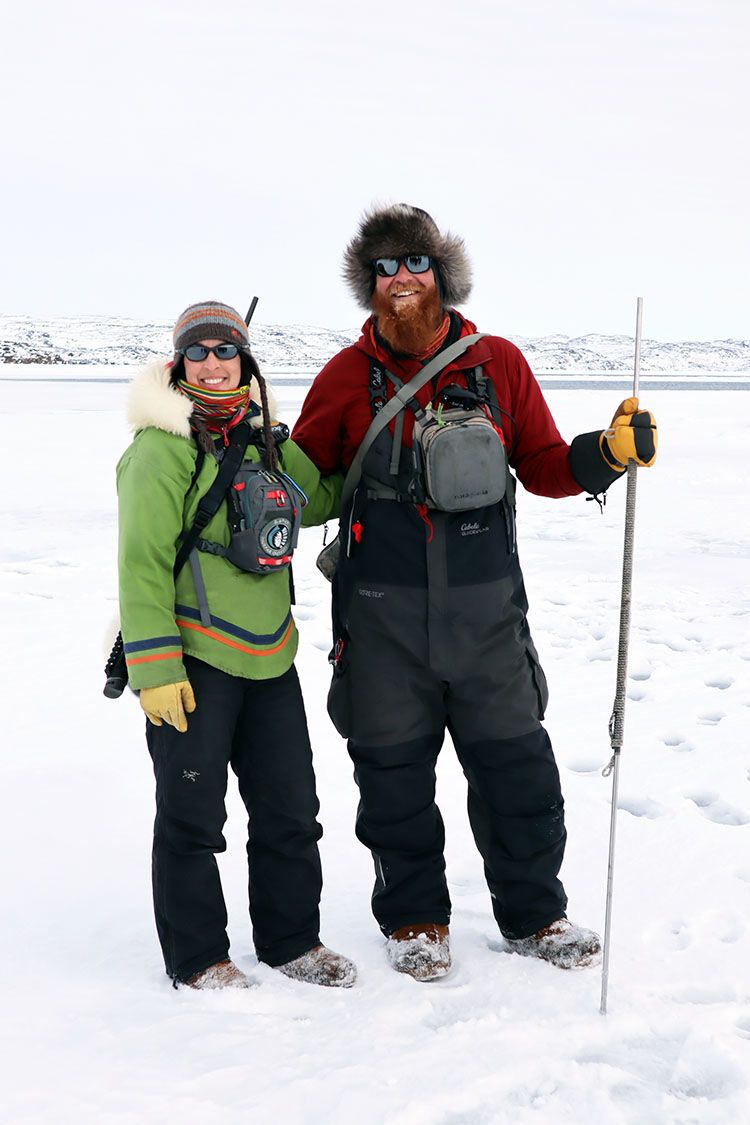
Martine Dupont (left) and Louis-Philip Pothier own Inukpak Outfitting. © 2019 Heather Greenwood Davis
Martine Dupont (left) and Louis-Philip Pothier own Inukpak Outfitting. © 2019 Heather Greenwood Davis

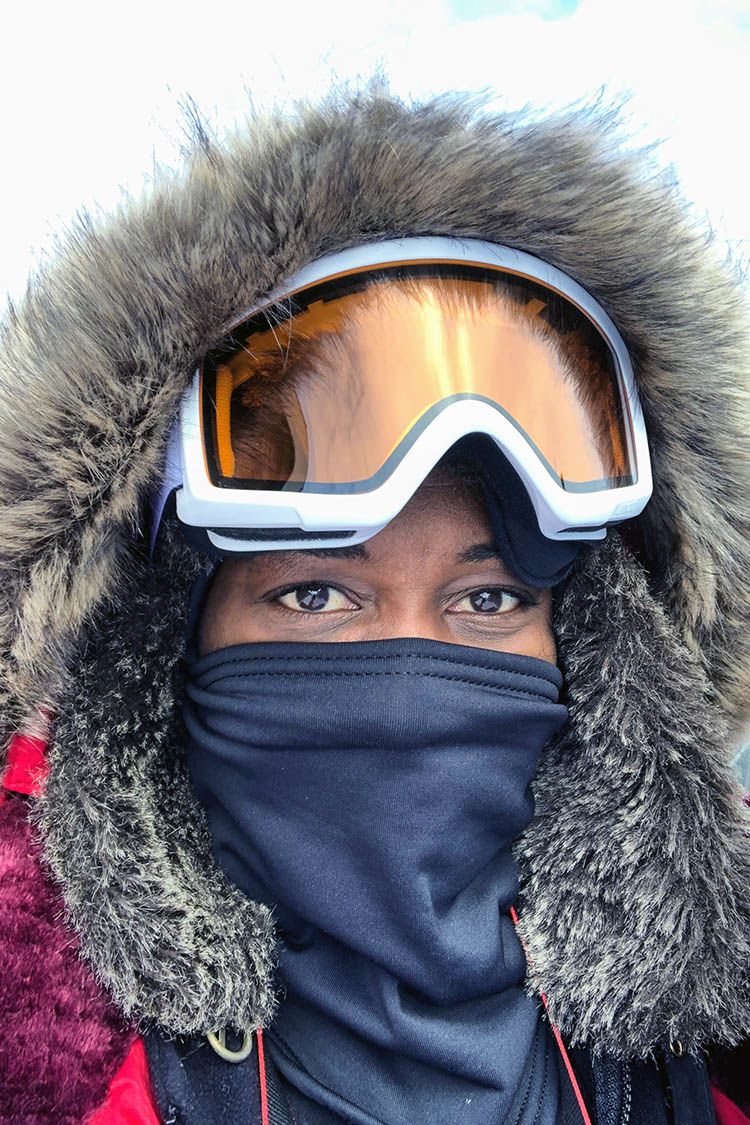
The writer bundled up in clothing and gear fitting for the destination © 2019 Heather Greenwood Davis
The writer bundled up in clothing and gear fitting for the destination © 2019 Heather Greenwood Davis
Arctic Adventures
Truly exploring the territory requires time and money, but Iqaluit is an easy place to start. Local outfitters, such as Inukpak, are hoping to lure travelers north with a range of activities that cover everything from soft adventure to full-on professional expeditions.
My visit was definitely on the entry-level end of the scale. Our group rode snowmobiles for a few hours over the ice, eventually stopping at a semi-sheltered clearing where Pothier and his wife and business partner, Martine Dupont, put out snacks for our group to enjoy while we took in the view. Nearby, a small hole in the ice was proof that, while the temperatures suggested otherwise, it was spring here, and within a few weeks, the very spot where we were standing would be fast-flowing water. We were snowmobiling across the ocean — travel in Nunavut is filled with these kinds of surreal revelations.
Later, on a dogsledding adventure with North Winds Expeditions, I climbed into an oversize sled not too dissimilar from one that kids might test out on a small hill. But this time, it was tied to a half-dozen powerful Canadian Inuit dogs who were so excited to see us approaching that they were already jumping in the air.
Sarah McNair-Landry, our host, cautioned us to get on the sled before the animals were hooked up: The dogs instinctively know it’s time to go the moment they are attached.
Before we knew it, we were off.
This terrain was no skating rink made smooth by a Zamboni — I felt every ridge and ripple on the ice as we bumped across the frozen tundra.
This terrain was no skating rink made smooth by a Zamboni — I felt every ridge and ripple on the ice as we bumped across the frozen tundra. The dogs’ powerful legs pulled us forward through the crisp air.
McNair-Landry grew up here. Her parents initially ran the company and now, in their spare time, she and partner Erik Boomer take on expeditions worldwide that make my morning with them seem like a walk in the dog park.
McNair-Landry was the first woman to be recognized by the International Polar Guides Association as a Master Polar Guide, and she’s the youngest person to travel to both the North and South poles. She has traversed the Greenland Ice Cap five times and spent 120 days circumnavigating Baffin Island by dog team.
So, I felt like I was in very good hands — even during the exhilarating moments when I could hardly catch my breath.

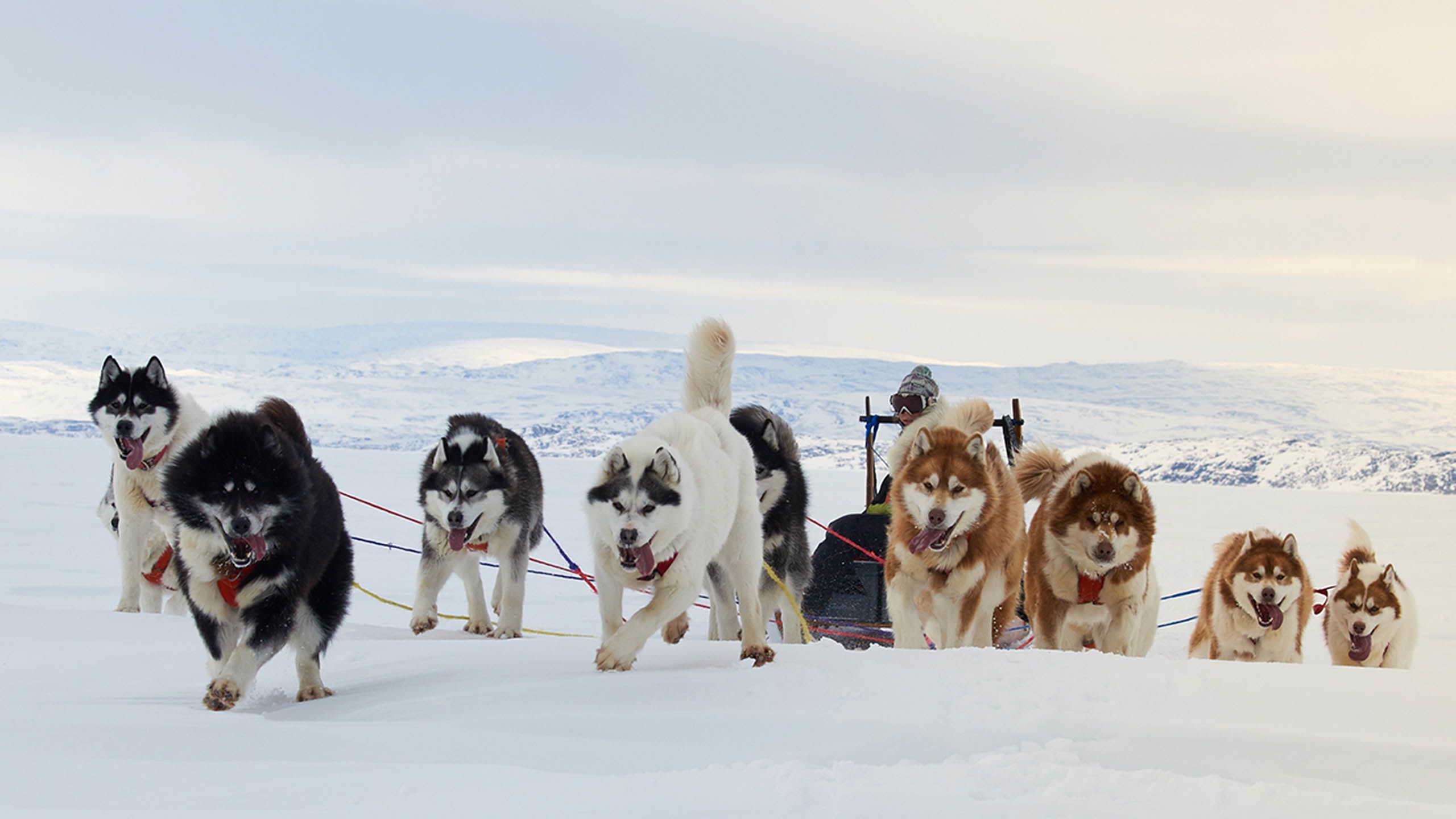
Visitors to the region can give dogsledding a try. © 2019 Jason Nugent/Destination Nunavut
Visitors to the region can give dogsledding a try. © 2019 Jason Nugent/Destination Nunavut
Local Traditions
Mind you, not every adventure in Nunavut requires breakneck speed. One morning, our group headed out to explore beyond the city limits. We boarded a single engine, turbo-prop plane for the flight over to Pangnirtung — an Inuit hamlet about an hour from Iqaluit. It was a sunny day, and the views from the air of the ice floe edge were absolutely stunning.
The descent was even better. Our wings were so close to the fjords as we landed that it felt as if the space was carved out specifically for them. The tiny airport is only a few minutes’ walk from the heart of town and Angmarlik Centre. This visitor center tells the story of the territory’s history, and information about the local communities is laid out with artifacts and easy-to-understand panels. Travelers can’t help but appreciate the ingenuity of the people in this region: Survival here is never an accident.
This was a lesson we learned again with the day’s final activity: ice fishing. Fishing for turbot, a type of flatfish, is one way that locals have lived off the land for generations. Commercial fishing remains a mainstay, and it takes skill, patience and fortitude to be successful.
Peter Kilabuk of Peter’s Expediting & Outfitting Services took us to his family’s fishing hole. To get there, we had to pair up and climb into qamutiiks — deep, wooden, lidless boxes that look like giant baby bassinets on traditional Inuit sleds. Each one is attached to the back of a snowmobile and towed across the ice. Two adults fit snugly in each, and at first glance, it looked like it was going to plenty comfortable.
It was not.
When the snowmobiles hit about 30 mph on the snow-covered ice, it felt like the equivalent of riding in a convertible during a snowstorm. I sometimes had the sensation that I was flying, and the thick caribou skin beneath me did little to soften the bumps. It was an experience so unique that, even as it was happening, I found it hard to believe. Still, I was grinning when we arrived at our destination.
The only shelter at the unmarked fishing hole was a small, shed-like cabin. Inside, a Coleman stove warmed the air and allowed for hot meals and coffee. Snack-lined shelves and bedding made it clear that if the weather changed, an overnight stay was a possibility.
Some of the local men cut a hole in the ice and lowered 200 feet of line into the water, and then we waited. Between the cozy shed, the friendly company and the beautiful landscape, the time went quickly. An hour later, we pulled 47 large fish out of the hole and put them in a heap on the ice. It was mesmerizing to watch.
The men gutted the haul on-site. They split the catch between fish that would be sold commercially and food for their families. When they were done, it was time to start the journey back.
Leaving felt a bit surreal. The ice walls in the distance seemed closer than they actually were, and the endless white made it hard to know which direction we came from or where we were heading.
Leaving felt a bit surreal. The ice walls in the distance seemed closer than they actually were, and the endless white made it hard to know which direction we came from or where we were heading.
We counted on our new friends to see the things we couldn’t — the way the snow peaks formed told them which way the wind was blowing, and which cracks in the ice were safe to cross and which weren’t. We relied on the people who live here now, but also on the ancestors who traversed the lands long before them and passed on their wisdom.
As I carefully maneuvered my body — mummified in layers of warm clothing — back into the qamutiik, I heard a familiar call.
“Are you ready?” the snowmobile driver asked.
I snuggled down into my coat, pulled the hood as far over my face as I could and called back, “Ready!”
It was only when I said it out loud, that I realized this time — despite the blowing winds and the snow already starting to crust on the fur of my hood — I meant it.
Fast Facts
How to Get There: Air travel is the best option for flying to Nunavut and between the communities. There are no options for road or rail. There are regularly scheduled flights from across Canada, including Ottawa, Montreal, Winnipeg, Edmonton and Calgary.
When to Go: Most tourists opt to visit in spring (April to June) or summer (June to September). They will experience the most daylight during these months.
Temperatures range from 5 to 59 degrees Fahrenheit over those two seasons. Winter temperatures can dip far lower, and the territory experiences as much as 20 hours of daily darkness midwinter.
Other Reasons to Visit: The adventures aren’t all outdoors. The Toonik Tyme Festival is a cultural celebration of spring that includes friendly competitions around igloo building, dogsledding, snowmobile racing and more.
Visitors shouldn’t miss the chance to hear live music while here, including modern takes on traditional throat singing. For great coffee, delicious baked goods and a chance to overhear snippets of local conversations, Black Heart Cafe is well-worth visiting.
Where to Stay: Frobisher Inn, in Iqaluit, puts guests in the center of town with easy access to local museums and shops. The Discovery offers a modern feel with 51 boutique rooms and free Wi-Fi access.
What to Bring: Winter in Canada always demands proper gear. Guests should consider moisture-wicking layers, ski goggles or similar good eye protection, and clothing that prioritizes warmth over fashion. Outfitters often provide additional gear for outings that will save luggage space.
Costs: Travelers should expect to pay more for almost everything here. Most items are imported, so food costs in particular can be high.
Photo © 2019 Michelle Valberg/Travel Nunavut

The Details
Angmarlik Centre
www.pangnirtung.ca
Destination Nunavut
www.destinationnunavut.ca
Inukpak Outfitting
www.inukpakoutfitting.ca
NorthWinds Expeditions
www.northwindsexpeditions.com
Peter’s Expediting & Outfitting Services
www.kilabukoutfitting.com