For many travelers, planning a vacation may simply be about choosing a destination and booking the trip. For Muslim travelers like me, it often involves additional layers of decision-making — such as access to halal food (food prepared according to Islamic dietary guidelines), an alcohol-free environment and privacy — to determine whether a destination can accommodate our faith, preferences and lifestyle.
These details can shape where Muslim travelers choose to vacation and how they experience a destination. And plenty of us are traveling. According to the Global Muslim Travel Index, Muslim travelers took 196 million international trips in 2025. Additionally, Muslim international travel spending is projected to hit $310 billion by 2030.
Yet, despite this growth, many travel advisors still lack a clear understanding of what Muslim clients are looking for.
Here, we offer a guide to selling to this demographic of travelers to create meaningful, memorable experiences.
Providing Information Muslim Travelers Need
Fatema Nathu understands these challenges through her work as a travel advisor and social media manager at Gala Travels, as well as from her own experience. When planning her destination wedding in 2022, Nathu struggled to find an all-inclusive resort that could accommodate 200 guests while also meeting their dietary requirements.
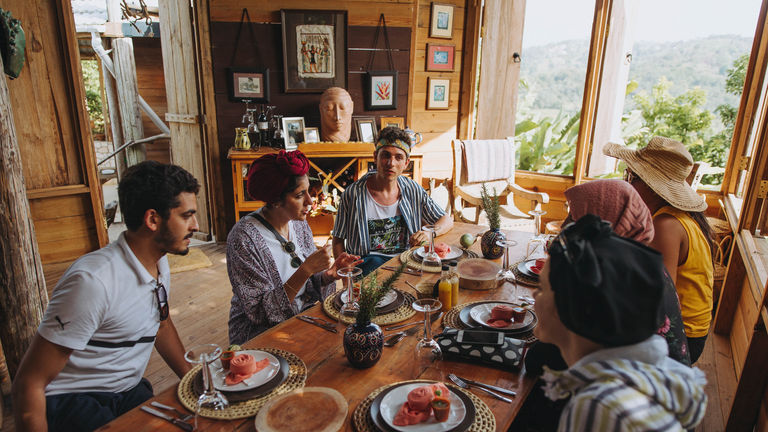 Travel advisors must research whether or not halal food is available in a destination or at a resort.
2026 Burgundy Roots“One of the biggest concerns from our guests wasn’t the beach or the rooms, but whether there would be halal food,” she said. “After all, you can’t really have an Indian wedding without butter chicken. It made us realize just how important this was to so many people, and how difficult it is to find clear answers.”
The Toronto-based agency began reaching out to resorts to see whether they could accommodate the group’s needs. Initially, many properties were unfamiliar with what halal meant or why it mattered. Explaining the scale of the group and their willingness to source halal meat from a local butcher helped properties better understand these requirements. Dreams Royal Beach Punta Cana in the Dominican Republic eventually became the first resort Gala Travels worked with to offer dedicated halal accommodations.
Today, the family-owned agency works with a growing number of resorts that offer halal options and continues to build those relationships each year, demonstrating that halal accommodations are not simply a dietary request, but an opportunity to better serve a wider group of travelers.
Many clients also want to know whether a destination is welcoming to Muslim travelers and whether they’ll feel comfortable there, particularly Muslim women. When Gala Travels began sharing this information online, clients told the agency it was “exactly the kind of information” they needed, Nathu says.
Gala Travels reviews factors such as food sourcing and preparation, dining options, privacy features and the overall resort environment before making recommendations.
“Serving Muslim travelers starts with recognizing that halal travel is not a single category. The goal is to provide honest, verified information so travelers can choose experiences that best fit their own values and comfort level.”
“Serving Muslim travelers starts with recognizing that halal travel is not a single category,” Nathu said. “The goal is to provide honest, verified information so travelers can choose experiences that best fit their own values and comfort level.”
Bringing Halal-Friendly Travel Closer to Home
One of the biggest shifts in recent years has been the changing expectations of Muslim travelers in North America, according to Nathu. While many have traditionally chosen destinations such as Egypt; Turkey; Zanzibar, Tanzania; the Maldives; Malaysia; and Dubai, United Arab Emirates — where halal food and Muslim-friendly amenities are widely available — they are now looking for vacation options closer to home, including Mexico and the Caribbean.
“Not long ago, many Muslim travelers simply accepted that if they were going to an all-inclusive resort in Mexico or the Caribbean, they would spend the week eating seafood and vegetarian dishes,” Nathu said. “That was just considered part of the compromise.”
Today, Muslim travelers want to enjoy their experience without compromising on meals that meet their religious requirements. Although more properties are accommodating halal requests, consistency remains a challenge. One property may offer established halal dining options, while another under the same brand may not.
Creating Meaningful Experiences
Another shift in Muslim travel is a growing interest in culturally immersive trips, according to Wafa Aouchiche, founder of Burgundy Roots. Her company curates small-group retreats across destinations including Jamaica, Brazil, South Africa, Morocco, Egypt, Zanzibar and Saudi Arabia, combining local experiences, Islamic heritage, prayer, learning and connections with local Muslim communities.
For many clients of Burgundy Roots, the appeal is also about being in an environment where they can travel comfortably while maintaining their own values and faith, Aouchiche says. In places such as Jamaica and Brazil, some travelers may want to swim modestly, whether wearing a hijab, a swimsuit or other clothing that aligns with their preferences, she adds. Others value being part of a group where alcohol is not central to the experience.
Burgundy Roots also prioritizes supporting local communities by working with locally owned hotels, farmers and transportation providers wherever possible.
As Muslim travelers’ expectations continue to evolve, serving this market requires a deeper understanding of the factors that shape their decisions. While halal food, women-only or family-friendly spaces, and alcohol-free environments remain important, many Muslim clients are also seeking more meaningful destination experiences.
For advisors, understanding each client’s priorities and providing clear, accurate information can help build trust and create more personalized travel experiences.
