 |
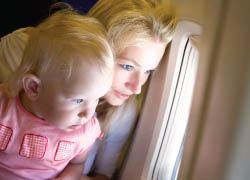
There may be some headaches when flying long
distances with children, but the rewards are
significant, too. //© Istockphoto |
When Nancy Cruz married Geert Bosch and they settled in Brooklyn, N.Y., friends foresaw a lot of frequent-flyer miles in their future. Cruz has family in Puerto Rico and Bosch is from The Netherlands. Sure enough, there have been many long-haul flights back and forth over the years, and that did not change as the couple added two boys to their family. Gerrit, age 6, and Gabriel, 10 months, have probably taken a dozen international flights already.
“When we got married, everyone said we needed to save money in other ways because we were going to be forced to spend it on airfare,” said Cruz. “But we love to travel anyway, so it hasn’t been a big deal.”
Cruz’s attitude is not unusual these days. Surveys show that increasing numbers of parents are willing to take their kids on longer and more exotic trips. As parents themselves are generally more experienced with international travel, they are more comfortable taking their youngsters on long flights as well.
“Gerrit does everything. He knows the whole routine. He puts his bag on the belt for security, takes off his own shoes and goes through the whole procedure,” said Cruz.
Regardless of how travel-savvy your tot is, flying long distances with kids requires planning, patience and flexibility.
Sign Up for Our Monthly Family Getaways Newsletter
I accept the T&C and Privacy Policy.
Before the Flight
Long before they fly, parents should make sure every detail of their reservation is correct — including where they will be sitting. On a recent flight to Europe with my 8-year-old son, I checked our return flight online and discovered my reservation had been changed and his had not. Luckily, I fixed this without any problem, but parents can save themselves a lot of grief at the airport by staying on top of changes.
Likewise, parents should be familiar with the configuration of their aircraft. For instance, some Boeing 747 designs have rows with just two seats on the side instead of three — ideal if you want to keep siblings separated and have each parent sit with one child. Also, individual, on-demand entertainment options can make a long-haul flight much more bearable.
“Every seat on South African Airways [SAA] flights from the U.S. has an individual, on-demand entertainment system with lots of kids’ programming,” said Elizabeth Ninomiya, director of marketing communications for SAA and a mother herself.
When it comes to packing, it’s advisable to include your child in the process as much as possible.
“We gave Gerrit a Thomas the Tank Engine carry-on bag and, to keep him busy while we packed, we told him he needed to pack all the things he wanted with him,” said Cruz. “He took it very seriously, and it was entertaining to see what he chose to pack. Of course, I packed all the truly essential stuff.”
Essential stuff should include a variety of small toys, books, games, coloring books and more. And it’s a good idea to hide all of this until the flight, so your child will be entertained for a bit longer by something he or she hasn’t played with before.
“Pack some surprises in your carry-on and give them something every two hours or so,” a parent posted on Fodors.com. “My wife excelled in finding some inexpensive items — removable stickers, small puzzles, children’s magazines, kids’ books on your destinations, etc.”
Of course, parents need to pack differently when traveling with their children as well. Some suggested items include anti-bacterial gel or wipes; an extra set of comfortable clothes or pajamas; a portable DVD player; stuffed animals; electrolyte solutions, particularly the powdered kind that you can add to water; and whatever over-the-counter medications they might need.
Parents should also be sure to pack some of their kids’ favorite snacks.
“On SAA flights, we do offer kids meals, as well as crackers, cheeses, other snacks and juice boxes,” said Ninomiya. “But, of course, parents are also welcome to bring along any other favorite snacks that their children might enjoy.”
At the Airport
Perhaps the most important thing for parents to remember on the day of travel is to take a deep breath and relax. Airports can be extremely stressful, especially with family in tow. Children pick up on your stress and react to it.
Also, think carefully about what you want to feed your kids just before you get them into a confined space for hours at a time.
“I would try to not give them food that contains sugar, caffeine or food coloring. I know that’s hard to implement, but the less they have, the less wound up they’ll be,” said a parent on Fodors.com.
Also, parents should research airport terminals ahead of time to know what facilities they have for children. Some airports now have whole playgrounds where kids can let out some energy prior to a flight.
“By all means, let them move around a bit in the lounge — safely, of course — so they blow off some steam prior to boarding,” said Ninomiya.
Onboard
Probably the most important bit of advice onboard is to remain calm and try to make the flight as fun as possible for your kids, even when dealing with fellow passengers’ dirty looks.
“Overall, if your baby cries, don’t sweat it,” said Cruz. “No matter what happens, some people will be huffy about having them there even if they are perfect angels. You can’t please everyone.”
Also, remember that flight attendants are there to help.
“Most flight attendants will be happy to sit with one of your children while the other one is being changed, or watch over them outside of the lavatory while you are inside,” said a parent on Fodors.com.
“Once a family is onboard a SAA flight, they can expect lots of courtesy and warmth from our flight attendants, who of course, are proud and excited that children are going to experience their homeland,” said Ninomiya.
Regardless of your personal in-flight survival technique, it’s important to remember why you are traveling with your kids in the first place. Travel creates memories that will be cherished for years to come, and builds character in your little ones in a way that staying at home can’t.
“I’m glad that Gerrit goes to Holland so much. He’s a very competent flyer, and he’s often at his best when he flies. He’s growing up with a sense of how big the world is, which is important,” said Cruz. “I grew up poor, and we never traveled; I was 13 the first time I went on an airplane. To this day, none of the adults in my family will go anywhere because they just don’t feel comfortable being a traveler. I think the earlier you are exposed to it, the more natural travel becomes.”
Parents should know their seating options in terms of comfort and safety for their children as well. Some parents choose to bring along a car seat, although it does mean one more thing to carry. There are also special seatbelts parents can request for little ones. A lot has to do with personal preference.
“Traveling with a car seat is such a pain, but we’ve done it before,” said Cruz. “Also, children under six months old can often get a bassinet from the airlines that attaches to the bulkhead wall. You have to ask the airline for it and they don’t always have them, but it can be great for infants.”
Some parents prefer not to have the kids too confined to their seats during the flights anyway.
“One thing I make my kids do is walk up and down the aisle of the plane with me several times during the trip (if they are not sleeping),” posted a parent on Fodors.com “They quietly say hello to anyone who is not engrossed in their own activity, and we have met some wonderful, interesting and amazing people this way, and learned more about the world.”
