Every year when we put together this look ahead in travel, I’m struck by what a difficult task we’ve made for ourselves. With so many variables that can — and do — affect the industry, it’s nearly impossible to predict what’s to come. Never has this been truer than this year, when all over the media, news reports are filled with a constant stream of so-called experts trying to make sense of the global economic meltdown. Still, in this issue, we provide the most comprehensive look at the travel industry in 2009, with reports on more hotels, cruise lines, tour operators, destinations, agencies and travel products than you can find anywhere else.
To begin with, however, we need to look at some of the factors that shaped 2008.
By all accounts, the first quarter of the year showed a lot of promise — 2008 was looking to be another knockout. By April, however, rising oil prices would start to wreak havoc on the industry — especially among the airlines, with fuel surcharges being implemented by a range of suppliers, changes in itineraries and routes and some companies going out of business altogether. Then came September, and the virtual collapse of the economy. Now, all eyes are looking to the first half of 2009 for an indication of what’s to come.
"I think the biggest news for the travel industry will be the state of the economy and how it affects bookings in the first quarter," said Chris Russo of Colorado-based Travel Partners and president and CEO of ASTA. "I think the industry as a whole is holding its collective breath to see how first quarter bookings go. I think we could see an incredible amount of consolidation if things do not get better."
Still, many of the executives we spoke with were more optimistic — with some expecting to at least match 2008’s sales and many others thinking that the recession won’t affect travel as much as other luxury items. In general, most felt the slowdown would let up in the second half of the year. Some thought that the key to the turnaround would depend on how well agents understand their clients’ needs.
"Americans are going to travel, but they’re considering every aspect of how their money is spent," said Steve Born, vice president of marketing for the Globus Family of Brands. "That applies to all categories, from luxury to value. They need assurance that their travel choice is the right investment — that they’re getting the best experience for their hard-earned, and hard-saved, dollars."
According to executives, multigenerational travel will continue to be an important trend in 2009 as consumers go back to the basics of why they travel.
"Consumers will travel to celebrate birthdays, anniversaries, important occasions," said Ignacio Maza of Signature Travel Network. "People are becoming more aware of how precious life is and how important it is to celebrate milestones with loved ones. Travel remains the absolute best way to celebrate, and the most memorable."
Another trend that several insiders mentioned is faith-based travel. Many felt this niche will prove itself to be recession-proof.
"A study we commissioned last year … shows that the segment of religious travelers is 20 million Americans," said Born. "Clearly, we’re helping our agents make the most of this opportunity."
Finally, with all the negative news we’re hearing these days, Born took a step back and offered a refreshing take on the big picture.
"The macro trends are incredibly positive — there’s never been a bigger pool of American travelers, all raised with travel in their blood," he said. "And now, more than ever, we’ve earned our vacations."
Destinations
By Kenneth Shapiro
Overall, the industry reported a diverse range of experiences when it came to international and domestic travel in 2008. Some reported that business boomed, while others noted steep declines. In general, the consensus seems to be that while the first quarter of 2008 showed incredible promise, most, if not all, of those gains were erased over the course of the rest of the year.

Domestic travel to Las Vegas saw a decline in 2008.
|
Perhaps the best example of these differing experiences is related to travel to Europe — where some reported seeing a decrease of business, even as others saw it as a bright spot.
"Travel to international, long-haul destinations such as Asia, Europe, Australia and the South Pacific was down due to rising airfares, fuel surcharges and the decline of the U.S. dollar against the euro," said Jack Richards, president and CEO of Pleasant Holidays.
"Europe was very popular," countered Pat Teutschel, of California Traveler. "Europe continues to be popular, with clients returning year after year. I expect 2009 to also be a good year for Europe, especially if the dollar continues to improve."
Several people cited the importance of river cruising — and cruising in general — when it came to the European market.
"Our international travel in 2008 was up over 2007, led by cruises," said Chris Russo, ASTA president and CEO and owner of Travel Partners. "European cruises were by far the most popular way to travel to Europe this year."
Suppliers that were lucky enough to be in this market agreed enthusiastically.
"Bright spots internationally included Avalon Waterways," said Steve Born, vice president of marketing for the Globus Family of Brands. "All of the brand’s international destinations — including Europe, Egypt, China and the Galapagos — showed double-digit growth over 2007."
Other top international destinations that were mentioned as hot spots in 2008 — and emerging destinations for 2009 — included the Middle East (especially Egypt and Dubai), South America, Costa Rica, India, East and South Africa and Southeast Asia, among others.
"Exotic destinations are certainly a lot more in demand: India, China, countries in the Middle East and secondary regions and cities around Europe, including … Romania,
Slovenia and Slovakia," said Nico Zenner, general manager of Travel Bound.
"In 2008, Ya’lla Tours saw a tremendous increase in travel to Israel, Egypt and Jordan," said Ronen Paldi, president of Ya’lla Tours. "These are mainly faith-based trips, which is a trend that continued in 2008 from previous years."
In particular, Central and South America were singled out as up-and-coming hot spots by almost everyone.
"South America continued its three-year dramatic growth for Globus," said Born. "It’s up over 30 percent from 2007."
On the Homefront
Domestically, the news was not as mixed — or as optimistic. Most of the people surveyed said their domestic business was down in 2008, with big cities and traditional favorites such as Hawaii, California and Las Vegas, leading the decline.
"For the most part, the U.S. market was down this year compared to 2007," said Ignacio Maza of Signature Travel Network. "Many large cities experienced declines, including Chicago, Miami and Los Angeles. New York experienced its first softness in demand in a number of years."
Still, for 2009, the domestic outlook is more optimistic. Richards said Hawaii, in particular, seems poised for a comeback.
"We expect leisure travel demand to remain soft during the first half of the year and begin to rebound during the second half of 2009," said Richards, "particularly to Hawaii and Mexico driven by declines in airfares and fuel surcharges in line with decreases in oil prices."
In general, the consensus seems to be that, for 2009, external forces could greatly influence consumer demand for certain destinations.
Between the U.S. economic crisis, volatile oil prices, the value of the dollar and airline mergers, agents are facing confusing times, so they had better keep a close eye on the headlines.
Hotels
By Janeen Christoff
With the economy weighing on everyone’s minds these days and consumer confidence at a 15-year low, is there any upbeat news on the lodging front? The answer is a mixed bag.

Sandals Resorts anticipates high occupancy rates in 2009, despite the economic crisis.
|
Optimists, like Kevin Froemming, president of Unique Vacations, worldwide representative for Sandals Resorts, Beaches Resorts, The Royal Plantation Collection and Grand Pineapple Beach Resorts, believe the economy will make a swift turnaround and occupancy rates will hold through 2009.
"The economy will recover. I sense the world wants us to become a world leader again," said Froemming.
He added that Sandals Resorts and Beaches Resorts anticipates running at high occupancy in the coming year.
"Our numbers can only go up," said Froemming. "We know that people are being much more selective about their next vacation, whether it’s researching online or consulting with family, friends or their travel agent. Guests want value without sacrificing every luxury. They want to make sure that every last dollar counts and our Luxury Included concept does just that."
Froemming may be right. A joint TravelHorizons study by the Travel Industry Association and Ypartnership indicated that, as of this October, leisure travel intentions among U.S. adults has remained stable, with 71.4 percent indicating that they intend to take a leisure trip in the next six months.
An American Express Travel survey conducted in late October also indicates that clients are still traveling; they are just being smarter about how they spend their money, especially when it comes to lodging.
The survey revealed that, this holiday season, clients are looking for smart ways to save, and 61 percent of the 900 agents surveyed indicated that American Express Cardmembers eligible for the Fine Hotels & Resorts program were taking advantage of complimentary amenities, special treatments and access at hotels in the program. Nearly half of agents surveyed, or 47 percent, indicated that their clients were booking more value-priced hotels this holiday season compared to last year, and many clients were looking for packages that combine hotel accommodations with airfare.
However, some analysts aren’t so optimistic. While many agree that leisure travel will remain fairly stable through 2009, most agree that business travel is taking a big hit and that means occupancy rates at many hotels are falling.
"Two kinds of people stay in luxury hotels: the wealthy, who don’t care, and people traveling on somebody else’s money," Mark Lomanno, president of Smith Travel Research, said at the American Hotel & Lodging Association’s fall conference. "Companies laying off employees don’t want to have their people stay at the Four Seasons."
In September, occupancy was down slightly more than 3 percent while revenue per available room (RevPAR) was nearly stagnant at less than one percent, according to Smith Travel Research. But by October, both occupancy and RevPAR took a nosedive, dropping 6 percent and 8 percent respectively.
And, although optimistic about leisure travel, the TravelHorizons forecast predicts a 2.7 percent decline in business travel for the coming year.
The result: Hotels are discounting rooms to boost revenue. In a statement released mid-November, Travelocity said that it was in the midst of the biggest hotel sale in the history of the company, with participation in its Race to Savings promotion reaching record highs. Some 4,000 hotels were offering discounts of 40 to 70 percent.
What Matters Most
With rooms on sale and travelers researching their options online more than ever, knowing what your clients are looking for in a hotel property may be helpful in targeting the best options for travelers who are undoubtedly looking to get the most bang for their buck these days.
According to the 2008 National Leisure Travel Monitor conducted by Ypartnership, hotels and motels are still the most popular accommodation type, despite growing interest in vacation ownership and condos. Of the most prominent brands, Marriott is still the number-one choice of clients in the West. But Western travelers also like smaller chains, like Homewood Suites, and regional brands, like Red Lion.
Clients in the West also have significant differences from their counterparts when it comes to what they look for in a hotel: 88 percent of leisure travelers in the West consider previous experience with a hotel chain or hotel when booking versus 79 percent in the rest of the country. Western travelers also consider quiet or soundproofed rooms more important (73 percent to 63 percent). They look for properties that offer late check-out at no charge more often than their counterparts (62 percent versus 51 percent) and they want free Internet access from their guestroom (43 percent versus 32 percent). Another consideration Western travelers look for is ways to earn airline miles. Twenty-nine percent of leisure travelers in the West are influenced by whether or not a hotel offers airline miles versus 19 percent in the rest of the country.
Cruise
By Marilyn Green
Next year, the cruise industry must yet again respond creatively to challenges from the domestic and world economic picture and uncertainty about future fuel costs and air travel. Liberal group policies, flexible programs and special incentives for consumers and agents all represent opportunities in a market where many consumers are frightened, but still determined to enjoy vacations.
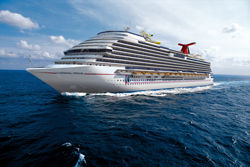
Carnival Cruise Line’s Carnival Dream debuts next September.
|
With the dollar fluctuating and the cost of fuel declining, much of the industry is moving to eliminate fuel supplements and coming up with formulae to determine whether travelers in 2009 will receive onboard credit for supplements already paid.
Newbuild orders are dropping, but many new ships are already on order and debuting next year, some of which are landmark vessels. For instance, Royal Caribbean International’s 5,400-passenger Oasis of the Seas will bring tremendous attention to the industry and great benefits to an already strengthening Caribbean. Viking River Cruises will launch the 189-passenger Viking Legend, powered by a propulsion system similar to that of hybrid cars and yielding an estimated 20 percent increase in fuel efficiency along with a smoother ride, less noise and fewer emissions.
Seagoing cruise lines in all sectors will see growth in 2009. Carnival Cruise Lines will launch its largest ship ever, Carnival Dream; MSC Cruises, which debuted two ships in 2009, will add the MSC Splendida; and Costa Cruises will see the introduction of two new ships simultaneously: Costa Luminosa, a return to a slightly smaller-sized ship with 2,260 passengers, and Costa Pacifica, a 3,000-passenger sister to Concordia and Serena. Royal Caribbean’s Oasis, a city afloat, is by far the largest cruise ship in the world, and Celebrity Cruises will bring in the 2,850-passenger Equinox a year after the launch of her sister, the revolutionary Solstice.
On the luxury side, Silversea Cruises will debut the 540-passenger Silver Spirit; Seabourn Cruise Line will introduce the 450-passenger Seabourn Odyssey; and luxury cruise line Pearl Seas Cruises will launch in May with its 210-passenger Pearl Mist.
The year ahead also brings rapid expansion in river cruise lines, which are bringing out ships with features from elevators to all-balcony staterooms. Uniworld River Cruises will introduce the 160-passenger River Beatrice on the Danube and the 42-suite River Tosca in Egypt, where the company has experienced enormous growth. Avalon Waterways also is launching two new vessels: the 138-passenger Avalon Affinity and the 140-passenger Avalon Creativity. AmaWaterways, too, has announced two newbuilds for 2009 — the 148-passenger ms Amadolce and ms Amalyra — and Tauck is launching its third annual newbuild with the 118-passenger Swiss Jewel, sister to Sapphire and Emerald. Viking River Cruises’ 189-passenger Viking Legend debuts in Europe next year, while Victoria Cruises’ 378-passenger all-balcony Victoria Jenna is slated to begin operation on the Yangtze.
Sadly, the year also sees the demise of Majestic America Line, which is laying up for future sale those ships not being returned to the U.S. Maritime Administration. Next year will also be the farewell year for the Paul Gauguin in French Polynesia under the Regent brand; the ship will continue to operate with new management after 2009.
Besides the ebb and flow of ships, 2009 brings huge investment in existing tonnage. Holland America Line, Princess Cruises, Carnival Cruise Lines, Windstar Cruise Line and Regent Seven Seas Cruises are among those announcing substantial measures to upgrade their fleets. Norwegian Cruise Line is continuing to promote its Freestyle 2.0 announcements, which combine new policies and facilitation for agents with physical changes to the ships.
In terms of deployment, there is a dichotomy between cruise lines that are catering to the world market and strengthening their capacity in international deployment and those that are centered on the North American market almost exclusively. Carnival, for example, has gathered its ships into domestic ports, leaving only one in Europe next summer and shuffling capacity so that many North American ports are seeing larger ships and/or year-round homeporting for the first time. Royal Caribbean International, on the other hand, recently announced plans for year-round Asia deployment of Legend of the Seas in 2009. Celebrity Cruises will place a record five ships in Europe, and Cruise West will go worldwide. American Safari Cruises has decided to postpone its planned entry into the Hawaii market, but Princess Cruises added 14 cruises in Hawaii for 2009.
The cruise industry is capitalizing again on its ability to shift its capacity and deliver exceptional value — a watchword now even to the very wealthy consumer. With a rich variety of new ships to spark the market and unprecedented emphasis on service, the cruise lines are united in their belief that they are meeting the market with the features it needs in stressful times.
Tour Operators
By Skye Mayring
For many traditional tour operators, 2008 started off with a bang, then slowly evened out as clients grew more cautious with their money. However, industry leaders are optimistic about the year ahead, citing more affordable gas prices, tremendous deals on 2009 tours and the dollar’s growing strength against the euro.

Travel agents continue to work closely with tour operators, both for their clients’ and their own trips.
|
While some tour operators saw demand decline after the first quarter of 2008 for European travel (including traditionally steady sellers like Italy, Spain and the U.K.), many expect interest in Europe to grow in 2009. In keeping with this prediction, Pleasant Holidays has added five European destinations to its offerings and a $50 cash incentive for agents who sell its European tours. Ritz Tours, too, has its eye on Europe, adding three, 12-day escorted tours and three, 14-day river cruises.
"We expect leisure travel to rebound during the second half of 2009, driven by declines in airfares and fuel surcharges — and Congress is likely to pass a second economic stimulus package with checks issued during the first quarter of the year," said Jack E. Richards, president and CEO of Pleasant Holidays.
The first quarter of 2009 is already looking profitable for Austin-Lehman Adventures, which reported a 10 percent increase in inquiries and advance bookings versus last year.
"And the strengthening dollar in Canada and Europe is adding value to our programs that focus on Western Canada and our newly launched cycling tours in Europe," Austin-Lehman Adventures co-founder and director Dan Austin said.
In a Ypartnership/Yankelovich 2008 National Leisure Travel Monitor survey, 4,378 leisure travelers were asked to rate their interest in visiting international destinations during the next two years: 56 percent of respondents who reside in the Western U.S. reported Europe as their first vacation choice. Out of that same sample group, 22 percent of those residing in the West said they wanted to travel to the Far East, while 21 percent picked Australia as their top destination.
According to Ya’lla Tours, Globus Family of Brands and Travel Bound representatives, exotic destinations, such as South America, India, China and Egypt sold well in 2008, a trend expected to carry over in the coming year.
"And [travel to] the South Pacific was also up by more than 30 percent," said Steve Born, vice president of marketing, Globus Family of Brands. "It’s great to see this growth, and we’ve developed complete marketing tool kits for agents to help them understand and sell these destinations."
With changing products to suit demand, agents seem to be more in control than in recent years.
"We see 2009 as a year in which agents will make very careful choices for their clients," said Born. "There may be other travel providers that cut corners in a year like this, and agents can certainly earn their stripes by protecting their clients."
Tour operators still depend heavily on agents and vice versa. In fact, 88 percent of agents said they use traditional tour operators for vacation packages and tours, according to an exclusive agent survey conducted by Northstar Travel Media, parent company of TravelAge West.
Leading tour operators recognize this valuable relationship and are working to strengthen rapport in the year ahead: Classic Vacations is offering agents air credits at participating hotels and a $100 gift card for every five bookings, while Apple Vacations is offering Bonus Royalties Points that are redeemable for free trips and merchandise. And MLT Vacations, Gate 1 Travel and Pleasant Holidays have recently added bonus commission programs for agents.
"It’s not a matter of if travel will be stronger in the future, but how soon," said Globus’ Born, "and we’re working very hard to help our agents see this gain this year."
Airlines
By John Miller
Recent layoffs, spasms in the stock market and a looming global recession have soured already gloomy forecasts for the air travel industry next year. And although a recent plunge in oil prices will help struggling airlines, analysts don’t expect savings to translate into cheaper airfares.

Analysts forecast increased consolidation among airline carriers in 2009, as well as rising air travel costs for consumers.
|
That’s because fares will face additional upward pressure next year amid increasing air carrier consolidation. Delta Air Lines’ recent takeover of Northwest Airlines — forming the world’s largest airline — could kick off a series of acquisitions that will reduce competition.
"We are likely to see more consolidation on a global scale," said Marick Masters, a professor at the University of Pittsburgh’s Graduate School of Business. "While falling oil prices benefit airlines, they may not be enough to offset the decline in demand. Since we have only seen the tip of the iceberg of the recession, particularly in its employment setbacks, we can expect further retrenchment in the airline industry."
Analysts say that while declining consumer air travel in North America could lead to cheaper economy fares, overall total air travel costs are expected to rise for business and economy travelers worldwide as fees for in-flight services, baggage and airport parking continue to rise.
American Express Business Travel delayed its closely watched forecast for 2009 to factor in the turmoil on Wall Street and the increasing likelihood of a global economic downturn. When it was released in late October, the Business Travel report left its fare forecast open to account for continuing swings in share prices and big questions about the economy and credit markets.
Herve Sedky, vice president and general manager of Global Advisory Services, American Express Business Travel, said economy fares for domestic flights could fall by as much as 3 percent in 2009 as a result of weaker demand. But he allowed for a 5 percent increase in domestic economy fares if the financial winds shift. For long-haul, business-class fares, Sedky said they could rise from 1 percent to 6 percent. But even if North American travelers get a break on airfares, they won’t have a lot to cheer, Sedky said.
"This doesn’t necessarily correlate to a decrease in prices paid as airlines continue their pursuit of expanding the suite of fees charged for services such as in-flight meals and baggage," he said.
Traffic Growth, Routes and Fares
Fears of a looming global recession have also caused analysts to slash growth forecasts in business and leisure travel in 2009.
The International Air Transport Association (IATA) lowered its growth forecast for global passenger volume next year to 2.9 percent from its estimate of 4.5 percent in June. In North America, passenger volume is expected to shrink as airlines squeeze capacity further.
Airlines can no longer count on steady business travel. A recent Business Travel Coalition survey of companies found about a quarter of respondents had issued "emergency travel cutbacks."
American Express’ travel report predicts fares will rise more in Europe than in the U.S. and Canada due to stronger demand overseas,
especially for long-haul Asian routes departing from Europe and the U.K. This could pressure European airlines to cut capacity on short-haul flights, the report said. Still, London and
Frankfurt might see steep declines in demand from business travelers because of the two cities’ ties to the financial markets.
Domestic economy fares in Latin America and the Caribbean could rise higher than in North America, the Business Travel report said, noting industry consolidation and increasing operating costs are expected to pressure ticket prices throughout the region.
The report forecasts economy fare increases of up to 8 percent in Brazil, followed by 7 percent in Argentina and 5 percent in Mexico. Long-haul fares out of Latin American should stay more competitive, rising by up to 4 percent on average in the three countries and the Caribbean.
While some analysts think plummeting fuel costs will be enough to boost most airlines next year, others are still cautious. The IATA, which forecasts an industrywide loss of $5.2 billion this year, expects the industry to lose some $4.1 billion next year.
Still, dramatic declines in fuel prices since the summer highs have given airlines some breathing room.
"Fuel dropping like a rock is a big offset to the economy," Delta Air Lines CEO Richard Anderson told analysts during a conference call in October. "With fuel dropping the way it’s dropping, we’re somewhat hedged against the economy. … You would rather deal with demand cessation than $150 oil."
TechnologyBy J.L. Erickson
Next year’s projected slow economy is expected to take its toll on information technology spending, with analysts forecasting relatively sluggish new investment in travel technology as agents and suppliers instead look to fully optimize and integrate systems already in place.

More and more consumers will be going online to research travel options and savings in 2009.
|
Meanwhile, on the consumer side, experts predict the economic squeeze will push an ever-increasing number of travelers online as they seek to maximize research and get the most out of their travel spending. Business travelers, experts forecast, will increasingly use teleconferencing and other means to curtail spending.
For agents, that means growing challenges to ensure travel packages not yielding revenue are eliminated or reduced, or substituted and enhanced with increased and maximized use of technology tools and customer-focused improvements in the online experience.
"Successful leisure agents will realize that customers are shopping online and determine how to connect with what they’re looking at — and connect that to expert advice," said Norm Rose, president of Travel Tech Consulting Inc., based in Belmont, Calif.
"There needs to be greater on- and off-line dialogue, and agents should try to adopt any tools that fix that need," Rose said.
Peter Yesawich, chairman of travel research firm Ypartnership, said about 60 percent of American travelers plan to comparison shop online. And, while travelers may not eliminate travel plans for next year, more than two-thirds have said they plan to reduce overall spending by shortening their stays or spending less on amenities.
Experts say those in the travel industry can capitalize on consumers’ move to online by boosting their Internet and mobile technology offerings, building travel brands through presence on social networking sites, boosting dynamic packaging offerings on their sites and developing stronger search-engine marketing strategies.
Ensuring Internet offerings are mobile-accessible also will be key; Nielsen analysts estimated in the second quarter of 2008 that there were 161 million U.S. mobile users accessing data, with 137 million of them going to text.
Jim Rapoza with EWeek.com predicts technological advances unveiled at recent trade shows will provide a boost to open mobile platforms next year.
"We should finally start to see, in 2009, some of the explosion in mobile applications that we’ve been expecting for years, and we will take another step toward a mobile Web that offers some of the same freedoms of choice that the current Web does," he wrote in a recent column.
Rose also predicts mobile technology will become more sophisticated and urges agents to watch the trend.
"As more travelers adopt multifunction smartphones, more applications are serving them. What we’re seeing so far are location-based services and suppliers targeting them. … There still needs to be more personalization.
"So far, there are not a lot of users utilizing mobile technology to book [travel], but agents could capitalize on the technology by ensuring e-mails they send are viewable on mobile devices. … Just be aware of it and see what may be available."
At a recent PhoCusWright Conference, experts predicted slowing growth in new social networks over the next year, but a growth in travelers’ access to an increasing amount of information on trip planning including a growing number of "virtual tours."
Established social network brands, however, as well as niche markets still will play a strong force.
"We’ve seen the growth in social network sites such as Facebook and MySpace, with travelers networking and sharing their experiences and influencing others," said Rose. "Agents should be aware that there’s probably a community out there already in all the different market segments — small business, seniors, youth — and they just need to figure out where their customers are, how to play in the game and how to get some influence there."
American Express Business Travel recently launched an online community for the corporate travel industry, BusinessTravelConneXion.com (BTX), using social networking to help travel professionals become better equipped to optimize their travel and entertainment programs.
The site has more than 950 members and offers real-time dialogue and polling through discussion forums, live chats, blogs, community benchmarking and weekly polls. It also offers editorial content from industry experts and community user groups.
"Through BTX, American Express Business Travel is providing the industry with an innovative tool that brings members together during a crucial time to expand their knowledge base and offer solutions and best practices that may not be available internally," said Charles Petruccelli, president, Global Travel Services for American Express.
"Through Web 2.0 technology such as live chats, blogs and forums, members have access to relevant information and solutions in real-time," Petruccelli said. "In addition, members are offered a platform to network and build relationships. Communities like BTX represent the future of B2B."
What headline do you expect to see in 2009?
• Jack Richards, Pleasant Holidays: "Leisure Travel Rebounds as Oil Prices Decline. We will be watching for stabilization of the global financial markets, improvements in the U.S. economy … and a stronger U.S. dollar to improve travel to Europe, Asia and the South Pacific."
• Kevin Froemming, Unique Vacations: "The arrival of alternative-fuel products, which, in turn, will help create jobs and ultimately benefit those in the travel industry. I continue to see innovation when it comes to the travel industry’s impact on the environment. I see more opportunity, more innovation."
• George Estill, Estill Travel: "I’m afraid the news next year might be who isn’t in business any longer. We have all taken a big hit this year, and if it continues for long, some will be hurt. All of us — cruise lines, tour companies, travel agencies — have used the airline mentality of low prices and marginal markups for so long many won’t have the resources to sustain during a prolonged recession or depression."
• Nico Zenner, Travel Bound: "Expect further consolidation in 2009: airlines and tour operators, possibly some mergers in the cruise industry."
• Ronen Paldi, Ya’lla Tours: "The Delta–Northwest merger and its affect on capacity. Lifting of the travel restrictions to Cuba."
• Ignacio Maza, Signature Travel Network: "The U.S. travel industry will weather the storm and come out stronger, more focused and more resilient as it plans for 2010 and beyond."
Only Online
Scroll down to see what headlines industry professional's expect to see in 2009?