As I settled into my cabin after dinner, our expedition leader’s voice came over the intercom, announcing an emperor penguin on the ship’s starboard side. I jumped up, grabbed my jacket and binoculars, and dashed outside to see the 4-foot-tall penguin on a drifting iceberg.
Another night, as I was settling into bed, there was an announcement that a blue whale was glimpsed right next to the ship. I once again leapt up, tossed on a few layers, and ran outside for a peek. With 24-hour Antarctic daylight, the evening wildlife viewing was so incredible that I quickly learned to stay up to spot whales, penguins and sometimes just light dancing on the ice.
Wildlife viewing is one of the main reasons many of my fellow guests and I chose to embark on the 26-day Ross Sea Odyssey expedition cruise onboard Douglas Mawson, the latest ship from Aurora Expeditions. Our early 2026 itinerary sailed roundtrip from Dune-din, New Zealand, and included New Zealand’s Subantarctic Islands, Australia’s Macquarie Island, the Ross Sea and Antarctica. (The December 2026 version of this itinerary will depart from Hobart, Australia.) While most cruises to Antarctica depart from South America and visit the Antarctic Peninsula, the Ross Sea Odyssey provides a rare look into a region of Antarctica that is visited by far fewer ships and people each year.
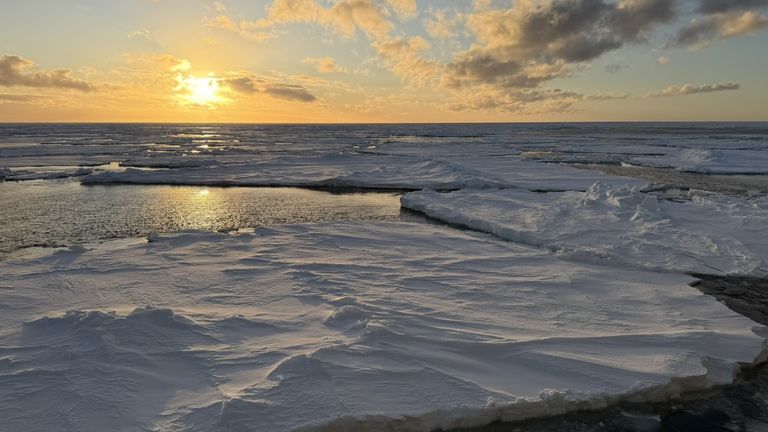 The Ross Sea is a less visited part of Antarctica.
Credit: 2026 Kristen PopeAntarctica Exploration
Douglas Mawson is built for Antarctica’s icy waters, featuring Ice Class IA and Polar Class 6 classification, as well as an Ulstein X-Bow to help cut through rough seas for a more comfortable ride and faster travel, which results in less fuel use and fewer emissions. The 154-passenger vessel (which holds up to 130 passengers on expeditions) sailed its maiden voyage in late 2025, joining sister ships Greg Mortimer (a 76-cabin vessel launched in 2019) and Sylvia Earle (launched in 2022 with 71 cabins).
Founded in 1991 by Australian mountaineer and explorer Greg Mortimer (namesake of one of the ships) and his wife, Margaret, Aurora Expeditions specializes in active adventure trips that offer opportunities for hiking and Zodiac cruising, as well as specialized opportunities. These can include kayaking — which was offered on my sailing — and programs such as snorkeling, diving, skiing and snowboarding, along with other activities on certain routes.
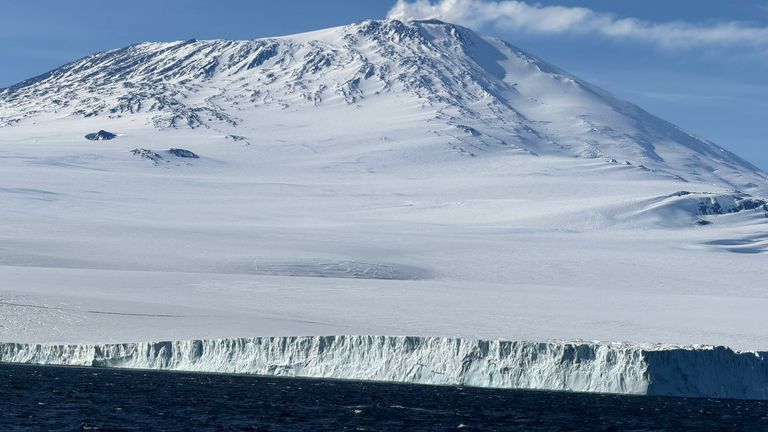 Antarctica’s landscapes and scenery can be enjoyed from onboard the ship, as well as on excursions.
Credit: 2026 Kristen PopeWatching ice was one of my favorite pastimes onboard Douglas Mawson; we spotted iceberg after iceberg, including a massive piece of ice so large it had a name: Iceberg B-22A. Additionally, we sailed within view of Antarctica’s largest ice shelf, the Ross Ice Shelf.
We visited McMurdo Sound on a bluebird day, enjoying breathtaking views of Mount Erebus as the active volcano spewed gasses into the sky — a view I was able to share with my husband on FaceTime via the free Starlink Wi-Fi onboard. We were also able to step back in time and visit historic huts at Cape Adare and Ernest Shackleton’s hut at Cape Royds. Our days off the ship were filled with hikes and Zodiac rides, including options for specialized Zodiac trips focused on photography, citizen science or mindfulness.
Throughout the trip, the wildlife viewing was phenomenal. We saw orcas and an array of whales, such as pilot, minke, fin, humpback and blue, as well as massive colonies of penguins, many types of birds and a variety of seals — including leopard, fur and elephant. We learned about the region’s wildlife, history and more during lectures, workshops and movies, with a packed schedule of offerings on sea days.
The winds and seas could be rough at times, but that was to be expected in the Southern Ocean, and it added to the adventure, though the Ulstein X-bow and stabilizers helped smooth out the ride.
Life Onboard Douglas Mawson
Like sister ships Greg Mortimer and Sylvia Earle (which both have Ulstein X-bows), Douglas Mawson features eight decks. The ship is equipped with a spacious lecture theater that includes a 24/7 tea and coffee station (with jars of cookies and treats on offer — the caramel macadamia nut cookies were divine), as well as a two-story library atrium and Citizen Science Center. Throughout the trip, there were numerous opportunities to participate in citizen science data collection efforts for whales, birds and even clouds.
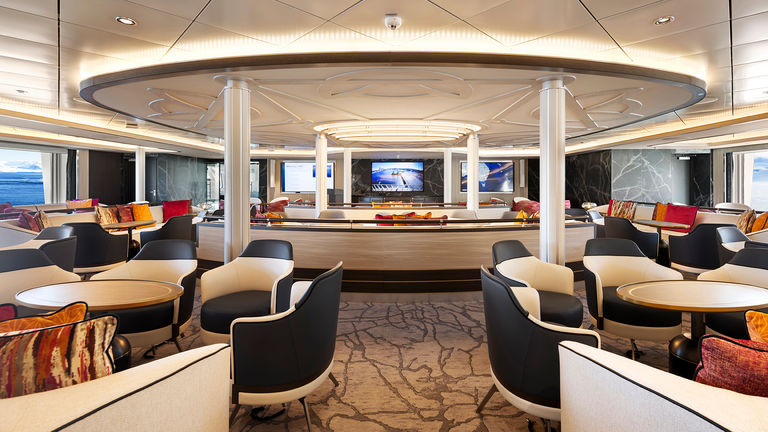 The ship features a spacious lecture center.
Credit: 2026 Aurora ExpeditionsDuring the multi-week expedition cruise, we were well-fed by the ship’s two restaurants, including the main dining room — which serves buffet breakfasts and lunches, along with a la carte dinner service most days — and The Hut on Deck 8, which provides a la carte service for all meals (reservations are required for dinner). The bars and lounges onboard are great places to grab a drink and mingle with fellow travelers, and the bar on Deck 8 is a favorite spot for watching wildlife.
Douglas Mawson’s heated swimming pool (closed in rough seas) sits next to two Jacuzzis, and the ship also features a fitness center and sauna. The small onboard shop sells a few clothing options — I purchased a fleece buff there — as well as souvenirs, snacks and other items. Each cabin has a locker in the ship’s mudroom to store muck boots — loaned for the duration of the trip — and other gear between outings.
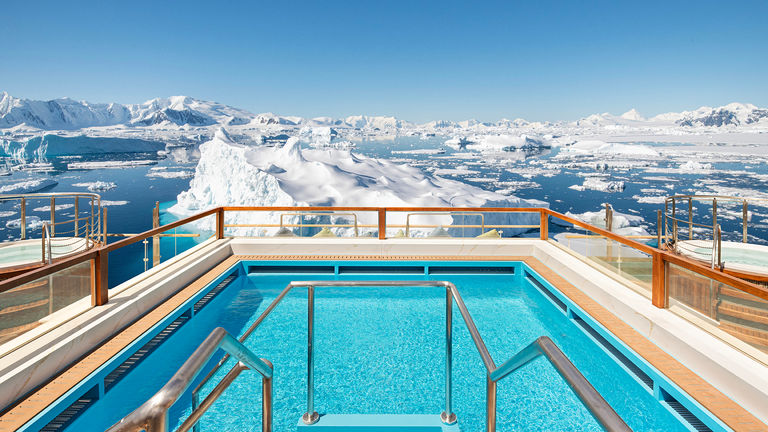 Guests can enjoy scenic vistas from the heated swimming pool.
Credit: 2026 Aurora ExpeditionsDouglas Mawson’s 86 staterooms range from twin and triple shares to singles, balcony staterooms and the 487-square-foot Captain’s Suite. All cabins have private bathrooms, and 79% have private balconies. During the sailing, I stayed in a balcony stateroom on Deck 4, which provided a comfortable space with a king bed (which could be converted into two twins), bedside tables, a small desk area and a massive amount of storage space between the cabinets, drawers and hooks. The in-cabin television displayed the daily schedule, a livestream of lecture hall briefings and talks, a variety of entertainment options and ship resources. The bathroom was well-appointed, with a heated floor that was great for helping dry wet gear.
My favorite feature in my room was the balcony, which was why every time a wildlife announcement came on in the evening, I would hope the speaker would say “port side” — that way, I could simply step out onto the balcony to witness the magic of the Southern Ocean and Ross Sea.
