Spain’s Catalonia region is distinct, with its own language and rich history. It is also home to many vibrant destinations that set it apart from the rest of the country.
Barcelona, the region’s capital, makes a convenient home base for exploring Catalonia and beyond, offering clients easy access to coastal towns, mountain landscapes and historic cities. And if travelers want to experience Catalonia without changing hotels, they are in luck, as many top destinations are within driving distance.
Here are five day trips worth considering if clients are headed to Barcelona.
Sitges
Known as the “St. Tropez of Spain,” the laid-back coastal town of Sitges is just a short distance (about 25 miles) from Barcelona. Visiting Sitges was the highlight of my own Barcelona trip, as it gave me space to breathe and got me away from the hustle and bustle of peak season in the city.
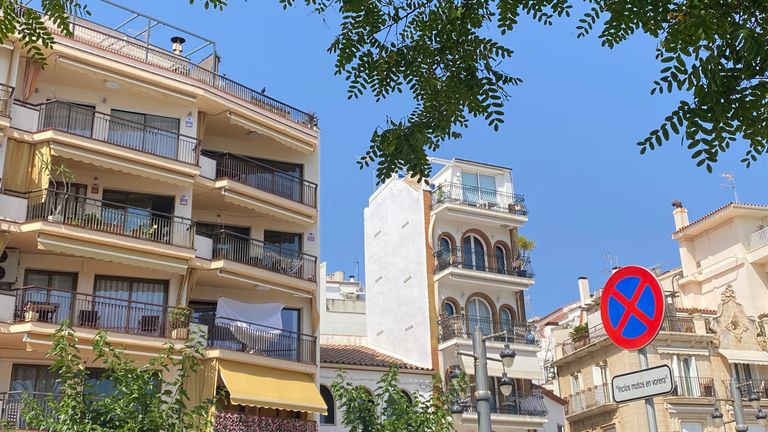 Sitges' beachside promenade features many restaurants, hotels and shops.
Credit: 2026 Sally Shapiro
The easiest way to get to Sitges from Barcelona is by train. The R2 Sud line runs regularly from Barcelona-Passeig de Gracia and Barcelona Sants, with the journey taking roughly 30 to 45 minutes. Tickets cost between $5 and $10 and can be purchased at the station before boarding, so there’s no need to book in advance.
Compared to Barcelona, Sitges is much smaller, more relaxed and far less crowded (especially mid-week). Its narrow streets, whitewashed architecture and waterfront cafes are reminiscent of the French Riviera. I recommend spending the afternoon enjoying a beachside paella at Cafe Sardina or swimming in the clear waters of Platja de la Ribera, one of the town’s central beaches.
Sitges’ compact layout makes exploring on foot the best way to get around. Don’t let clients miss Iglesia de Sant Bartomeu i Santa Tecla, an 18th-century church perched right above the Mediterranean Sea.
Andorra
Clients looking to add another country to their trip can head to Andorra, a tiny principality tucked into the Pyrenees mountains between Spain and France.
Andorra is unique for many reasons — it is the world’s only co-principality, led by both the president of France and the bishop of Urgell, in Spain, and its capital, Andorra la Vella, is the highest capital city in Europe (at about 3,300 feet above sea level). The dramatic mountain scenery is a highlight, and visitors might hike in summer and ski in winter.
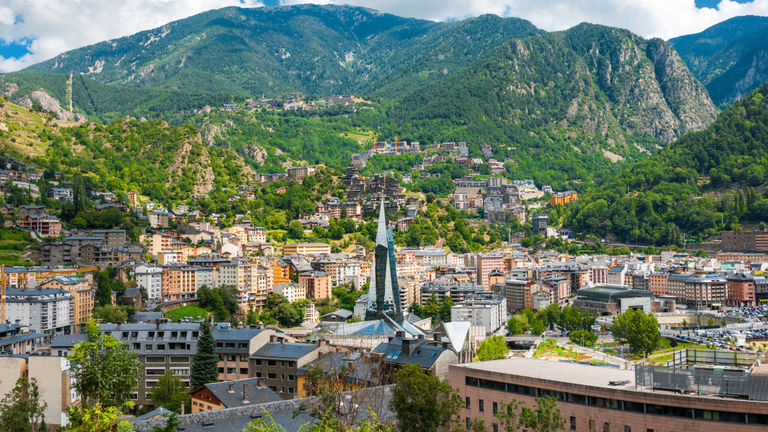 The glass Caldea Tower is the tallest building in Andorra.
Credit: 2026 gurgenb/stock.adobe.comShopping is a major draw here, thanks to Andorra’s low taxes. Travelers might stroll through the shops on Avinguda Meritxell; visit the Pont de Paris bridge; explore Casa de la Vall, a historic house that dates back to the 16th century; and visit Sant Esteve Church.
For relaxation, send clients to neighboring Escaldes-Engordany to visit Caldea, one of Europe’s largest thermal spa complexes. Outdoor enthusiasts can also explore the nearby Madriu-Perafita-Claror Valley, a UNESCO World Heritage site.
Getting to Andorra from Barcelona is easy by direct coach, with operators such as Andbus and FlixBus offering journeys of around three hours each way for around $35. Private cars or van transfers can be arranged for clients to cut down on travel time and make for a more enjoyable trip. Note that transportation should be booked in advance, especially during the busy ski season.
Tossa de Mar (Costa Brava)
The 75-mile region of Costa Brava charms travelers with its rugged coastline, turquoise waters and seaside towns. The region stretches from Blanes in the south to Portbou at the French border. Anywhere along this coast is beautiful, but my top recommendation is the medieval town of Tossa de Mar.
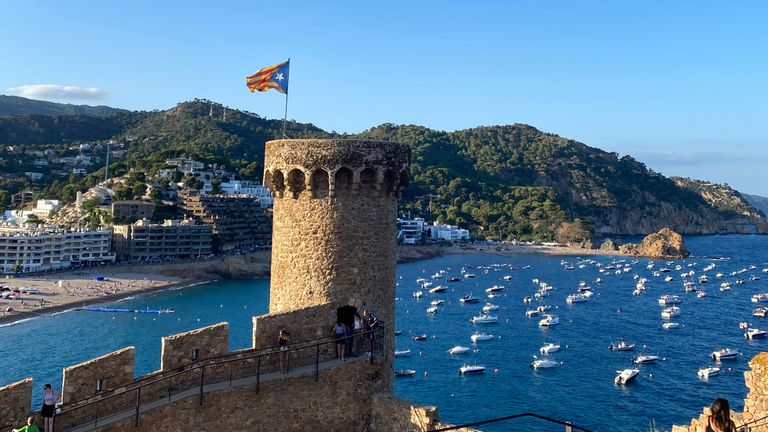 Leading up to Tossa de Mar Castle are narrow cobbled streets built against the perimeter walls of Vila Vella.
Credit: 2026 Sally ShapiroTossa de Mar Castle, a 12th-century fortress perched on a cliff overlooking Platja Gran, Tossa de Mar’s main beach, is a must-see site here. A short and accessible walk up into the castle grounds gives visitors an amazing view of the town. A stroll in Vila Vella — Tossa de Mar’s Old Town area, where the castle is located — is another good idea. Vila Vella is the only example of a fortified medieval village still existing on the Catalan coast.
To get to the town, clients can take a direct bus (operated by Moventis Safra) from the Barcelona Nord bus station to the Tossa de Mar bus station. The one-way journey takes around one and a half hours.
Montserrat
After my time in Barcelona came to an end, one of the questions I heard most often was, “Did you visit Montserrat?” Sadly, I did not, and it’s one of my biggest regrets. This mountain retreat is one of Catalonia’s most significant cultural and religious sites, drawing visitors for its historic monastery, distinctive rock formations and mountain views.
Getting to Montserrat takes about one hour from Barcelona’s Placa d’Espanya station. Clients can take the R5 train to Aeri de Montserrat, where a cable car carries visitors up the mountain, reaching an elevation of 4,055 feet. Combined train and cable car tickets can be purchased to make the trip smoother. Travel advisors might also consider booking a guided tour for clients, as an expert guide is sure to share details about the site’s religious significance.
Beyond the dramatic, jagged peaks here, the main draw is Santa Maria de Montserrat Abbey. Visitors can explore the basilica, see the revered Black Madonna and visit the monastery’s museum, which houses works by artists such as Salvador Dali and Claude Monet. The Escolania de Montserrat, the monastery’s boys’ choir, is among Europe’s oldest, and they perform regularly for visitors.
Tarragona
For a look at Catalonia’s Roman past, send clients to Tarragona, a coastal city built around the remains of ancient Tarraco. Once a major Roman provincial capital, Tarraco is now a UNESCO World Heritage Site, with ruins scattered throughout the city, including a seaside amphitheater, a Roman circus and sections of ancient wall. The mix of archaeological sites and modern city life makes Tarragona an especially rewarding day trip for history enthusiasts.
Tarragona is about one hour by train from Barcelona. From Barcelona Sants station, travelers can take a regional train to Tarragona’s central station, which puts them within walking distance of much of the city’s historic center and Roman ruins.
After exploring the historic center, clients might also head toward El Serrallo, Tarragona’s traditional fishing neighborhood, to experience its maritime roots and sample local seafood. Regional specialties include arros negre, a squid-ink rice dish, and romesco, a rich sauce made with roasted peppers.
