Six months after losing his home in the Lahaina wildfires, West Maui chef Zach Laidlaw appeared on the Fox reality competition show “Next Level Chef.” He finished as a runner-up in May 2024, during the cooking show’s third season.
“That took my culinary career and just threw it out in the world," Laidlaw said. "I became very busy after that, which I'm super grateful for. I really needed that outlet after losing everything from the Lahaina fires besides the clothes on my back. I literally felt every emotion a human could possibly feel — just the highest of highs and the lowest of lows — going on the TV show after losing everything.”
The former chef de cuisine at Fleetwood’s on Front St. (a restaurant owned by drummer Mick Fleetwood) in Lahaina, Laidlaw was later a finalist on a July 2025 episode of “Chopped,” the Food Network’s long-running competitive cooking program.
Today, the celebrity chef leads culinary experiences on Maui. This is just one example of a made-in-Maui activity led by locals that visitors can enjoy. From private dinners to cultural art, here are a few made-in-Maui experiences worth adding to client itineraries.
Help Feed Maui
Maui vacationers interested in sampling Laidlaw’s cuisine can book a private farm-to-table dinner in Kapalua at Hua Momona Farms, which Laidlaw co-founded in 2017. The high-end, multicourse culinary experience kicks off with a farm tour guided by Laidlaw himself.
“I always walk [guests] through the greenhouse,” Laidlaw said, who is the executive chef and vice president of experiences for Hua Momona. “I talk about the farm, our foundation and our community work. Then, we roll back into the tents, and we start with one-bite canapes. [From there], we just roll into the course-style meal, and by the end of it, people are floored.”
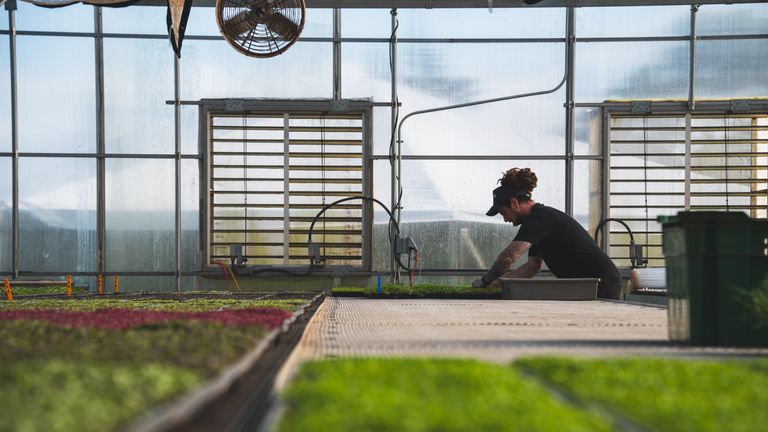 West Maui chef Zach Laidlaw spends his time away from the kitchen growing organic microgreens at Hua Momona Farms in Kapalua.
Credit: 2026 Hua Momona FarmsSince the August 2023 wildfires that destroyed much of Lahaina and scorched Maui’s upcountry community of Kula, Hua Momona Farms has helped provide more than 100,000 hot meals at no charge to island residents in need, according to Laidlaw.
Maui visitors can take part in that effort by joining one of Hua Momona’s 90-minute voluntourism activities, offered in the mornings each week Monday through Thursday.
“We get [volunteers] in the fields, and tasks range anywhere from seeding and harvesting to washing vegetables,” Laidlaw said.
Half of the farm’s harvest is distributed to its nonprofit, Hua Momona Foundation, which turns the produce into hot meals for the local community. Another local Maui nonprofit that distributes food across the island visits Hua Momona on Wednesdays and Fridays to pick up the meals.
“We're doing about 200 meals every Wednesday and every Friday,” Laidlaw said. “So it's about 400 per week.”
Hua Momona specializes in 25 different varieties of organic microgreens, which Laidlaw says are sold to roughly 50 different restaurants, hotels, private chefs and food trucks on Maui. The farm also regularly produces arugula, purple daikon, watermelon radish, bok choy and fennel.
Describing Maui as a place that has “touched so many hearts,” Laidlaw encourages travelers to visit and to make a point of regularly frequenting the island’s mom-and-pop restaurants and retailers, as well as farmers' markets.
Visitors are absolutely welcome. We need visitors to come back, because we’re tourism-driven.
“Just be kind and respectful,” he said. “Even though it has been nearly three and a half years, a lot of people are still grieving. But visitors are absolutely welcome. We need visitors to come back, because we’re tourism-driven. So, please, come up to the farm and let me educate you on how this was grown and cooked, and let me feed you.”
Maui’s Distinctive Spirit
Another immersive culinary experience awaits clients visiting Maui, but instead of farm-to-table dining, it’s farm-to-bottle imbibing.
Clients certainly don’t have to be hard liquor fanatics to enjoy a visit to Waikulu Distillery, a farm-to-bottle producer of blue agave spirits located just outside the upcountry Maui town of Makawao.
“I meet people who would never dream of sipping hard alcohol straight-up, [which is] the way it's served in our tasting room,” said Viviana Amezola, manager for Waikulu. “But then after one of our flight tastings, they’re telling me how surprised they are by just how much fun it was and how much they learned.”
Waikulu owner Paul Turner certainly didn’t have grand plans to start a distillery back when he planted his first agaves on Maui in 2011.
“I just figured they would be fun to have since I loved tequila,” he said. “It was only after I saw how well they grew, and later found out that Makawao’s climate is really ideal for growing blue agave, that I started to formulate the dream.”
Noting that there are only five regions in Mexico that can officially describe the liquor they produce from agave plants as tequila, Amezola says Makawao’s consistent, year-round temperatures in the 70s help the plants flourish on Waikulu’s 6-acre farm.
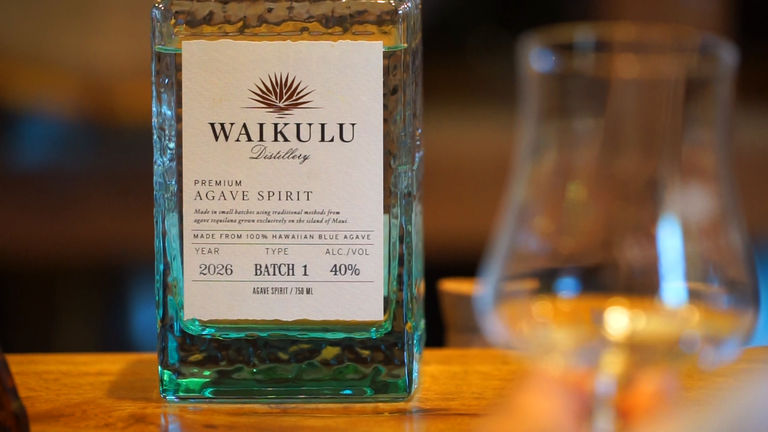 Waikulu Distillery turns its Maui-grown agave plants into agave spirits.
Credit: 2026 Shane Nelson“They're growing a little faster, sweeter and bigger than they typically do on average in Mexico,” she said, noting that Waikulu sells only to a limited number of Maui restaurants and retailers, in addition to Fairmont Kea Lani.
Vacationers can book one of the distillery’s in-depth 90-minute farm and facility tours — which include a tasting experience — for 11 a.m. on Saturdays, Sundays, Mondays and Wednesdays. Those interested in just a tasting can join the fun from noon to 5 p.m. daily.
As for what a blue agave spirit made from Maui-grown agave tastes like, Amezola offers a novice-friendly description.
“For me, Mexican tequila tends to have a bit more grassiness, a bit more of this asparagus note,” she said. “In my opinion, our spirits are coming out a bit sweeter, with subtle floral, citrusy, fruity hints — lots of cinnamon. I hear from people in the tasting room all the time, ‘I definitely can't do tequila, but I can do these agave spirits because they’re a little sweeter and smoother.’”
More Than Maui Murals
Art lovers intrigued by Maui’s exceptionally rich cultural heritage should set aside time for over 20 vibrant murals adorning buildings in historic Wailuku town.
Part of the Small Town Big Art initiative launched in 2018, which was developed in part with grants from the National Endowment for the Arts, the gorgeous collection of large-scale paintings are more than just a beautification project, according to Kelly White, chair for Maui Public Art Corps.
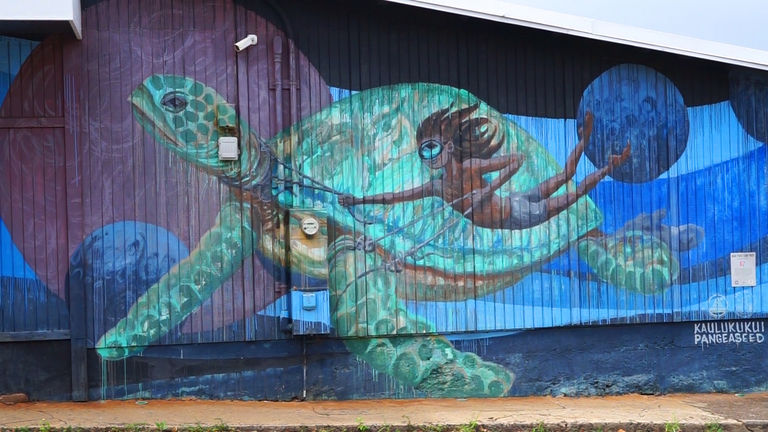 Maui’s historic Wailuku town is home to a collection of more than 20 murals, financed in part by a National Endowment for the Arts grant.
Credit: 2026 Shane Nelson“It's really an educational program,” White said. “People can scan all the QR codes available at each site, hear the elder stories that inspired each of those works of public art, and tap into all the conversations with hyperlocal community members who invested their time and energy in those artworks.”
Travelers can also make use of an interactive Google map, designed and managed by the project’s collaborative team, to locate the murals and learn more about the artists, as well as the Hawaiian cultural heritage behind each work.
White is quick to note that the initiative has expanded beyond Wailuku and now spans across Maui County, which includes the islands of Lanai and Molokai.
“We're trying really hard not to be pigeonholed as a mural program,” White said. “There are also dance, music and theatrical performances — lots of pop-up performances that come with Small Town Big Art.”
What we are trying and hoping to do is connect people to the heartbeat of these places.
Although the initiative’s primary audience is Maui residents, White warmly encourages visitors who are keen to learn more about the island’s heritage, culture and people to check out some of the regularly scheduled performances.
“When visitors come to a pop-up dance performance, a mural blessing or one of our film festivals, they tell us it was the most engaging, educational and fulfilling experience of their entire trip,” White said. “What we are trying and hoping to do is connect people to the heartbeat of these places.”