It’s a wonderful thing to hold an ohia lehua tree sapling in your hands.
Grown-up models of the native Hawaiian species are a common sight across Hawaii Island and around the archipelago, often festooned with fiery red flowers. In favorable conditions, ohia trees can reach 80 feet in height, but the sapling in my hands was no more than 1 foot tall, with its web of roots swaddled in a clump of dark soil.
Later, the little ohia seemed to smile up at me from the small clearing in Kona Cloud Forest Sanctuary where I planted it, hopeful and resilient there in the newly packed dirt, but no less fragile.
“Our hope is that everyone who comes here feels an elevated level of respect, responsibility and inspiration about our Earth,” Nadara Rose, owner and steward of Kona Cloud Forest Sanctuary, told me during a later interview. “So with our little tree planting ceremonies, we really do it very intentionally. It’s more than just, ‘Hey, dig a hole and plant a tree.’ We try to make it meaningful.”
Uncommon Escape
A 10-minute drive up the hill from Kona International Airport, the 70-acre Kona Cloud Forest Sanctuary sits on the verdant slopes of Hualalai volcano and offers Hawaii Island vacationers a range of wellness, mindfulness and educational activities within the unique preserve.
“Just coming up the hill 10 minutes from that warm coastal heat, you're at 3,000 feet of elevation and all of a sudden in this really lush, cool climate,” Rose said. “And what makes it so unique is it’s the only tropical cloud forest in the U.S. other than in Puerto Rico.”
Guided 90-minute or 2.5-hour walks through the cloud forest — led by naturalists who share all sorts of ecological expertise, along with cultural and historical insight — are the most popular option for visitors, according to Rose, who notes that guided birding tours are also available.
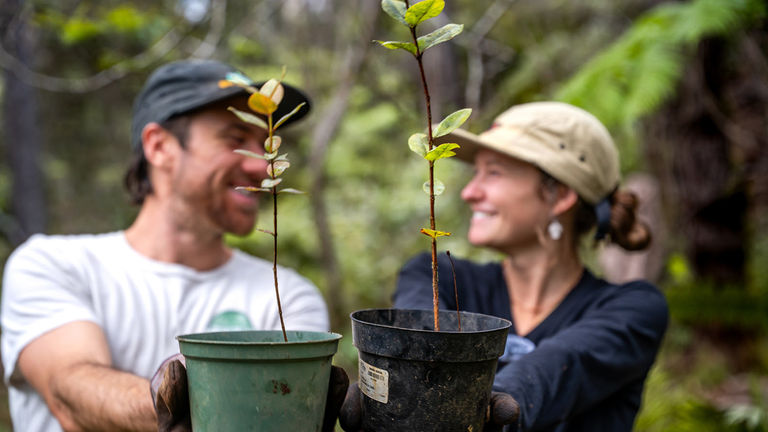 Travelers can plant native ohia lehua trees during Malama Aina Service Events at Kona Cloud Forest Sanctuary.
Credit: 2026 Hawaii Adventure Portraits“We also have forest bathing, which is kind of like a guided walking meditation,” she said. “We provide journals, reflective prompts and a tea ceremony, and people who come on that tour are typically looking for a reset of some sort.”
Yoga and sound bath meditation experiences hosted within the sanctuary are also available to vacationers, and travel advisors can work directly with Kona Cloud Forest Sanctuary to create customizable private experiences for clients, according to Rose.
“We love doing the private tours because we can specially curate things,” she said. “So if they're there for a memorial, or if they're there for a birthday, or if it's a bridal party — whatever their theme is, we can make it fun, and we can make it meaningful."
Advisors can also book nights for groups of eight to 10 people at the sanctuary’s private residence, an offering Rose notes is fairly new.
“We have a lot of retreat facilitators who book it, and they bring their small groups, and then we provide all the experiences on site,” she said. “So maybe they wake up in the morning and do a yoga class, then maybe we'll do a sound bath and later take them into the forest.”
A History of Service
Kona Cloud Forest Sanctuary’s roots reach back to 1982, when Rose’s father —University of Hawaii professor and horticulturalist Norman Bezona — recognized the property’s educational value as a reforestation project and began offering tours there for students.
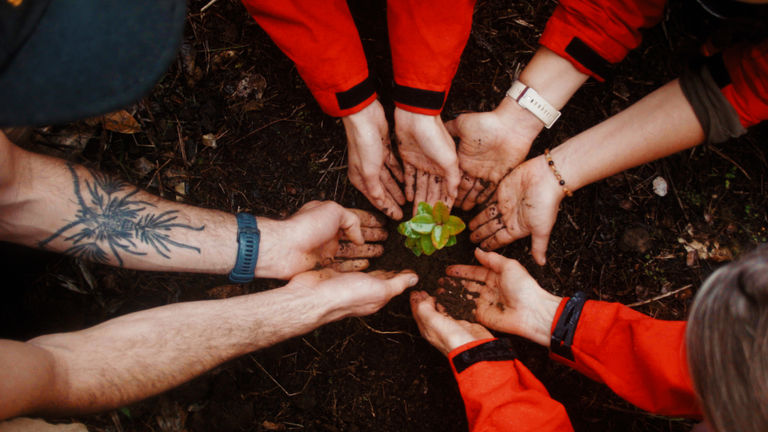 Founded by a University of Hawaii horticulture professor, Kona Cloud Forest Sanctuary has a long history of service.
Credit: 2026 Dom Walczuk“It’s important to point out the reason why we're doing this,” Rose said. “It's a heart-led, purpose-driven project that was really inspired by my father's love for tropical plants.”
Along with the guided tours and wellness activities available today for clients, travelers can also take part in the sanctuary’s free Malama Aina Service Events, which happen once per month and usually attract a blend of visitors and local folks interested in volunteer conservation work.
I joined one of these monthly events during a recent Hawaii Island visit, working alongside half a dozen residents and a vacationing couple to remove all sorts of invasive ginger before planting the little ohia sapling. That time spent helping local folks to leave a small part of Hawaii in better shape than I found it is an experience I’ll never forget.
“What I'm seeing is, there has been a big shift,” Rose said. “People used to come to Hawaii and would just want to receive — you know, hang out by their pool and drink their mai tai. More and more, people are coming to Hawaii, and they’re saying, ‘I want to learn about the culture and actually meet some people who live here.’ And when they do that, they’re learning about and have a chance to help with little projects like ours, where people want to protect the natural spaces they really love.”
