Necessity is the mother of invention, I thought, as fierce winds blew my long curls into a scarf around my neck.
“Ah, the Patagonia breeze,” said our guide, Cecilia, rather cheerfully.
She floated ahead of me as I took big steps against the wind, gasping for air that seemed to be moving a few paces faster than my natural breath.
We weren’t on a hike, but I could be forgiven for thinking so: Estancia Cristina, our lodge for two nights, is located a distance away from just about everything, including the bright-turquoise lake at which we had just docked.
Argentinian Patagonia isn’t exactly known for being tame and accessible, but arriving at the estancia (ranch) felt like unlocking another level. Enveloped by its own valley, the lodge is only reachable by sailing from Punta Bandera — an hour away from El Calafate — into the north channel of the glacially fed Lago Argentino.
The land was settled in 1913 by the Masters family, English homesteaders eager to raise sheep to produce wool. Percival Joseph and Elizabeth “Jessie” Masters arrived with their young children in tow, first residing in tents before gradually building a home with timber and sheet metal, protected by a windbreaking boulevard of poplar trees.
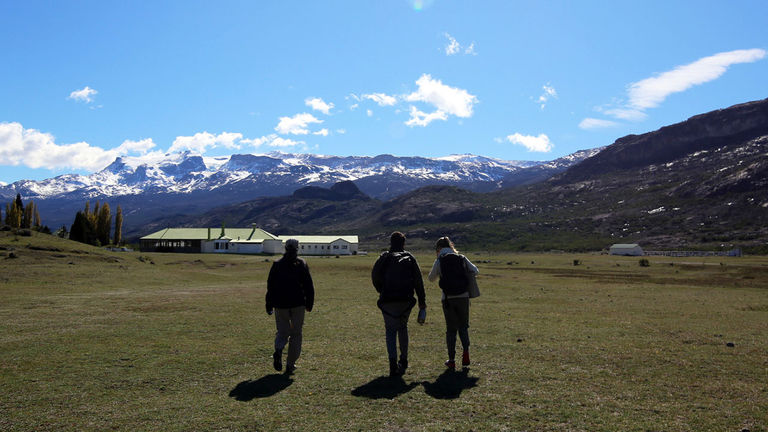 Guests make the walk from the lake to the property.
Credit: 2018 Mindy PoderWhile the estancia’s namesake — daughter Cristina Masters — died from pneumonia at age 16, the Masters’ son, Herbert, lived on the ranch until his death in 1982. His wife, Janet, inherited the land and slowly began to transform the ranch into a visitor destination, based on stipulations set forth by Argentina’s National Parks Administration. But even before Estancia Cristina was an official tourist lodge, the family hosted mountaineers and explorers who carried out expeditions of the land and the Southern Patagonian Ice Field, which borders a portion of the valley.
Though extreme weather persists, times have changed since anyone has truly roughed it here. I, for one, felt like I was on a private island holiday — substitute Argentinean wine for rum cocktails, Arcteryx shells for swimsuits and mountain treks for skinny dips. The estancia hosts a handful of daytrippers who book excursions and dine in a separate space, but my group didn’t see them after our boat ride. There are 20 rooms dispersed throughout five small cabins — all of which were occupied by us.
The small-group-in-a-big-place nature of Estancia Cristina creates a warm atmosphere among guests, who linger over local wine and beers in the Octagon room, a one-stop social space, dining room and bar.
Throughout our stay, I was wowed by the kitchen’s ability to whip up delicious, healthful meals that considered food allergies and dietary preferences. For example, our packed lunch — which we enjoyed during long hikes — included sandwiches made with homemade multigrain bread, a beet spread, roasted vegetables and cheeses, along with sides such as a couscous and lentil salad, fruit, dessert and more.
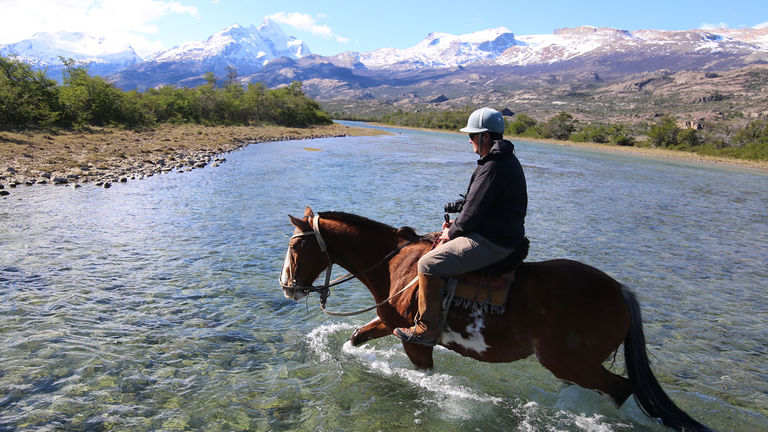 Horseback riding through the property’s extensive grounds is a must-do.
Credit: 2018 Mindy PoderBedrooms are also simple and clean, and smartly designed to face a large window. The view made me reminisce about my time gazing out of canvas at safari camps — not because the towering Patagonian mountains looked like plains, but because the view was uninterrupted and my own. The unspoiled natural landscape was so calming that one late afternoon, I awoke to find myself sprawled on the window seat cushion, blanketed by the sun.
Another reason the valley felt like home was the property’s staff. From the service employees to the on-site guides and gauchos, everyone at Estancia Cristina was present, kind and excited to share their valley with us.
On a mild-weather day, we rode the estancia’s beautiful horses, splashing through streams and gradually ascending hills. Another day, we spent hours hiking in a part of the valley that we hadn’t seen yet. We foraged for edible berries and took turns crossing a stream via a piece of wood positioned over the water. Despite the wind and rain’s best efforts to slow us down, we discovered the Rio de los Perros waterfall, mossy forests and misty mountaintops.
On our last day, we took a four-wheel drive vehicle to yet another undiscovered portion of the valley, where we had a front-row view of the eastern side of Upsala Glacier, the third-largest glacier in Argentina. From there, we descended into a former glacial land studded with mollusk fossils. Estancia Cristina’s guides sprang into action, explaining what happens when glaciers recede.
I eyed the black and brown landscape with fascination. Each new sign of life gave me hope.
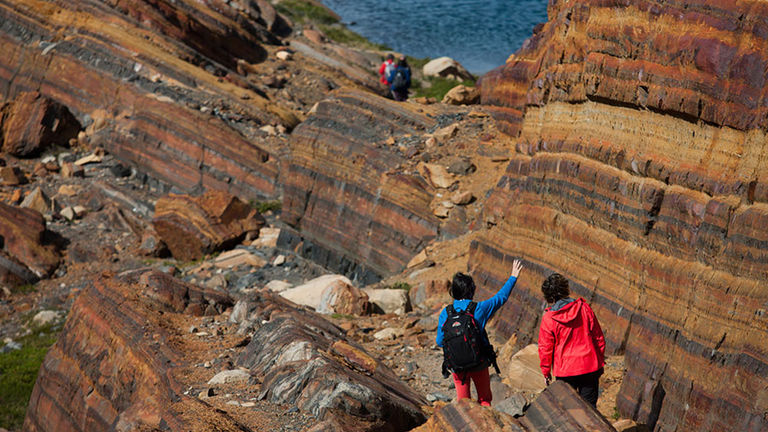 Hikes travel through various landscapes, such as this fossil-filled canyon.
Credit: 2018 Estancia CristinaNote: The lodge operates from Oct. 1 until April 30. To book as part of a customized itinerary throughout Patagonia, contact Fitz Roy Expediciones, an Argentinean travel agency based out of El Chalten that specializes in all-inclusive, tailored trekking programs.
The Details
Estancia Cristina
www.estanciacristina.com
Fitz Roy Expediciones
www.fitzroyexpediciones.com.ar
