Hawaii may be spectacular to see, mesmerizing to smell and harmonious to hear, but of all the senses, Hawaii’s tastes take the cake. Visiting families who make a point of eating off the tourist track open doors to appetizing adventures that they will remember for years to come.
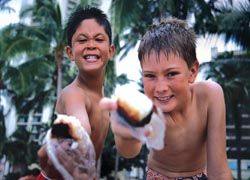 |
Hawaiian kids showing off their spam musubi // © 2010 Oahu Visitors Bureau |
Over the centuries, immigrants from different countries have made their way to this remote destination in the middle of the Pacific, bringing with them their individual culinary traditions. For today’s travelers, enjoying a meal in Hawaii is like taking a trip around the world with every bite. Visitors of all ages can learn about Hawaii’s mixed plate of cultures — from Japanese and Chinese to Filipino and Vietnamese — simply by opening their mouths.
Food Tours
One good way for families to explore the distinctive flavors of the 50th state is to book them on an organized food tour.
Sign Up for Our Monthly Family Getaways Newsletter
I accept the T&C and Privacy Policy.
“When you sample some of the food offerings here in Hawaii, your taste buds blossom,” said Matthew Gray, who runs Hawaii Food Tours on Oahu. “It’s as if you have switched on a previously untapped area of your brain.”
During Gray’s daytime Hole-in-the-Wall tour, he shares the remarkable history of the food that his guests are eating. He talks about where it’s grown and how it’s prepared, and he spins stories that help people appreciate what they are about to taste.
“Guests of our islands love the way our food looks, the way it smells and the way it feels in the mouth,” he said. “It’s both different and familiar at the same time. Many people describe Hawaii as a melting pot, but I prefer to call it a salad bowl, where each ethnic group retains its singular identity, favorite ingredients and cooking styles.”
On the Valley Isle, a firm called Maui Culinary Tours emphasizes the agricultural heritage of the island as it transports visitors to farms, ranches and restaurants of the upcountry region. Another enterprise, Tour da Food Maui, presents intimate excursions to hidden dining treasures that tourists might not find otherwise.
Bonnie Friedman, the brainchild behind Tour da Food Maui, encourages families to forgo the everyday restaurant chains and, instead, try genuine local eateries where the food is almost always great.
“I recommend getting out of the resorts and exploring local communities,” said Friedman. “On Maui, that would include Wailuku, Kahului, Pukalani, Kula and Haiku. As is true in any destination, visitors can only benefit from eating where the residents eat.”
In Hawaii, dining is extremely inclusive because it’s such a family-friendly place as a whole, added Friedman.
“I can’t think of a restaurant here that doesn’t welcome all ages,” she said. “And as far as local food is concerned, there’s always something that will satisfy every generation. What kid doesn’t like noodles? Here, we just call it by a different name — saimin (Asian noodle soup). If they’re craving chicken fingers, offer them katsu (Japanese-style fried chicken).”
From Farmers’ Markets to Farm Tours
Families staying in condominiums or vacation rentals often want to do their own cooking. For them, Hawaii’s farmers’ markets present a perfect solution, allowing visitors to cook up tasty memories with tropical overtones. When they bypass name-brand grocery stores and go to farmers’ markets instead, they can pick up ingredients springing from island soil and sample unique flavors while meeting area growers.
Oahu alone lays claim to dozens of weekly markets. Close to Waikiki, the Saturday morning Kapiolani Community College Farmers’ Market rolls out a mix of vendors with goods ranging from fresh-churned butters to Hawaiian veal. Among the venues on Hawaii’s Big Island is the Saturday farmers’ market at Keauhou Shopping Center, where mom, dad and the kids can nibble on exotic fruits, see a coconut prepared and listen to live music. Kauai’s many farmers’ markets enrich the Garden Isle with organic products as well as culinary and agricultural demonstrations. Maui’s outdoor markets lure visitors with island edibles like strawberry papayas, apple bananas, homemade salsas and zesty guacamoles.
As the sustainable dining movement grows in popularity in Hawaii, so does the opportunity for agri-tourism. While visiting farms, families can see island ingredients at their source.
On Oahu, the venerable Dole Pineapple Plantation tells the tale of Hawaii’s most famous fruit while engaging the tykes with its narrated train ride and the world’s largest maze. Maui’s picturesque Surfing Goat Dairy teaches the generations about the cheese-making process, with hands-on milking lessons and free samples at the end of the tour. On Kauai, families can journey through agricultural history during a tour of the Haraguchi Rice Mill and Taro Farm. At the Hawaiian Vanilla Company on Hawaii’s Big Island, they can enjoy a delicious lunch showcasing local products while discovering the origins of tropical vanilla.
Pick a Food Fest, Mark the Date
As visitors decide on a date for their culinary travels through Hawaii, they should consult the state’s calendar of family-friendly food festivals. The fall 2010 line-up promises such crowd-pleasers as the Kauai Coconut Festival (Oct. 2-3), Hawaii Fishing and Seafood Festival on Oahu (Oct. 10) and Kona Coffee Cultural Festival on Hawaii’s Big Island (Nov. 5-14).
In the coming year, there’s something for everyone at festivals such as Eat Dessert First on Kauai (February); Waikiki Spam Jam on Oahu (April); East Maui Taro Festival (April); Whalers Village Maui Onion Festival (May); Taste of Hawaii on Kauai (June); Greek Festival on Oahu (August); Mango Festival on the Big Island (August); and Taste of the Hawaiian Range on the Big Island (September). Most of these gatherings are informal affairs with food booths, entertainment, games for the youngsters and culinary contests.
Whether they are adventurous eaters or meat-and-potatoes folks, families who encounter Hawaii’s cornucopia of cuisines can’t help but spice up their vacation.
As Gray put it, “The foods of a place say a lot about its culture, history, people and traditions, and it’s no different in Hawaii. That’s why the best way to experience Hawaii is to taste it.”
The Details
Food Tours: Hawaii Food Tours, all ages (
www.hawaiifoodtours.com); Maui Culinary Tours, ages 12 and up (
www.mauiculinarytours.com ); Tour da Food Maui, ages 13 and up (
www.tourdafood.com)
Farmers’ Markets: Hawaii Farm Bureau Federation (www.hfbf.org)
Farm Tours: Dole Pineapple Plantation (www.dole-plantation.com); Haraguchi Rice Mill and Taro Farm (www.haraguchiricemill.org); Hawaiian Vanilla Company (www.hawaiianvanilla.com); Surfing Goat Dairy (www.surfinggoatdairy.com)
Food Festivals: A year-round calendar is available online (www.gohawaii.com)
