Something peculiar is inside that bright yellow box. A nearby man treading water waits for you to look inside. As You squat down to unlatch the clasps and open the lid, An undeniably familiar scent hits you: it’s New York-style cheese pizza, brought to your underwater hotel room some 30 feet below the surface of the sea.
Few can say that a scuba diver has hand-delivered room service pizza to their guestroom, but the sentiment makes all the difference.
Experiential hotels such as Jules’ Undersea Lodge — an underwater hotel in the Florida Keys that is accessible only by scuba — are becoming as important to travelers as the destinations themselves. These properties promise an immersive stay that’s beyond the ordinary. Whether guests are hardcore adventurers or just looking for something different, such wild, fully commissionable accommodations prove to be an adventure in and of themselves.
“Experiential hotels offer guests believable escapism that is increasingly more difficult to find,” said Leslie Swanson, owner of Washington, D.C.-based Leslie Swanson Travel LLC, an affiliate of Departure Lounge. “Places like Finland’s Kakslauttanen Arctic Resort (with glass igloo accommodations), the pop-up yurts at Uyuni Salt Flats in Bolivia and Costa Rica’s Pacuare Lodge — accessible only by river or air — give clients the chance to live out a completely different experience, if only for the night. That kind of promise is exciting, curious and fun to share with loved ones.”
U.K.-based tour operator Off the Map Travel specializes in soft-adventure tours that incorporate wild accommodations, from a luxury catamaran anchored in the Norwegian fjords to a hotel on skis in northern Finland that moves locations based on the position of the northern lights. According to Gwen Tavares, Off the Map’s marketing pioneer, the company has seen an uptick in requests for experience-based hotels — and for secluded accommodations, in particular.
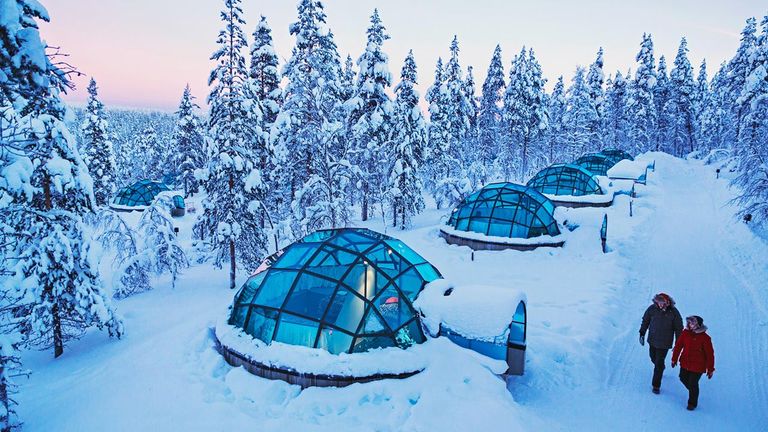 Sleep in an igloo at Kakslauttanen Arctic Resort in Finland.
Credit: 2019 Kakslauttanen Arctic Resort“Experience-based accommodations are picking up, and we try to include at least one unique stay in every trip,” she said. “Travelers are more interested in booking wild accommodations now than ever before, because they want to feel immersed in the destination as it gives them a truer feeling of relaxation and a more genuine experience, especially when they are in a remote place.”
Tavares cites social media as another driving force. In this day and age, it’s a status symbol to share photos of oneself in places that few have had an opportunity to visit.
“People now document their entire lives on social media, and holidays are often a reward for working hard,” Tavares said. “To that end, travelers want to share their experiences, because this is their way of showing their success to a certain extent. It also drives clients to plan a more shareable trip; the more out there or different the accommodation is, the more shareable.”
Social media — and Instagram, in particular — has brought valuable business to Andrea Espinosa, a private travel designer at Harmon Travel in Boise, Idaho. It has also offered opportunities to showcase her expertise.
“In my opinion, eight out of 10 times, clients book wild accommodations for the ’gram. They want to be able to say, ‘Oh, I’ve been there before.’ And, usually, the more remote, the better,” Espinosa said. “Clients see a picture of a hotel on Instagram and tell me they want to stay there because it looks amazing. Sometimes, they don’t even know where the location is or the costs associated with certain experiences, but it’s fun to educate and offer options.”
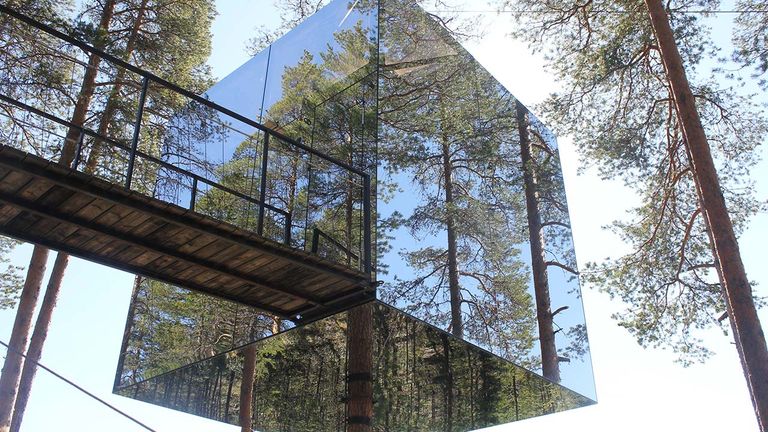 Treehotel’s Mirrorcube blends into its surroundings.
Credit: 2019 TreehotelExperiential accommodations give considerable opportunities for advisors with knowledge and good relationships in some of the world’s more unique destinations. Simply put, itineraries that feature wild accommodations are often more complex. For example, some properties might only have a particular type of transportation such as a helicopter, a float plane or a private boat — and that’s often after embarking on a series of connecting flights and car rides.
“When we sell a trip that includes wild accommodations, we have significantly more opportunity to earn higher commissions,” said Amanda Vallone, co-owner and marketing director of DeLand, Fla.-based Roseborough Travel Agency. “Since they are often set off the beaten path, these vacations can include packaging other experiences, transportation and tours — all of which completes a higher-profiting package.”
Slated to open in the 2020 winter season, Arctic Bath in Harads, Sweden, is one of the latest wild accommodations to come to market. Billing itself as the world’s first Arctic floating spa, the property will comprise a dozen cabins; a Scandanavian restaurant serving locally sourced fare; and a spa with multiple saunas, baths and a treatment room.
Experiential hotels offer guests believable escapism that is increasingly more difficult to find.
While Arctic Bath caters to wellness travelers, its stunning design and unusual location are perhaps the biggest draws. Resembling a jam of timber floating down Lule River, the main lodge pays homage to Swedish log-shipping traditions. In the winter, the floating resort will freeze into the ice.
Arctic Bath is a sister property to social media darling, Treehotel, located a 10-minute drive away. Treehotel features visually arresting guestrooms that are suspended in a pine forest 13 to 32 feet above ground. Accommodations are accessible by ramp, bridge or electric stairs, and feature creature comforts such as heated floors and Wi-Fi access. Among the more striking units are the Mirrorcube (camouflaged by mirrored walls that reflect the surrounding forest), the hyper-realistic Bird’s Nest and the family-friendly UFO that sleeps up to five guests. Straight from the pages of a 1950s sci-fi novel, the UFO is accessible by an electric, collapsible ladder through a hatch in the floor. (Alien sightings are not guaranteed.)
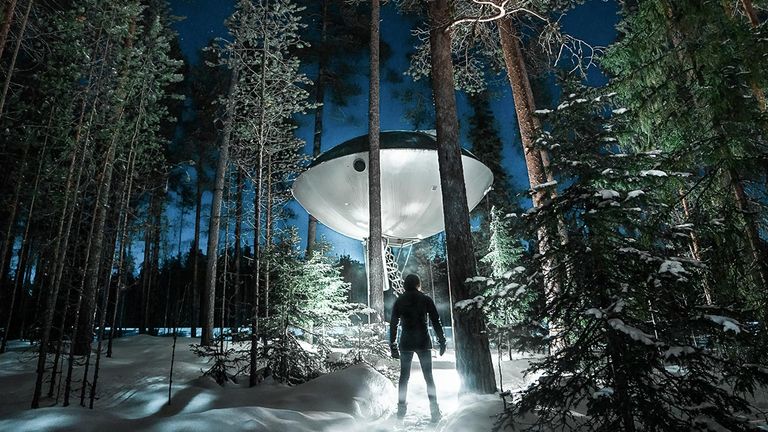 Sweden’s Treehotel offers The UFO as an accommodation option.
Credit: 2019 TreehotelAt both Treehotel and the soon-to-open Arctic Bath, guests can book a number of once-in-a-lifetime excursions. Sure to give everyone at home a fear of missing out, tours include moose safaris, bear-spotting in the midnight sun and hang time with a Sami family and their reindeers.
Although millennials and adventure travelers are an obvious fit for complex itineraries that include treetop accommodations, multiple required modes of transportation and immersive outdoor excursions, travel planners have the responsibility to properly qualify clients and match them to the right experience. It also takes educating clients to let them know what the start-to-end experience will look like, offering comprehensive travel insurance and perhaps pairing them up with a tour operator whose experienced guides can ensure safety every step of the way.
“Experiential accommodations are not appealing to everyone,” advisor Swanson said. “The couples I see interested in doing something a little wild tend to be well-traveled empty-nesters who are curious to try new things together and excited to realize bucket-list trips. I am seeing more travelers within this demographic be open to new ways of traveling and eager to see more (far-flung) destinations — and surprise the kids while they’re at it.”
With cliffside hotels accessible only by rock climbing, guestrooms connected by ziplines, underwater properties and ice hotels available for bookings, what could possibly be next for this style of travel? In an effort to lure travelers who have “been there, done that,” expect the hospitality industry to continue to push the envelope and attempt to one up each other.
“This takes engineering and creativity to the next level,” said Off the Map’s Tavares. “Creating accommodations in ‘unlivable’ or unbelievable locations is on the rise and what we will see more of in the coming years. It’s about pushing boundaries and searching for authentic experiences. The deeper into the unknown and the more remote, the better.”
