A certain level of unpredictability is unavoidable on any Antarctica trip — wildlife may be all around or harder to spot, and the weather can turn on a dime, interfering with excursion plans or simply affecting the enjoyability of being outside in the elements.
On a February Antarctica cruise with HX Expeditions, I experienced the full spectrum of conditions, from a few spectacularly calm and sunny days filled with whale and seal sightings to an overcast afternoon when the rain and wind whipped mercilessly during a Zodiac ride. There was even one fully canceled day of excursions when weather and wave conditions made it unsafe to leave the ship.
The lesson I learned is that it’s best to approach any trip to the White Continent with loose expectations, a flexible attitude and a sense of adventure, taking each day as it comes and enjoying whatever it has to offer. That said, there are ways to up a traveler’s odds of experiencing the Antarctic offerings they are most excited for — be it the chance to see baby penguins, be surrounded by migrating whales or enjoy milder weather.
The season for Antarctic travel runs roughly from late October to March (a period that marks the end of spring through late summer at the southern pole), but weather and wildlife conditions vary over the course of the season. By understanding a client’s motivation for visiting Antarctica and what they most hope to get out of what is often a once-in-a-lifetime trip, travel advisors can match travelers to the months that provide the best opportunities for seeing their particular dreams realized.
Following is a guide to help advisors (and travelers) better understand and navigate the fluctuations of the season.
Early Season, October – November
While no particular weather can ever be guaranteed in Antarctica, it’s most unstable very early and very late in the travel season, according to Marie Hernar, HX expedition leader, Fridtjof Nansen (who led my cruise). Average daytime temperatures in the earliest months range from roughly 20-36 degrees.
Among the perks of visiting early in the season are pristine snow conditions — a sight many travelers picture when they imagine visiting Antarctica, according to Hernar. An abundance of powder is also ideal if clients are looking to take part in optional activities such as snowshoeing.
“If you come down in the early season, you’ll have a lot of snow from the winter still — you’ll see these rolling hills covered in snow, and the landscape will look so much more pristine,” she said, noting that warmer temperatures and penguin activity will melt, muddy and wear down the snow cover as the season progresses.
Earlier and later months also provide more differentiation between daylight and night, compared to the bright, mostly unchanging light of high summer; that differentiated light marks a potential highlight for photography enthusiasts.
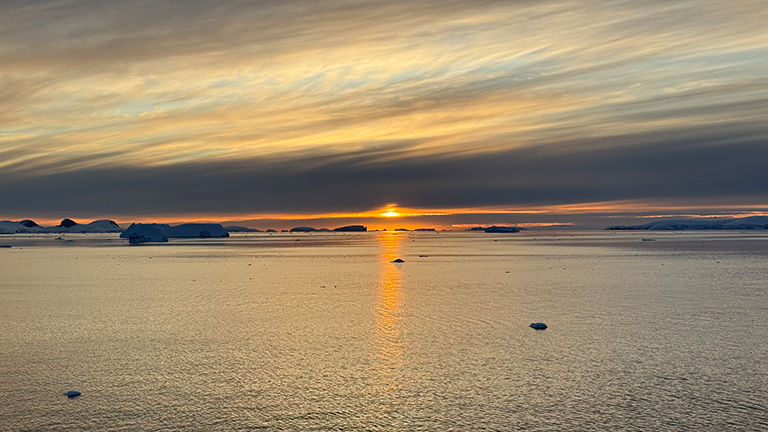 Vivid sunsets and more varied lighting conditions happen during the earlier and later months of the season, a potential draw for photography lovers.
Photo Credit: 2026 Kelly Rosenfeld“At the shoulders of the season, you actually have a sunset, and you get these pinks and oranges [across the sky],” Hernar explained. “The light down here is so different — it’s spectacular.”
Icebergs are also highly concentrated early in the season, as winter’s pack ice begins to break up.
When it comes to wildlife, October to November is a slightly sparser time for whales, as the gentle giants are still in the process of migrating south. Seals, penguins and other birds, meanwhile, are in the midst of their spring mating, so visitors are unlikely to see babies yet.
Mid-Season, December – January
Mid-summer brings the highest average temperatures (roughly 28-39 degrees), and the days begin to elongate, reaching up to 20 hours of sunlight. Warmer weather results in some snowmelt, varying the landscape as rocky cliffs peek out from the white cover of snow and ice.
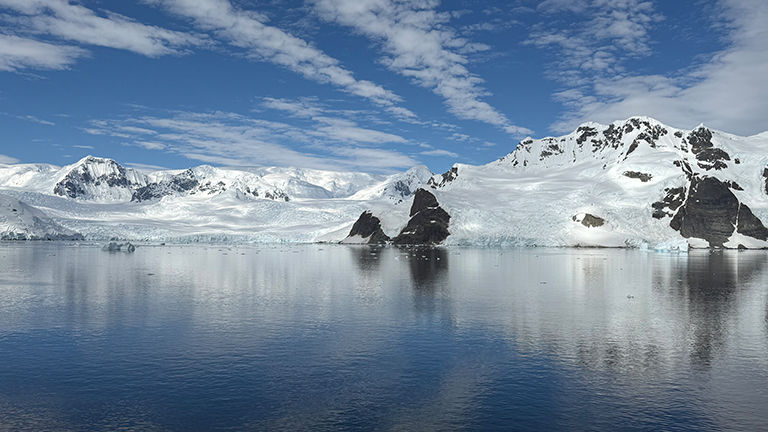 As winter’s snow melts, the landscape becomes more varied.
Photo Credit: 2026 Kelly RosenfeldGlacier calving (when chunks of ice break off with a thunderous roar, sometimes creating icebergs) starts to happen more often. It’s a dramatic phenomenon that many visitors hope to witness.
This is also the period Hernar recommends for seeing penguin chicks soon after they have hatched. Chances of seeing penguin “highways” — paths forged through the snow as the creatures waddle their way from sea to nest and back again — also increase. Seals and their young pups are another possibility, along with a steadily growing number of whales.
Hernar’s favorite moments of the season fall within this timeframe.
“Christmas voyages or early January would be my favorite [time to visit],” she said. “You still have snow, and I enjoy that it still gets a little dark in the evenings. I also really like the little baby penguins, and you get the whales.”
Late Season, February – March
By late summer, whale season has hit its peak: Warmer weather (with average temperatures of 28-36 degrees) brings an abundance of krill, drawing a wide variety of whales in high numbers. (During my February trip, I could hardly look out at the horizon without spotting at least one whale — and often more — at any given time.) With the possibility of seeing species including humpback, minke, orca, southern right and more, this is prime time for whale-watching enthusiasts.
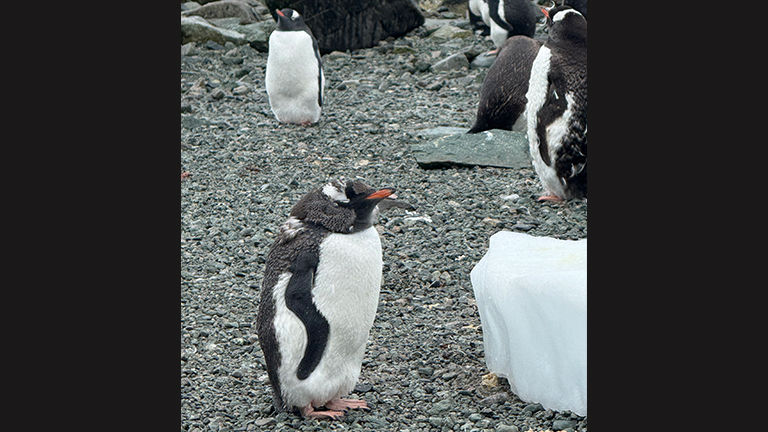 Penguins stay on land while they molt, waiting for their new batch of waterproof feathers to grow in.
Photo Credit: 2026 Kelly RosenfeldIt’s also a unique time in the penguin colonies, as the birds complete their molting season: an annual period where penguins lose their old, worn-out feathers and grow a new batch, resulting in some adorably scraggly looks. It’s a good period for seeing well-worn penguin highways, as well, though the surrounding snow will be sparser (and dirtier, with a stronger odor on warm days). The season’s babies are also likely to be in their adolescent phase now, with some still sporting their fluffy feathers.
“At the end of the season it can look very bare,” Hernar said of the environmental changes during these months.
The diminishing snowpack at this time of year can also mean snow-based activity options are not guaranteed to operate.
But, as the season draws toward its end and the days begin to shorten once again, spectacular sunsets make their return, casting a colorful glow over the sea and ice late into each magical evening.
