For years, most Mongolia itineraries treated the country’s capital city of Ulaanbaatar as an arrival point rather than a destination — a place to catch up on sleep before heading into the countryside for horseback riding, luxury ger tent camps, camel treks through the Gobi Desert and visits with nomadic families.
But now, the capital is becoming a more compelling stop in its own right.
Last year, United Airlines became the first U.S. carrier to offer service to Mongolia, launching a flight between Tokyo's Narita International Airport and Ulaanbaatar that can be booked as a single itinerary from dozens of U.S. cities. At the same time, a wave of new openings — including the luxury Ayan Zalaat hotel and the Chinggis Khaan National Museum — has transformed the city into a destination rather than simply a jumping-off point.
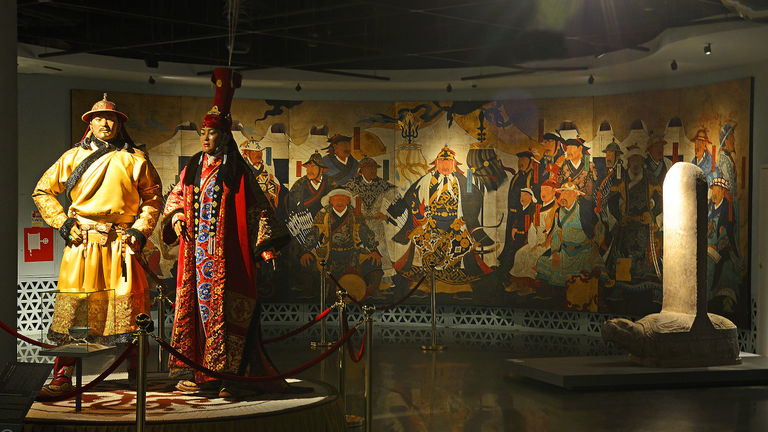 Clients can learn about Mongolian history at Chinggis Khaan National Museum, which opened in 2022.
Credit: Credit: 2026 Pecold/stock.adobe.comAdd in a dining scene that spans traditional Mongolian fare, Korean barbecue, Japanese sushi and an impressive cafe culture, it's easy to justify spending two or three days in Ulaanbaatar before heading into the countryside.
For clients seeking a cultural adventure in East Asia interspersed with upscale offerings, here’s where to eat, sleep and play in Ulaanbaatar.
Where to Play
Suggest travelers start at the Chinggis Khaan National Museum. Opened in 2022 just off Sukhbaatar Square, the nine-story institution tells the country’s history from a Mongolian perspective, tracing the story of the steppe from prehistoric cultures and the Xiongnu Confederation through the rise of Chinggis Khaan (also known as Genghis Khan) and into the modern republic. Inside, clients will find elaborately decorated saddles, imperial seals, centuries-old Buddhist sculptures, embroidered royal robes and one of the museum's prized possessions: a copy of Guyuk Khan's letter to Pope Innocent IV. Even if museums aren't typically your clients’ first stop, this one provides invaluable context for the rest of their journey through Mongolia.
Next, have them step outside and into Sukhbaatar Square, the city's civic heart. Anchored by the Government Palace and its monumental statue of Chinggis Khaan flanked by his son Ogedei and grandson Kublai, the square is where locals gather for festivals, concerts and evening strolls.
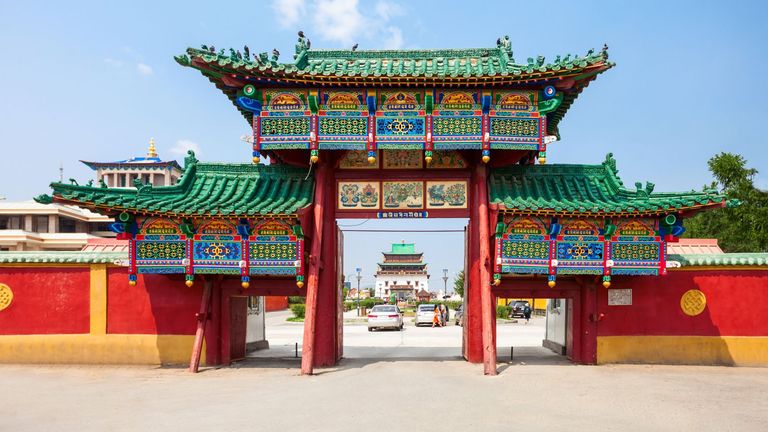 The active Gandan Monastery dates back to the early 1800s.
Credit: Credit: 2026 saiko3p/stock.adobe.comA short drive away, Gandan Monastery (also known as Gandantegchinlen Khiid) offers a quieter counterpoint. Founded in 1809, it's Mongolia's largest active Buddhist monastery and one of the few to survive the Stalinist purges of the late 1930s. Hundreds of monks still live and study here, and visitors can observe prayer ceremonies before stepping inside the temple that houses the towering 85-foot gilded statue of Migjid Janraisig, rebuilt after the fall of communism.
Many travelers don't realize that Mongolia is home to one of the world's most important dinosaur fossil sites until they visit the National History Museum, which merged with the Central Museum of Mongolian Dinosaurs in 2019. The collection includes towering skeletons, fossilized eggs and specimens recovered from the Gobi Desert, but the museum also tells the remarkable story of Mongolia's efforts to repatriate fossils that were illegally smuggled overseas and sold at auction.
Recommend clients save some time for shopping, too. Mongolia produces some of the world's finest cashmere, and the six-story State Department Store remains the easiest place to compare dozens of local brands under one roof. Travelers looking for investment pieces should also stop by Gobi Cashmere's flagship store, where the country's best-known manufacturer sells everything from lightweight travel scarves to beautifully tailored coats. And Mary & Martha Mongolia specializes in fair-trade felt ornaments and handcrafted home goods made by female artisans across the country.
Where to Eat
One of the biggest surprises for first-time visitors is just how international Ulaanbaatar's food scene feels. Alongside restaurants serving hearty Mongolian classics, clients will find everything from French pastries to American-style burgers.
For Mongolian cuisine, Asiana Central Restaurant is an excellent introduction to local dishes such as buuz (steamed dumplings), crispy khuushuur (fried meat pastry), rich bone broths and slow-cooked lamb. It's a polished take on the country's culinary traditions without feeling like it's performing for tourists. The menu also branches into Chinese and Japanese dishes — a reflection of the cross-cultural influences that shape Ulaanbaatar’s dining scene.
Korean food is especially popular in Ulaanbaatar, thanks to decades of close cultural and economic ties between Mongolia and South Korea. Seoul Restaurant is a good place to experience it, with tabletop barbecue, bibimbap and a sizable spread of banchan (small side dishes).
Coffee culture is also flourishing in Ulaanbaatar, with a slew of independent cafes such as Donnie’s and Cafe Camino offering laid-back environments to spend an hour between sightseeing stops.
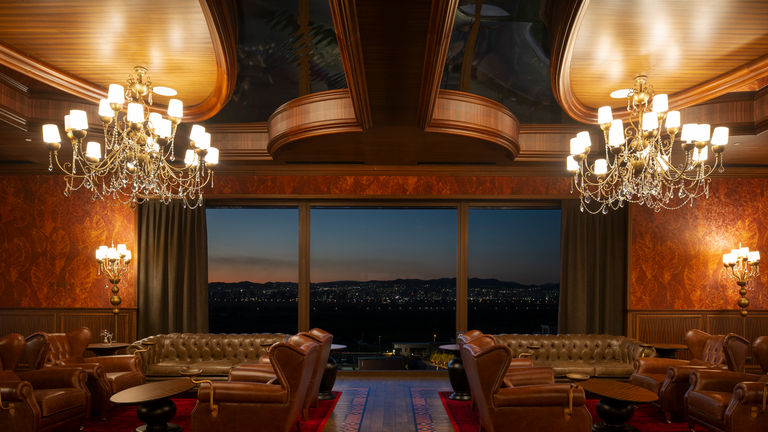 Send clients to the Smokey Room in the Ayan Zalaat hotel to sip whiskey with a view.
Credit: Credit: 2026 Ayan ZalaatThe recently opened Ayan Zalaat hotel has quickly become one of the city's more compelling dining destinations. Rather than centering on a single signature restaurant, the property offers a collection of distinct concepts, including handmade pasta and fine wines at Roma Ristorante, teppanyaki and sushi at Nipponian Room, Chinese cuisine ranging from Peking duck to excellent spicy Sichuan chicken at Lost in China, and locally sourced and imported steaks at 8 Ounce Steakhouse. Even travelers staying elsewhere may find it worth making the trip here for dinner — or lingering afterward over a whisky in The Smokey Room or a glass from the hotel's subterranean wine cellar.
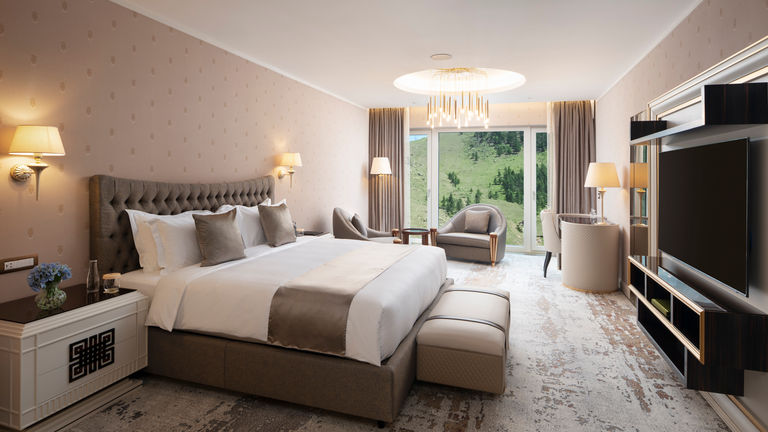 A junior suite at Ayan Zalaat
Credit: Credit: 2026 Ayan ZalaatWhere to Sleep
Opened in January 2026, the 32-room Ayan Zalaat property brings a new level of luxury to Ulaanbaatar, with contemporary interiors that incorporate Mongolian materials and craftsmanship without leaning on cliches. Rooms are spacious, featuring floor-to-ceiling windows with views of Bogd Khan Mountain or the city skyline.
Beyond a full menu of treatments, the Ayan Spa boasts an indoor pool, sauna, steam room and fitness center, while other facilities include a two-lane bowling alley, a game room, a karaoke room and a private cinema.
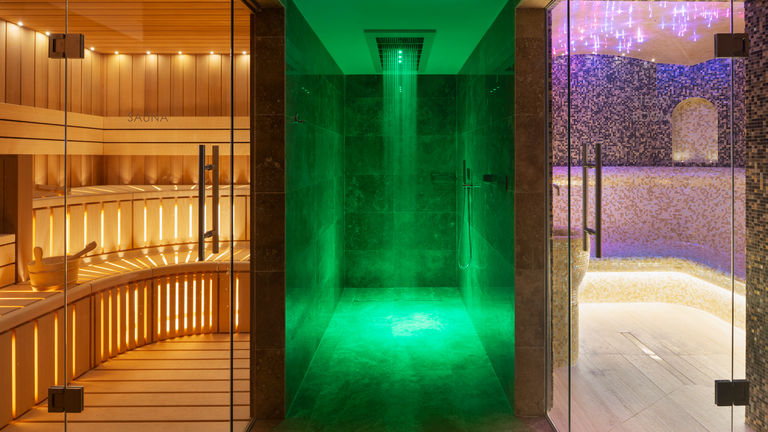 Ayan Zalaat offers just 32 rooms and the full-service Ayan Spa.
Credit: Credit: 2026 Ayan ZalaatThe intimate on-site Ayan Theatre hosts regular performances of traditional throat singing, long song, folk dance and music played on instruments such as the horsehead fiddle. It's an easy way for travelers to experience some of Mongolia's most distinctive performing arts without having to seek out a separate cultural show in the city.
While Ayan Zalaat leans boutique, Shangri-La Ulaanbaatar delivers the familiarity of an international hotel brand, with 290 generously sized rooms, multiple restaurants and bars, and a location within easy walking distance of Sukhbaatar Square. Connected to the Shangri-La Centre, the property offers guests cafes, designer shops and one of the city's best-stocked supermarkets just downstairs.