Like just about everything else, luxury travel is subjective. For some, it means exquisite and personalized service. Others want incomparable privacy and peace.
For me, there’s luxury in nature, and luxury in the unexpected.
One example: In Big Sur, one of California’s most remote regions, Treebones Resort offers unfussy comfort, access to pristine wilderness and, dumbfoundingly, an incredible omakase sushi experience. After driving hours to reach the glamping property — by car, it’s 4.5 hours from my home in Los Angeles — superlative bites of kohada (of the herring family) or chutoro (tuna belly) and a dessert of apple poached in sake will surprise most guests, and in the best of ways.
But sushi is not the only thing to admire about Treebones. Here’s what else travelers can expect at the property, from exemplary sustainability efforts to incredible views.
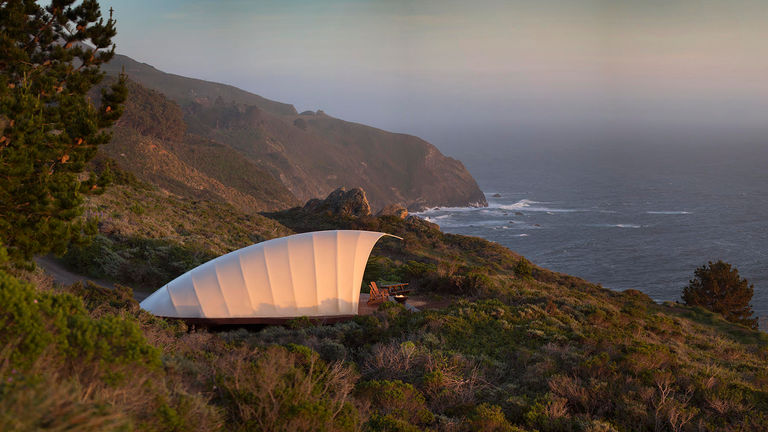 With epic views and en suite bathrooms, Autonomous Tents are the most luxurious way to stay at Treebones.
Credit: 2026 Treebones ResortOn-site Details to Know
Since opening in 2004, Treebones Resort has helped guests rest and play in Big Sur in a sustainable way. A small collection of furnished, solar-powered yurts on stilts has grown to include 16 such accommodations over the years. There’s also a 3D-printed tiny house and two Autonomous Tents. The latter are visually awesome — giant clamshells that peek luxuriously out to sea, with their own decks and firepits. While experienced campers will love distinct overnight options such as the Human Nest and Twig Hut, the Autonomous Tents are surely the top pick here for glampers; guests need only exit their pristine corner of the property to dine, or perhaps to take a dip in the pool. The property generates its own electricity and is fully off-grid.
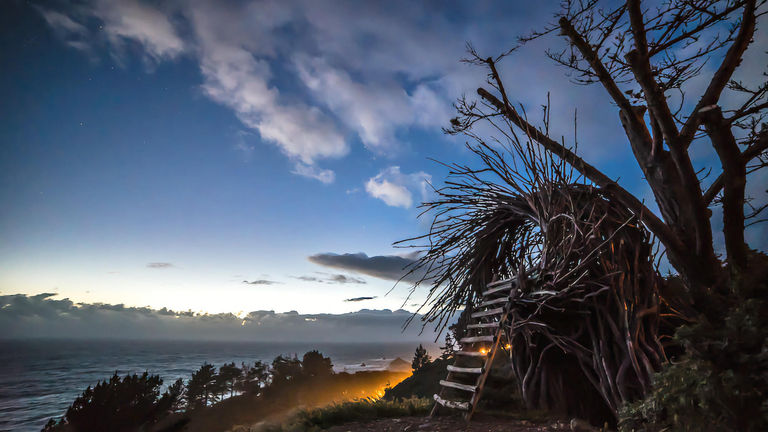 The Human Nest is a very special camping spot on the property.
Credit: 2026 Kodiak GreenwoodAfter more than 20 years in operation, Treebones remains family-run. Owners John and Corinee Handy are at the lead, and they benefit from a crew of gregarious workers, most of whom live on the property. This is their home, and that alters the vibration of the guest experience. Every day, the team welcomes visitors to a piece of the Earth that they collaboratively steward with care, attention and love.
Guests are encouraged to connect with the crew, fellow travelers, nature and themselves. There are no televisions and minimal-to-no Wi-Fi access or cell service (except for in the lodge, where my husband and I would sit to connect to the internet every so often). Mostly, guests spend their time talking over brilliant sunsets, delicious meals and property strolls.
Yurt Living
Treebones welcomes guests ages 13 and up, and that’s more about serenity than safety — though the whole place overlooks the Pacific Ocean, there aren’t sheer bluffs to stress over. My husband and I stayed three nights in a yurt in the resort’s Yurt Village, where you can hear your neighbors if voices are at mid-range volume or louder. (If my 6-year-old had been present, too many folks would have had to listen to her roaring her toy cars around or working out the kinks in her knock-knock jokes.)
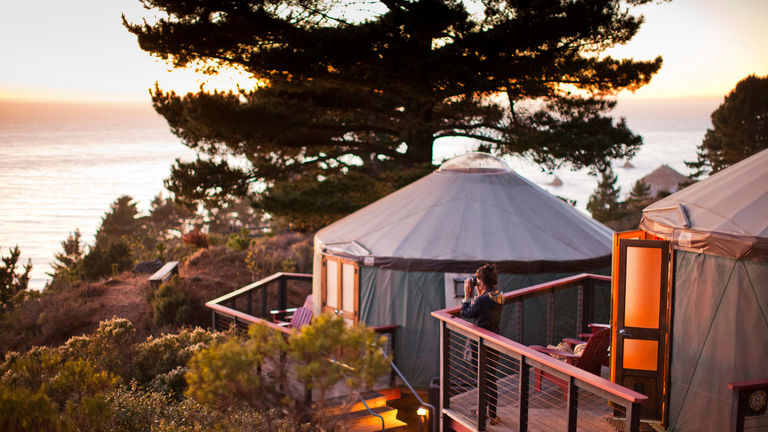 Yurts face west and have their own decks for sunset and star viewing.
Credit: 2026 Kodiak GreenwoodIn early November, the gas fireplace in our yurt kept our evenings cozy, and an overhead fan helped move the air mid-day, when full sun heated the space pretty quickly. Our window and deck looked directly to the ocean, and our king-size bed was supremely comfortable. We had a sink in our yurt, good for brushing our teeth and washing faces. A communal bathroom with showers, toilets and more sinks was a two-minute walk away — this was the only (surmountable) challenge we faced during our stay, as we seem to have reached the age where a midnight trip to the bathroom is inevitable. Note: Autonomous Tents and the tiny home have their own private ensuite bathrooms.
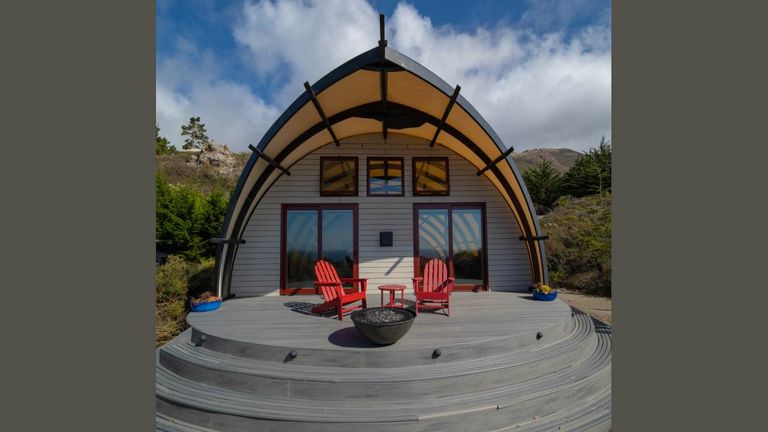 The private furnished deck of an Autonomous Tent
Credit: 2026 Treebones ResortWe read in our yurt, took daily naps, wrote at our dining table and played a game of Scrabble over wine one evening after dinner. When the wind picked up wildly another night, canvas walls meant we heard it howl through the branches of nearby trees — a natural white noise we enjoyed.
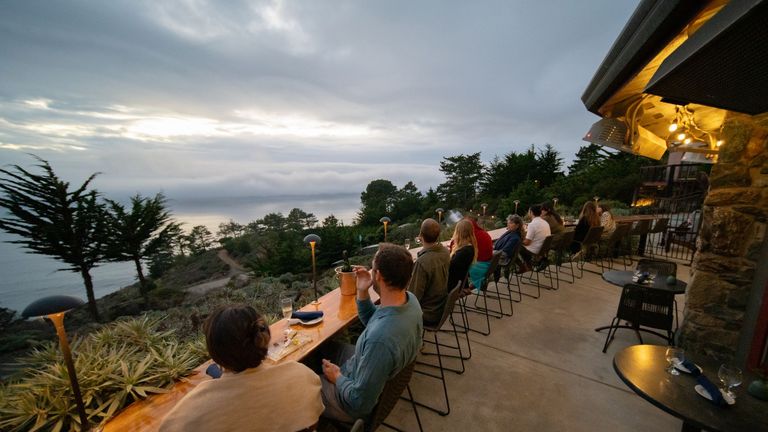 The Lodge Restaurant has an epic outdoor bar table from which diners can watch the sunset over a meal or a glass of wine.
Credit: 2026 Treebones ResortDining at Treebones Resort
The resort’s main lodge structure houses a check-in counter, a gift shop and a mini marketplace (think: wine to take back to your yurt, snacks, ice cream bars) and The Lodge Restaurant. The latter has floor-to-ceiling windows facing west, a narrow outdoor bar ideal for a sunset wine session and doors to the pool deck (which, of course, also overlooks the Pacific). Three meals a day are served at the lodge restaurant: a complimentary continental breakfast (the housemade granola is lovely), a casual lunch and a pre-fixe, four-course dinner. Chef Kyle Walker presides over the garden-to-table menu, and regional meats and fish and cheeses help make this a special, from-scratch dining experience.
 An organic on-site garden produces vegetables, herbs and more for Treebones chefs.
Credit: 2026 Treebones ResortWe had dinner here twice, digging into dishes such as mushroom dumplings in a smoky chicken broth, roasted cabbage dressed in salsa macha, and pepitas and wagyu bavette steaks cooked to perfection in a wood-fired oven just outside. From that same oven also came an incredible fungi pizza that could have easily served four hungry glampers. Inside, a fire roared in the lodge fireplace. We loved lingering here. Each night, we hung out an extra hour, ordered the organic garden teapot with chamomile, rose petals and spearmint from the Treebones garden and chatted or read.
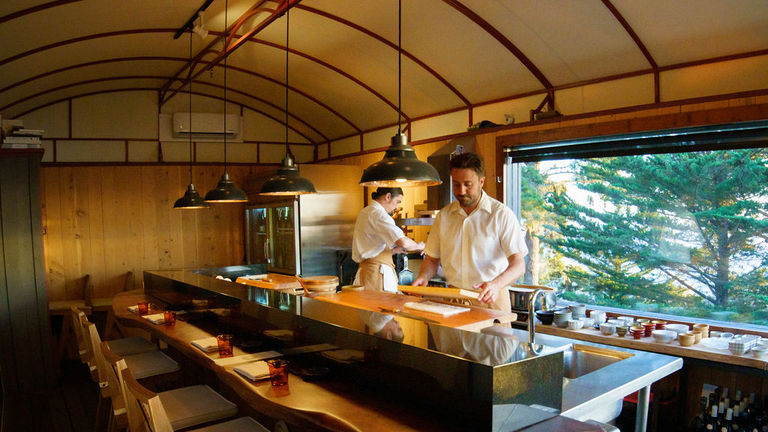 Wild Coast Sushi has just eight seats and serves an incredible 18-course omakase dinner.
Credit: 2026 Two Feathers CollaborationJust outside the lodge is Wild Coast Sushi, an eight-seat sushi bar helmed by executive chef Yancy Knapp and the talented DJ Underwood. Here, guests delight in an 18-course omakase (or chef’s choice) experience — and I haven’t had this much fun dining out in quite some time. It’s an intimate setting — we chatted with the chefs and with the couple to our right, who were tent camping somewhere down Highway 1 — and I’m charmed by the rarity of that.
I would have never been able to put my pen down had I attempted to record every detail of our meal, so here is what I did manage to note down. There was pickled pampas grass (the non-native and invasive species is increasingly prevalent on this stretch of the California coast, so this is one clever reaction to that) and grilled cod and sustainable oysters sourced from Morro Bay (less than 60 miles south). Luna Koshihikari rice grown in the Sacramento Delta was the base for many bites of nigiri. A teacup of miso soup warmed the belly.
Yancy sliced fish artfully, then later laid each piece atop a hand-formed bed of warm rice before serving the bites one by one to diners. Meanwhile, Underwood grated fresh wasabi (grown in Half Moon Bay) with a musician’s rhythm, and introduced different sakes and teas, many imported from Japan, to guests. When our meal ended, I marveled that Yancy and Underwood would repeat the whole thing again — there are two nightly seatings at Wild Coast, five nights per week.
Where Is Treebones Resort, and What's Nearby?
Big Sur is expansive and remote, stretching along the California coast for 90 meandering miles — if travelers are looking to “slow down,” that’s pretty much requisite here. The Pacific Coast Highway is Big Sur's main thoroughfare, and as drivers traverse it, the sea is ever-present.
From the south, Treebones visitors drive by classic California sights such as Hearst Castle and San Simeon elephant seal rookery. A stop for lunch or a stretch break in Cambria is another good idea. From the north, the (supremely charming) town of Carmel-by-the-Sea is considered the entryway to Big Sur.
Between Carmel and Treebones, travelers will find iconic Big Sur spots, including Nepenthe, an ocean-view restaurant open since 1949, and the famous McWay Falls. During our stay, though, we kept closer to the resort. Short drives delivered us to Lime Kiln State Park, where a few kilns still stand tall (remnants of a bygone industry), surrounded by grand redwoods and trails. We also took the path and long staircase down to Sand Dollar Beach, a windswept stretch of sand with big waves and rocky outcroppings.
I love to be out in nature; the truth is that Treebones does a good job “being” in nature already. Reading on our deck to the tune of distant ocean waves, staring at the stars in the dark of night and watching the sunset behind a masterful sushi chef married the outdoors and comfort oh-so well.
