The yellow cabs in Kolkata, India, are disappearing, slowly being phased out by court order due to age. Boxy, battered and unmistakable, the distinctive Hindustan Ambassador taxis — India’s answer to London’s black cabs — remain one of the lasting images from my guided journey through Northern India, from Kolkata to Delhi, with Explore Worldwide.
India was my first introduction to Explore, a U.K.-based small group tour operator that is well-established in the U.K. and Australia, but relatively new to the U.S. market. Explore offers more than 350 itineraries across 100 countries, focusing on immersive, sustainability-minded travel.
“Traveling with a smaller group allows for a more authentic, local flavor of a destination,” said Laura Dewar, senior public relations and communications manager for Explore.
This approach offers greater flexibility, making room for impromptu moments — such as squeezing into a classic local cab for a cross-town ride — that aren’t feasible with a large group.
The Small Group Approach
I joined a condensed version of Explore’s 15-day Kolkata to Amritsar itinerary. As with all Explore tours, accommodations, some meals, private drivers, local guides and a dedicated tour leader were included, allowing the focus to remain on the experience rather than logistics.
Each itinerary is led by an in-country guide who stays with the group from arrival to departure, providing cultural context, historical perspective and logistical expertise. Our tour leader, Neha Trivedi, seemed perfectly suited to the role, able to smoothly navigate the trains, tuk-tuks, taxis, minibuses and boats that were a part of our journey.
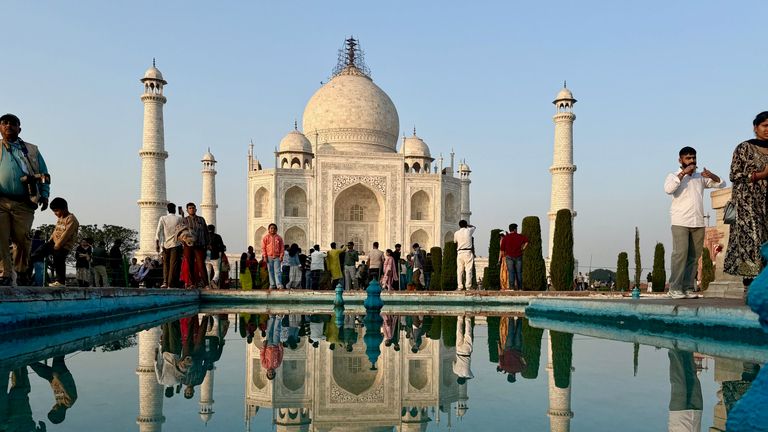 The Taj Mahal
Credit: 2026 Erin GiffordTrivedi moved confidently through crowded train platforms and narrow alleys, always mindful of each person in the group. She stayed one step ahead of the itinerary and adjusted plans in real time, even monitoring weather and air quality to help determine the best time of day for our Taj Mahal visit.
India’s rail system deserves special mention. We traveled by train three times, including an overnight journey from Varanasi to Agra in a second-class sleeper carriage. Berths folded down from the walls, sheets were handed out, and the night filled with the sounds of metal wheels and soft, rumbling snores. Sleep was fleeting, but the experience felt like a rite of passage.
Finding Flavor Along the Way
I don’t consider myself a foodie, which made my growing appreciation for Indian cuisine all the more unexpected. Meals were often ordered family-style, plates arriving one after another, filling the table with the aromas of cumin, coriander, saffron and turmeric.
One especially memorable meal was a traditional thali (Indian full meal) at Shree Shivay Thali Dining in Varanasi. Small bowls of lentils, vegetables, yogurt, cucumbers and chutneys were set down one by one on a wide metal platter, all meant to be mixed and matched. It was like Indian tapas.
Then there was the masala chai: Although it was new to me when I arrived, it soon became a twice-daily habit. Chai stands dotted street corners, markets and train stations, each offering a slightly different balance of ginger, cardamom and creaminess. The ritual became a familiar pause amid constant motion.
 Hindus bathe, pray and perform ritual cleansing in the waters of the Ganges River in Varanasi.
Credit: 2026 Erin GiffordSacred Places and Spaces
Cultural and spiritual experiences anchored the itinerary. In Bodh Gaya, we visited Mahabodhi Temple, where Siddhartha Gautama, considered the founder of Buddhism, is believed to have achieved enlightenment beneath the Bodhi tree. The fourth-generation tree still stands, its branches shading monks seated below in quiet meditation and prayer.
Varanasi left the deepest impression on me. Before sunrise, we boarded a small boat on the Ganges River. Hindus bathed and prayed, performing ritual cleansing in waters believed to wash away sins. We passed Manikarnika Ghat, one of Hinduism’s most sacred cremation grounds, where funeral pyres burn continuously, and cremation is believed to release the soul from the cycle of rebirth.
Meaningful Encounters Beyond the Highlights
Beyond brochure highlights, experience-driven moments added texture and depth: a home-hosted Bengali dinner with art collector and culinary host Bomti Iyengar; a visit to India’s largest flower market during wedding season; and lunch at Sheroes Hangout, a cafe run by acid-attack survivors, where we listened to stories of resilience as henna designs dried on our hands.
“The authentic and immersive experiences paint a true picture of a place,” said Explore's Dewar. “We believe in spending as much time with locals as possible and being respectful of the people, places and wildlife.”
That philosophy extends to animals impacted by exploitative wildlife tourism.
One of our last stops was Wildlife SOS, a rescue center providing lifelong care for elephants, bears, leopards and other animals once abused by tourism. Outside each enclosure, placards share the animals’ histories — their rescues, favorite foods and even quirks.
“We want travelers to leave informed and inspired,” Dewar said. "This visit to Wildlife SOS really stays with visitors.”
It certainly stayed with me. I’m not much of a souvenir shopper, but I left the gift shop with an armload of elephant-themed Christmas presents, each purchase supporting the sanctuary’s work. I also left with a renewed appreciation for travel that goes beyond sightseeing to inspire reflection and positive impact.
