Hyphenation is heritage in the Caribbean. The most accessible of the region’s hyphenated Caribbean-French destinations is St. Martin, which shares an island with Dutch St. Maarten. While there are many reasons to visit St. Martin, it’s a safe bet that clients will be choosing the destination for its sophisticated mix of Gallic culture and Caribbean cool.
“Authentic French Creole culture permeates all facets of life on French St. Martin,” said Steve Bennett, editorial director of Uncommon Caribbean and a frequent visitor to St. Martin. “Yes, you have the modern resorts and kitschy shops and bars found in other well-traveled corners of the Caribbean. Here, though, a palpable, intoxicating undercurrent of Creole spice extends to even the most touristy attractions, elevating the visitor experience for adventurous, culturally curious travelers.”
Restaurants
What actually constitutes French-Caribbean culture? The No. 1 element would have to be the cuisine, which combines French techniques with Creole and West Indian flavors, with many dishes utilizing locally sourced ingredients.
Many of the best restaurants on St. Martin are located in the town of Grand Case, which is something of a dining destination. Family-style Villa Royale offers Creole cuisine that is easy on the budget and popular with locals. Seafood dominates the menu, although meat dishes include traditional curried goat and steak with Creole spices. They also have a kids’ menu.
L’Auberge Gourmande, also in Grand Case, has the distinction of being housed in a historic Creole house. This elegant venue, celebrated for its wine list, is a good choice for those who want an elevated dining experience. There’s terrace seating for travelers desiring an alfresco Caribbean meal.
Le Ti Bouchon is located off the tourist trail, in Cul de Sac, near the border with St. Maarten. The restaurant is housed in a restored Creole cottage. If charismatic owner Momo is on-site, advise your clients to reach out to him for wine pairing suggestions. Caribbean flavors on the menu include starfruit chutney, coconut broth and wahoo (a type of fish) ceviche. Dishes range from Creole and Cajun to French-style cooking.
Seeking out dining establishments in historic Creole buildings is one way to enjoy the French-Caribbean ambiance. But to access colonial history, drop into small barbecue restaurants with their roots in the island’s African slave culture.
In my travels in the Caribbean, I’ve never seen anything quite like the stretch of roadside and beachside eateries called “lolos” in Grand Case. These simple restaurants serve grilled chicken, barbecued ribs and other simple fare. Lolos have their genesis in St. Martin’s colonial period in the 17th century, when African slaves prepared their own food in open-air kitchens on plantations.
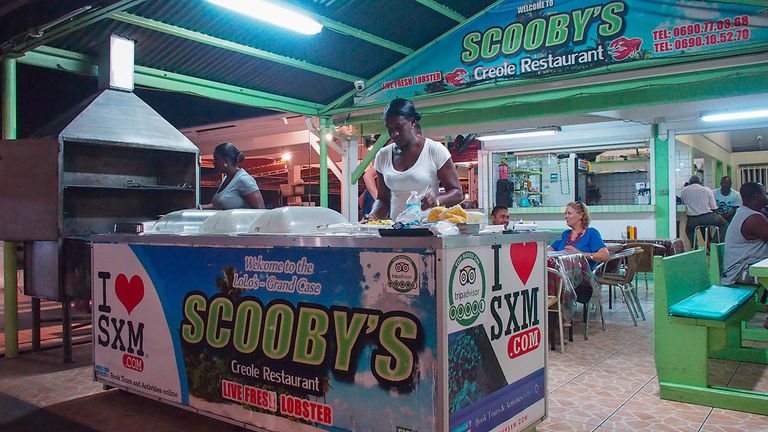 Try simple Caribbean fare at local “lolos,” such as the one pictured above.
Credit: 2018 Steve Bennett/www.uncommoncaribbean.comSt. Martin isn’t an inexpensive island to begin with, but a few meals at the destination’s lolos will help stretch your clients’ vacation dollar even further. Lolos aren’t confined to Grand Case, and travelers will find them sprinkled around the island. I would have been happy to build a weeklong vacation centered on catching down-home cooking at one after another of the lolos on Grand Case Beach.
Music
Another French-Caribbean aspect of St. Martin’s culture is the music known as zouk, which still has a way to go before catching on in the U.S. It’s a lively, fast-paced style of music that has some similarities to soca (a music genre that originated in Trinidad and Tobago) and jump up (a subgenre of bouyon music that is a mix of traditional and modern Caribbean music). Zouk translates to the Creole word “shake,” and the music is synonymous with a partying good time.
Language
While French and French-based patois (provincial speech) are common on St. Martin, English is also widely spoken, making it easy for non-French speakers to communicate in shops, resorts and restaurants.
Historic Buildings
Given the centuries of hurricanes sweeping through St. Martin, there is a dearth of historic buildings still standing from the destination’s colonial period. The most impressive is sturdy Fort Louis, which was built in 1789 as a defense against marauders entering Marigot Bay. One of the qualities most Caribbean forts share is awesome sea views, and Fort Louis is no exception. Visitors to the fort will be afforded vistas overlooking Marigot Bay, Simpson Bay and the island of Anguilla, which lies 12 miles away.
Hotels
Small hotels on St. Martin offering Creole charm include the 23-room boutique hotel L’Esplanade, and the 65-room Esmeralda Resort, which has Creole-style villas.
Accessing French-Caribbean culture during a visit to St. Martin will be an exercise for your clients’ senses rather than their intellect. An expertly prepared Creole meal, a snatch of zouk on the airwaves, the lilt of Creole patois — all of these delights contribute to the magic of a St. Martin vacation.
The Details
St. Martin Tourist Office
www.stmartinisland.org
