I heard the Blue Devils long before I ever saw them.
I was wrapping up a meal of dense “bake” bread and stew at Aunty Julia’s, a roadside eatery in the Trinidadian town of Paramin, when I heard a rumble in the distance. As it drew closer, I realized it was the percussive sound of a drum that appeared to be fashioned from an old cookie tin, its rhythm occasionally punctuated by piercing whistles and shrill shrieks.
I ran out to the street to see a band of pitchfork-wielding dancers painted entirely in blue, with giant horns jetting from their heads. Some had wings, others had snake-like tails that thumped on the ground menacingly as they drew nearer. Every so often, one of the dancers would stop, take a swig from a plastic bottle, and then blow out a fireball so big that I could feel its heat from several feet away. These were the Paramin Blue Devils, a group of artists who are keeping a traditional Trinidadian Carnival devil character alive.
This dance of the devils was one of many culturally immersive highlights during my week in Trinidad and Tobago with Hadco Experiences, a DMC that works extensively with travel advisors in the North American market. While the Blue Devils traditionally perform during Carnival, Trinidad’s traditional pre-Lenten festivities, Hadco can arrange experiences with the diabolical squad throughout the year.
The Hadco Experience
Founded in 1992 by three brothers after the death of their father, Hadco began its foray into the travel world with hospitality management. The company is the concessionaire for the ecolodge at Asa Wright Nature Centre, a longstanding birding destination in Trinidad and Tobago. Hadco is also the owner-operator of Mt. Plaisir Estate Hotel and Pawi Lodge in Grand Riviere, an area known as the densest leatherback turtle nesting site on Earth.
Although the company's core experiences focus on Trinidad and Tobago’s most famous draws — birding and leatherback turtles — Hadco is also leading the way in showcasing the dual-island Caribbean nation beyond its natural wonders, working with agents to craft bespoke packages that balance clients’ niche interests (such as birdwatching) with cultural programming.
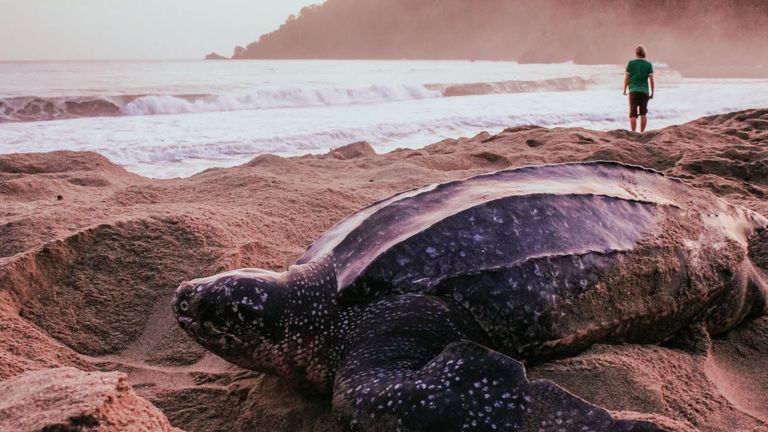 Trinidad and Tobago’s biggest attractions are birding and leatherback turtles.
Credit: 2026 Hadco Experiences“People want to contribute to a place that feels authentic,” said John Hadad, co-founder of Hadco Group, the conglomerate that runs Hadco Experiences. “They want to feel that they’ve experienced community — feel that they’ve experienced the heart and the lifeblood of a country — rather than just skimming the surface.”
One With Nature
While Hadco emphasizes the importance of making local culture accessible to clients, the company also maintains core offerings focused on Trinidad and Tobago’s ecological draws. At Asa Wright Nature Centre, I descended deep into a cave to see oilbirds, an elusive nocturnal species that feeds primarily on oil palm fruits. In Grand Riviere, I hiked to jungle waterfalls and spotted a Trinidad piping-guan (known locally as a “pawi”), a critically endangered turkey-like species that's one of the island’s big draws for birders.
For clients keen on seeing gargantuan leatherback turtles, the period between March and August is ideal for a visit to Trinidad. During this nesting season, thousands of the endangered marine reptiles flock to the beach in front of Mt. Plaisir Estate Hotel to lay their eggs. Guests are invited to help protect hatchlings from seabirds, so that the new-to-the-world turtles can make it safely into the ocean.
Musical Immersion
While I was delighted to experience Trinidad’s wildlife, it was a desire to experience the local culture that drew me to the island. The folks at Hadco wasted no time getting me into the spirit of things. During my first full night on the island, I attended a fete, one of dozens of pre-Carnival parties fueled by drinks, food and plenty of energetic soca (a contemporary descendant of Trinidad’s famous calypso music).
I also received an immersive introduction to Trinidad and Tobago’s national instrument: the steelpan drum. Originally fashioned from upcycled oil drums that were widely available on the oil-producing island, steelpans have grown to become a symbol of the country’s culture. We spent one evening watching orchestras with upward of 100 players playing in perfect harmony. Another morning, we toured the factory of the Musical Instruments of Trinidad and Tobago Company. With this Hadco-exclusive experience, we learned about steelpan production and got the chance to play the melodic instruments ourselves.
Culinary Culture
Throughout my trip, Hadco also highlighted Trinidad and Tobago’s culinary traditions, which reflect the nation’s mix of African and East Indian heritage. I sampled a street-food staple known as doubles (curried chickpeas served with fry bread), snacked on chow (a sweet-and-savory fruit salad made with garlic and chadon beni, a type of local cilantro), and ate plenty of "buss up shut” Paratha roti (flatbread), which is best served with curry.
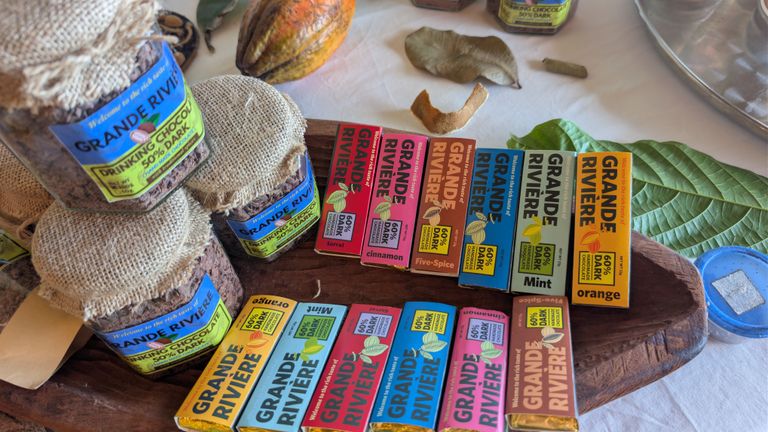 Travelers can enjoy artisanal chocolate tasting with Grand Riviere Chocolate Company.
Credit: 2026 Margot BiggAnother highlight of my trip with the operator was an artisanal chocolate tasting with Grand Riviere Chocolate Company. I learned about Trinidad and Tobago’s historic and contemporary role in the chocolate industry and sampled the island’s own Trinitario cacao, prized for its earthy, floral flavors. My guide also prepared me a cup of cocoa tea, a milky alternative to hot cocoa made from cacao enhanced with sugar and fragrant spices.
I brought some home with me — now, whenever I get nostalgic for Trinidad and Tobago, all I have to do is put on a soca playlist, brew a hot cup of cocoa tea and dream of my next visit.
