Not all Caribbean islands are equal when it comes to welcoming LGBTQ+ travelers. Curacao is one of the clear standouts, as I discovered when my husband and I recently visited for Curacao Pride, an annual LGBTQ+ pride celebration.
The island’s respect for diversity comes naturally, according to Andre Rojer, product development manager for the Curacao Tourist Board. Curacao’s long-standing connection to the Netherlands has shaped a “very open mindset,” he says, noting that many locals study or vacation there. The island’s welcoming attitude toward LGBTQ+ travelers “is not staged,” he adds. “It’s just part of our DNA."
My introduction to the island’s queer-positive spirit began on day one of our visit. After checking into Curacao Marriott Beach Resort, one of the island’s many LGBTQ+-friendly hotels, we headed out with local tour guide Tirzah Statia to explore Otrobanda after dark. The neighborhood, one of Willemstad’s most historic districts, becomes particularly atmospheric in the evening, when its colonial-era architecture glows softly under streetlights.
Our destination was Kura Hulanda Village, a pedestrian-friendly enclave of restored buildings home to interesting shops, galleries and restaurants. There, we strolled to the Bagira art gallery to participate in Sip & Sign, a pride event that provided lots of opportunities to socialize and imbibe while creating signs for the upcoming pride parade. Attendees at Sip & Sign spanned generations, genders and orientations, and the atmosphere was relaxed, social and inclusive — a great way for travelers to meet locals and other visitors.
Parade in Paradise
The Curacao Pride Parade, which took place the following evening, further immersed us in the city’s rainbow-hued vibes. Starting near Renaissance Mall and Rif Fort downtown, the gathering takes place after dark, when temperatures are more comfortable for walking and there’s no need for sunscreen. We ordered cocktails and tapped our feet to music spun by drag queen DJs as the crowd slowly grew on the small plaza.
 Curacao allows LGBTQ+ travelers to connect, socialize and celebrate.
Credit: 2026 Curacao Tourist BoardWhen the parade stepped off, it was larger and more vibrant than I had expected, with live drummers, trumpeters and a massive pride flag carried by dozens of participants. I quickly noticed that there were all kinds of people joining the parade: young and old, and diverse identities, nationalities and orientations.
“It’s not a gay parade,” Rojer would later tell me. “It’s everybody’s celebration.”
As we marched across the floating Queen Emma Bridge, we felt a sense of collective joy as well as the soothing Caribbean breeze.
According to Rojer, Curacao Pride has become increasingly diverse over the years, with participants from around the world.
“You can see people from Curacao with their flags and rainbow flags, and then you see a Brazilian flag, an American flag, a Colombian flag,” he said.
The island’s decidedly international pride scene, he explains, is thanks to a welcoming ambience as well as its geographic location in the middle of the Americas — and its cultural and political links with the Netherlands.
"It's a really cool scene; a celebration of the world in a place where everybody speaks at least four languages,” Rojer said. “It's a melting pot.”
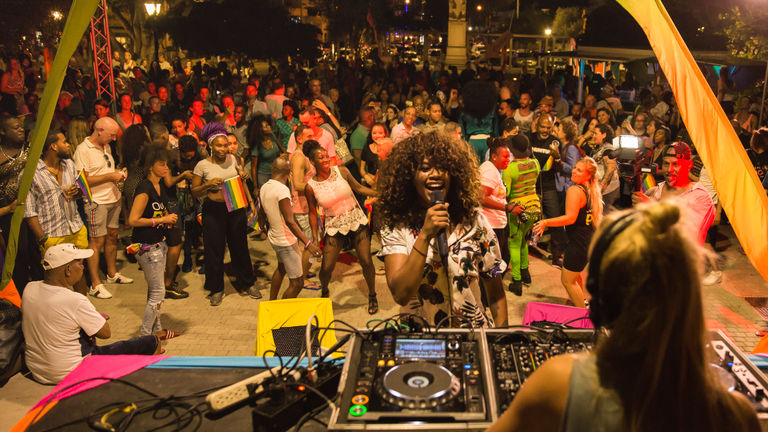 There are various LGBTQ+ events throughout the year for travelers.
Credit: 2026 Curacao Tourist BoardThe parade ended at the plaza near Willemstad’s much-photographed “Curacao” and “Dushi” signs, where live music, drag performances and dancing kept the crowd entertained. The unveiling of a bold new pride mural by Bagira — the Algerian-Hungarian artist whose gallery hosted the Sip & Sign event — added even more visual excitement. Later, we headed to Gaze Bar & Lounge, the island’s only fully LGBTQ+ bar, where revelers spilled into the street.
The Pride weekend concluded the following night with Freskura, the official closing party held at La Coco Jamboo Republica, a hip venue that hosted drag performances, live music and DJs late into the night. By then, we had grown accustomed to seeing familiar faces from earlier events, which made the experience feel even more social.
Year-Round Appeal
Beyond Pride events, Curacao offers LGBTQ+ travelers plenty of opportunities to connect with the local culture and natural beauty throughout the year. One of the most meaningful experiences during my visit was an LGBTQ+ walking tour led by journalist and historian Nelly Rosa, who specializes in local queer history. Her fascinating tours — which can be reserved year-round — highlight queer-owned and -friendly businesses while also tracing the island’s LGBTQ+ history, including early pride efforts, community trailblazers and key locations tied to milestones such as Curacao’s first official same-sex marriage.
Rojer of the Curacao Tourist Board says his advice for travel advisors with Curacao-bound LGBTQ+ clients is simple.
“Push your clients to explore,” he said. “Don't have them stay just at the resort; they'll miss out on so much. Have them rent a car and get out, explore the 40 beaches, 60 dive locations, museums and attractions — and come back full of experiences.”
He lists snorkeling and trying local cuisine among the must-do experiences on the island.
Curacao Pride takes place in early October every year; details about the 2026 event will be announced soon.
