The French Riviera. La Cote d'Azur. The South of France. No matter what you call this alluring French region kissed by the Mediterranean Sea, it’s a byword for glamour, and there’s a good chance it’s currently near the top of your clients’ European wish list.
Timeless instead of trending, the Riviera may be famed for blue water, sun-soaked beaches and super-yachts, but it’s also the home of small seaside towns, working ports and places where daily life still happens at an authentic pace. It’s this combination that makes it such a rewarding place to visit.
While Nice garners much of traveler attention and serves as the de facto hub of the region, the entire stretch of coastline is studded with enthralling locales. The following five Riviera destinations all deliver a different slice of this enduring European paradise, and they are easy to string together by rail or road, making them ideal for clients who want to experience multiple Riviera locales in one trip.
Marseille
The Riviera is more a state of mind than a set-in-stone region with hard borders, and there is debate over what places are “on” the Riviera or simply just “near” it. While many purists argue that the Riviera begins farther east, from a traveler’s perspective, Marseille makes a perfect starting point for exploration.
Energetic and endlessly fascinating, Marseille is the second-largest city in France and offers a tantalizing mix of cultures, cuisines and histories. At the Vieux-Port (Old Port), fishermen sell the day’s catch and vessels ferry travelers to the idyllic inlets of the nearby Calanques National Park and other offshore islands, including Chateau d'If, the historic island fortress that served as one of the settings in Alexandre Dumas’ novel “The Count of Monte Cristo.”
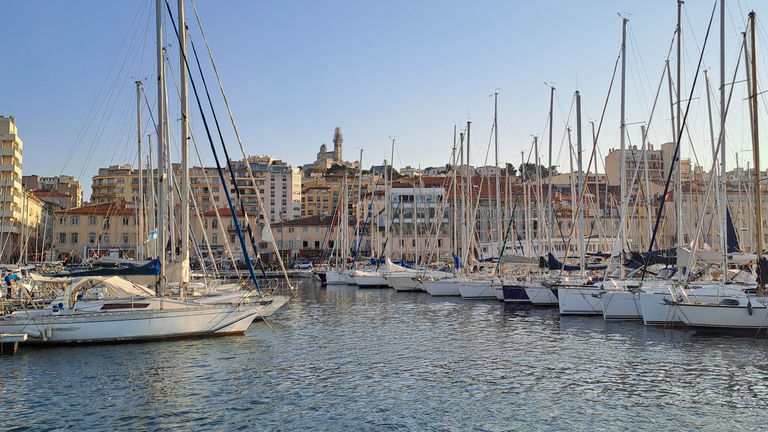 Marseille is the second-largest city in France.
Credit: 2026 Scott HartbeckIn Marseille, hilly backstreets filled with eclectic shops, eateries serving up delicious North African cuisine, and bars pouring beloved local liquor pastis rub shoulders with grand boulevards and urban beaches. Rising above it all is Notre-Dame de la Garde, the basilica that watches over the city and rewards those who make the climb with panoramic views stretching out to sea.
Saint-Raphael
Saint-Raphael sits at the edge of the Esterel Massif, a dramatic landscape of red-rock cliffs and pine forests that plunge toward the Mediterranean.
This town is the perfect Riviera location for clients who like to combine working on their tan and keeping up with cardio. Coastal paths lead from Saint-Raphael toward sweeping viewpoints and tucked-away coves, offering sweeping views over turquoise waters with a backdrop of orange-red rocks. The contrast is striking, making this stretch of coast truly special.
While the surroundings may feel more like Sedona, Arizona, than the South of France, one lap through waterside park Jardin Bonaparte — or a glance at the local Belle Epoque mansions — will bring travelers right back to the Mediterranean. As evening settles in, the promenade fills with locals out for a stroll, a reminder that Saint-Raphael is as much a working town as it is a tour stop.
Antibes
Located between A-listers Nice and Cannes, Antibes manages to balance Riviera sparkle with an easygoing, laid-back feel. Stone ramparts envelope the old town, standing watch over the sun-faded streets and fleets of fishing boats and pleasure crafts below.
Inside the walls, Antibes is a pleasure to explore on foot. The Marche Provencal market is the natural starting point, where stalls brim with plump olives, ripe tomatoes, punchy tapenades and wedges of pungent local cheese. Clients can grab supplies for a picnic or settle into a nearby cafe for a plate of socca, the chickpea pancake beloved across this stretch of the Riviera.
Antibes is also home to the Picasso Museum, housed in Chateau Grimaldi, where the artist once lived and worked. The combination of modern art, medieval stone and marvelous sea views is unexpectedly harmonious — and fits Antibes perfectly.
Villefranche-sur-Mer
Located less than a 10-minute train ride from Nice and famed for its deep harbor and role as a cruise port, Villefranche-sur-Mer rewards those who resist the siren call of its neighbor with a town full of pastel facades, calm waters and a distinctly slower pace, especially at night when overnighters have the town to themselves.
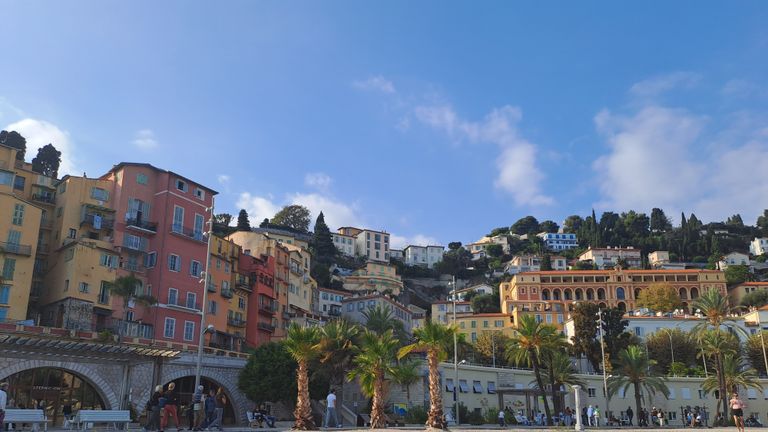 Menton is the perfect town for clients who are looking for an escape from the busier corners of the Riviera.
Credit: 2026 Scott HartbeckThe Villefranche-sur-Mer Old Town leaves a lasting impression, with its narrow streets lined with softly painted buildings that slope toward the waterfront, where small beaches and casual restaurants invite all to linger past sunset. One of the town’s most atmospheric features is the Rue Obscure, a covered medieval defensive passageway that can be found behind the waterfront. Dating back to the 13th and 14th centuries, its weathered stones serve as a reminder that Villefranche-sur-Mer is both pretty and layered with local history.
Menton
Pressed up against the Italian border, Menton offers a true escape compared to the busier corners of the Riviera. The town is mellow and yellow, the latter attribute coming from the local lemons, which are famed for their flavor and appear everywhere from shop signs and magnets to pastries and liqueurs.
Menton’s Old Town is a vertical maze of staircases and narrow lanes, which climb toward the glowing yellow facade of the Basilique Saint-Michel Archange. If Menton captures clients’ hearts, they’ll be in good company: French poet and playwright Jean Cocteau loved the town and left his artistic mark here, most notably at Musee Jean Cocteau, which offers a fittingly whimsical tribute.
The perfect way to end a day in Menton? A seaside picnic at sunset, complete with local rose and a view toward the surrounding hills — an alfresco event about as Riviera as it gets.
