Located in the San Juan Mountains of the Colorado Rockies, the 13 luxury log cabins of Dunton Hot Springs resort hide in lush green. Four miles down the road, its sister property, Dunton River Camp, which features eight luxury tents, is also open for business.
“We reopened May 1 and were one of the first [properties] to open,” said Edoardo Rossi, executive vice president of Dunton Destinations. “We are pretty spread out. Everyone has their own space.”
Dunton implemented other safety measures such as increasing cleaning procedures; capping hot springs occupancy to four people at a time; and limiting dinner seating to 50% capacity.
“Normally, our dining is communal with everyone sitting together, but we can’t do that anymore,” Rossi said. “We now have individual tables placed 6 feet apart, and dining occurs in shifts.”
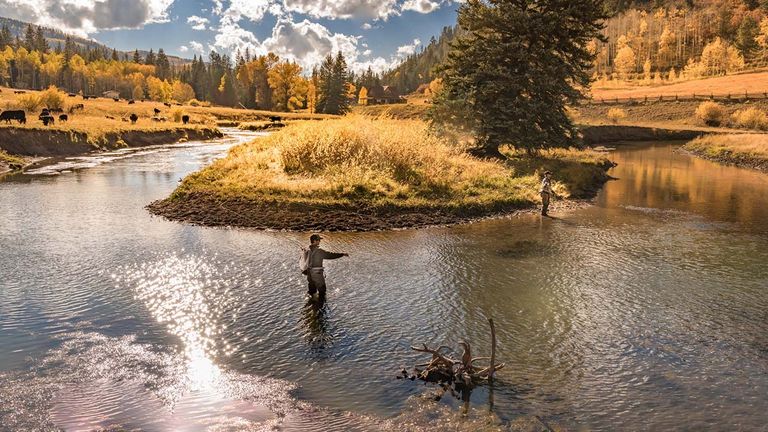 Thanks to exclusivity and an emphasis on nature, Dunton River Camp is an ideal property for social distancing.
Credit: 2020 Dunton River CampLuxury properties are uniquely able to implement coronavirus safety measures. It is in part because high-end travel has always included an element of distancing, says Melanie Brandman, founder and CEO of the Brandman Agency, a public relations firm that represents many upscale clients.
RELATED: What Travel Advisors Should Know About the Numerous New Hotel Cleanliness Initiatives
High-end travel experiences often promise privacy, no crowds or long lines and being one-on-one with nature.
Properties set in remote locales offer built-in distancing, too. At Acre Baja in Los Cabos, for example, nearly all guest areas are located in open-air, and with 12 treehouses spread over 15 acres, there’s ample space to keep away.
“We’re a perfect setup for the new normal of social distancing travel,” said Stuart McPherson, co-owner of Acre Baja.
And similar to Dunton, Acre offer buyouts.
“Our guests will no doubt find it easy to stay away from everybody else, especially if they choose to take advantage of our complete buyout option,” McPherson said.
Buying out accommodations is a popular choice this year, Brandman adds.
“Whether it’s an entire private villa or an island, or a wing of a hotel, buyouts will be the way for families or small groups to feel secure,” she said.
Luxury fishing resorts have more challenging settings because of the group nature of fishing trips. To address such matters, Steamboat Bay Fishing Club and Waterfall Resort Alaska have a comprehensive safety protocol, including checking guests’ temperature and symptoms prior to fishing trips, and thoroughly sanitizing all boats.
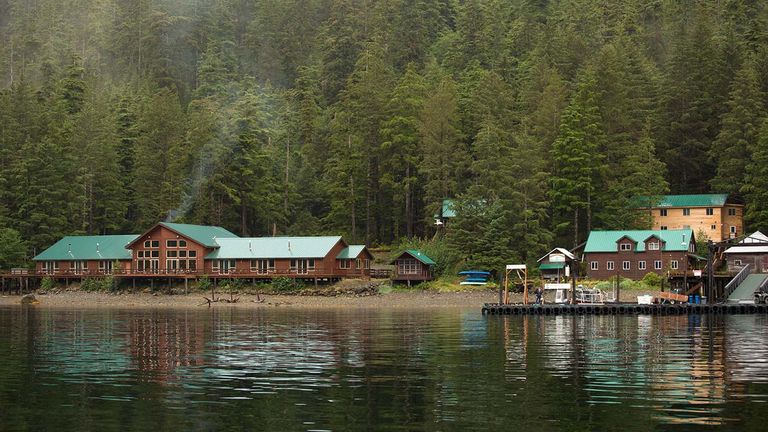 Steamboat Bay Fishing Club in Alaska has a comprehensive safety protocol in place for guests and staff.
Credit: 2020 Steamboat Bay Fishing ClubSince it is not always possible to keep 6 feet away from others while on a fishing boat, guests have to wear masks inside the onboard cabin but can remove them while on the back deck. All guests and crew have to demonstrate a negative result from a COVID-19 test 72 hours prior to departing for Alaska.
RELATED: Pretested Visitors to Hawaii Can Bypass State's Quarantine Starting August 1
High-end properties also have the resources to acquire and implement high-tech sanitizing gear. Andrew Weibrecht, owner of Mirror Lake Inn on Lake Placid in the Adirondack Mountains of upstate New York, invested in hospital-grade cleaning tools. Part of the Small Luxury Hotels of the World, the property is built on the lakeside with 7 acres of outdoor space. Hotel staff use germ-zapping UVC light-emitting machines to disinfect guest rooms and electrostatic sprayers to clean commonly used surfaces and areas.
“We also added UVC filtration system to air ducts in the areas where the air is recirculates,” Weibrecht said.
The efforts are paying off.
“We are seeing a high volume of visitors even compared to a normal year,” he said.
Urban resorts do not have the lavish expanses of forests or mountains, but they are getting creative as they welcome summer travelers this year. Los Angeles’s iconic Hotel Figueroa, which has been hosting first responders during the lockdown, is now offering leisure guests “summer safecations.” With no more than two passengers per elevator, contactless check-in and reduced occupancy, the hotel is assuring social distancing amidst old cactuses and Spanish colonial settings. The rooms stay vacant between guests and are cleaned with UV technology.
To reduce contact between staff and guests, the hotel had to forgo housekeeping services during a guest’s stay, says managing director Connie Wang.
“The staff neither cleans rooms nor changes sheets, but if guests stay more than a couple of days, we transfer them into a new clean room,” she said.
In the past, the combined area of the pool, restaurant and event space could host more than 500 people. Currently, that area is capped to host a maximum of 25 people, although “we can expand,” Wang says.
A new limited contactless restaurant menu debuted in July, which allows guests to order via an app. One of the first to become Clean + Safe Certified by the California Hotel & Lodging Association, Hotel Figueroa had all the protocol down pat — and the measures are helping now.
“The number of reservations is going up, particularly on weekends,” Wang said.
