Like with every facet of the travel industry, the hotel segment evolves each year, adapting to economic changes, shifting traveler demands and more.
Many of last year’s trends have helped to frame the outlook for the new year, as they’ve matured in efficacy and attracted new players. Take the oft-discussed concept of wellness, for example, which has progressed from a shiny trend to an acute lifestyle. As a result, wellness now hugely impacts not only a hotel’s amenities and design, but also its core mission.
There’s also the uptick in micro hotels, where major industry brands are offering their own take on deliberately downsized accommodations. Additionally, big hotel brands are venturing into an exciting, new-to-them — and extremely lucrative — territory: the sharing economy.
Below is a deeper look into these top hotel trends for 2020.
Micro Hotels Are Having a Growth Spurt
Bigger isn’t always better — at least, that’s the reasoning behind micro hotels, an industry trend gaining ground in metropolitan areas around the world. Social butterflies, millennials and on-the-move businesspeople are flocking to these small but mighty accommodations, where square footage is sacrificed in favor of lower room rates and prime locations set in the heart of the action.
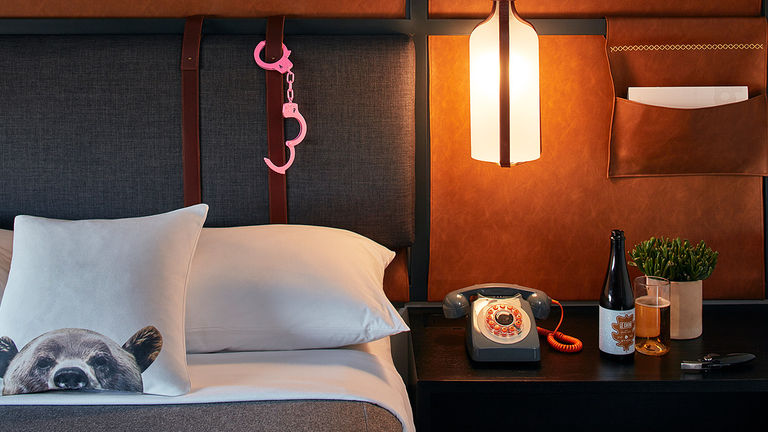 Moxy Hotels feature quirky design details.
Credit: 2019 Moxy HotelsWith guestrooms averaging 200 square feet or less, micro hotels emphasize a tech-forward design meant to lure people out of their rooms and into buzzing communal spaces. Japan’s capsule-style hotels pioneered this formula of an optimized stay, and U.S. brands have since stepped into the ring.
For example, lifestyle hotel brand The Pod Hotels opened its sixth location in Philadelphia, and Motto by Hilton has plans to launch in destinations including Atlanta; Lima, Peru; and more. Marriott International’s Moxy Hotels now features more than 100 properties either open or in the works.
 Moxy Chattanooga has a railyard container bar where guests can mingle.
Credit: 2019 Moxy HotelsToni Stoeckl, vice president of distinctive select brands for Marriott, says that Moxy properties are designed to give guests everything they want, and nothing they don’t.
“Smaller rooms mean concentration, not reduction — where affordability is not a sacrifice of style nor loss of comfort,” he said.
Wellness Continues to Progress
The concept of wellness isn’t new, but it has evolved beyond the stereotype of healing crystals and $15 green juices. And at the best hotels of today and tomorrow, wellness is much bigger than a spa or a daily yoga class.
Kristie Goshow, chief marketing officer for Preferred Hotels & Resorts, says that wellness is a way of life, and should be reflected in every touchpoint of a hotel — from the environmental approach of the building to the provenance of ingredients used at food and beverage outlets.
“In a few short years, wellness will be an expectation, as opposed to a concept or proposition that we market to,” she said.
 Switzerland’s Alpina Gstaad offers wellness at every touchpoint.
Credit: 2019 Preferred Hotels & ResortsJordin Greene, vice president of hotel partnerships for Signature Travel Network, says exciting new properties from wellness resort brands include Canyon Ranch Woodside in California, which opened last month, and Miraval Resorts & Spas in Lennox, Mass., which is expected to welcome guests in spring 2020.
Greene adds that urban hotels are also under the wellness spotlight, including Six Senses New York. Opening early 2020, the property is the group’s first foray into North America.
The Sharing Economy Gets Bigger
More than ever before, consumers are actively participating in the sharing economy. MMGY Travel Intelligence’s 2019-2020 Portrait of American Travelers reports that 29% of U.S. travelers used home-sharing services this year, up 9% from 2018. (Airbnb alone racked up an astounding 57% year-over-year increase in use by respondents.)
Of those who have used such lodging, about half now indicate they prefer it to traditional hotels.
 Homes & Villas by Marriott International is shaking up the home-sharing market.
Credit: 2019 Homes & Villas by Marriott InternationalYou know what they say: If you can’t beat ’em, join ’em. With the home-sharing market now valued at an estimated $3 to $4 billion, hotel brands understandably want a piece of the action. Paris-based AccorHotels’ Onefinestay brand, which it acquired in 2016, grew and reorganized its portfolio this year; it now encompasses a City Collection and a Villa Collection.
Additionally, following a yearlong pilot program in Europe, Marriott introduced Homes & Villas by Marriott International in May. In partnership with vetted property management companies, the brand offers some 2,000 luxury home rentals in the U.S., Europe, the Caribbean and Latin America.
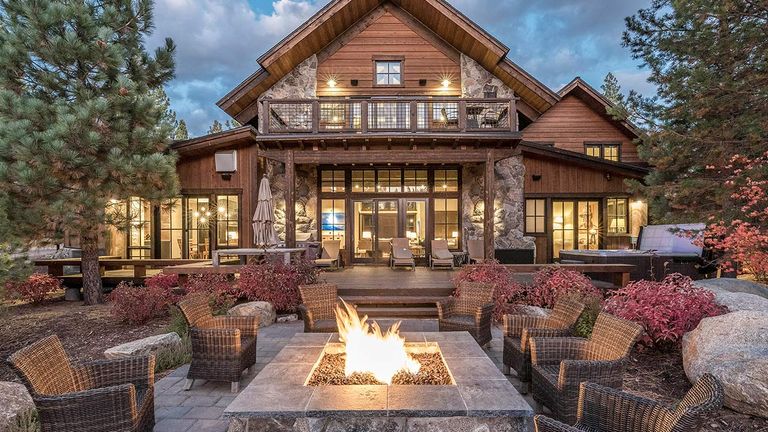 Travelers can rent a house in Lake Tahoe, Calif., with Marriott.
Credit: 2019 Homes & Villas by Marriott InternationalIt may be a bold move to go up against home-sharing behemoths, but Homes & Villas has one distinct advantage.
“It’s the ability to earn and redeem Marriott Bonvoy points that’s likely to attract the home-share customers of Airbnb and VRBO,” Signature’s Greene said.
The Details
Motto by Hilton
www.hilton.com/en/motto
Moxy Hotels
www.moxy-hotels.marriott.com
Pod Hotels
www.thepodhotel.com
Preferred Hotels & Resorts
www.preferredhotels.com
Signature Travel Network
www.signaturetravelnetwork.com
