Despite the influx of fans traveling to the United States for World Cup matches this summer, most travel advisors are not benefiting from the event, according to new Need to Know research from TravelAge West.
In a survey of more than 100 agents, 88% did not book any travel related to the World Cup. Anbritt Stengele, president and founder of sports travel package provider Sports Traveler, says this number is not surprising.
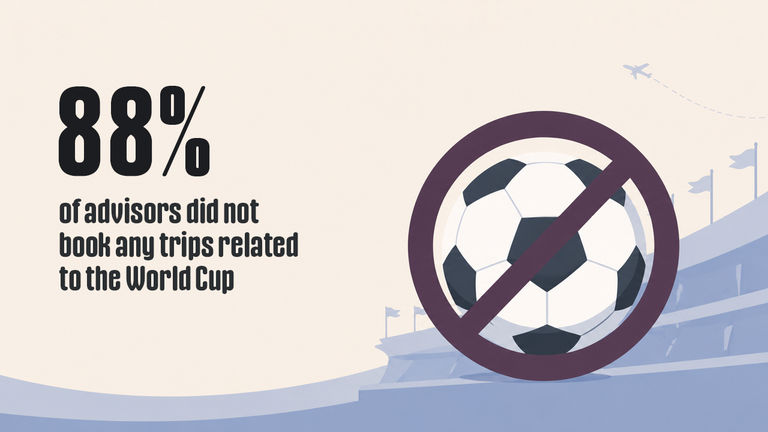 Most travel advisors did not book any trips related to the World Cup.
Credit: 2026 TravelAge West
“The majority of World Cup matches are in the United States, and U.S.-based travelers feel comfortable booking their own travel to host cities,” Stengele said. “Also, the U.S. team is guaranteed only three matches out of the 104 matches in the World Cup. They still must qualify into the Round of 32, and onward through the tournament.”
Stengele adds that the location of future playoff rounds is still unknown, but advisors may see additional demand for last-minute travel planning to those host cities once they are announced.
While World Cup business has largely bypassed advisors, many see greater potential in the 2028 Summer Olympics in Los Angeles — more than a third (36%) expect to book Olympic travel, with another 42% not sure yet. Stengele isn’t optimistic, though.
“I think the Olympics may very well go the same way as the World Cup, with ticket demand being high but demand for travel planning with an advisor being low,” Stengele said. “Again, Los Angeles has a lot of hotel rooms, Airbnbs and so on, and is a very approachable city for individual travelers or families to go it alone and make their own arrangements.”
In general, respondents say that most event travel is split between concerts/music festivals (33%) and major sporting events (32%), with cultural/art festivals accounting for another 15%.
Event travelers tend to plan well in advance, with 60% booking between six months and 12 months out and another 16% booking more than a year in advance.
Although event travelers remain price conscious — with 73% described as moderately price sensitive and 16% as highly price sensitive — 52% of advisors say these clients spend more than those taking non-event trips. Stengele believes event-related trip costs will continue to rise right along with ticket prices for all major events.
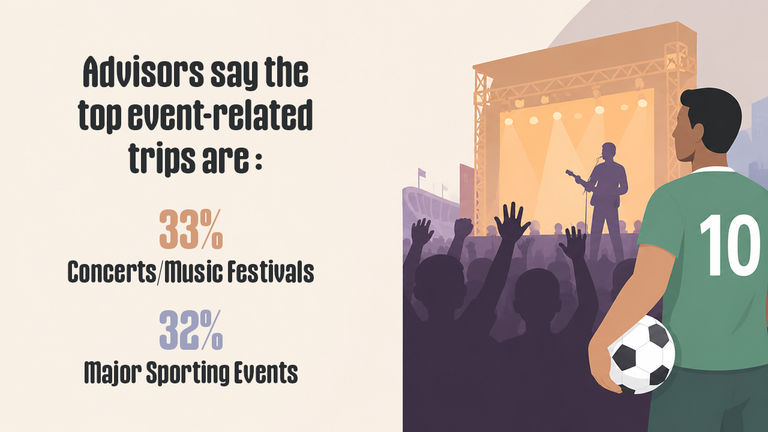 The top event-related trips booked by advisors are concerts/music festivals, followed by major sporting events.
Credit: 2026 TravelAge West"Ticket prices are setting new records, with event organizers of most every major sporting event raising prices annually,” Stengele said. “This World Cup, as an example, has dramatically raised prices for all rounds of the tournament compared to just four years ago in Qatar, and created a new ‘dynamic pricing system’ that allows prices to rise without notice based on demand — similar to the surge pricing structure that ride-share companies use.”
Ticket prices are setting new records, with event organizers of most every major sporting event raising prices annually.
No single client segment dominates event-travel bookings. Couples and groups of Gen X and Baby Boomer friends lead the way, followed closely by families/multigenerational travelers and solo travelers.
Most advisors (42%) report that the event itself is the primary driver of the trip, but another 38% say the event and the destination are equally important.
Pre- and post-event leisure extensions are the most common add-on to event trips, followed by private transfers and concierge services; premium seating or VIP access; and upgraded luxury accommodations.
Advisors say rising prices (36%) and limited ticket availability (32%) are the biggest obstacles advisors face when booking event travel. Other major challenges include managing client expectations (14%) and supplier reliability and accessibility (10%).
Need to Know Travel Survey Series
“Need to Know” is a research series from TravelAge West that tracks the responses of travel advisors as they relate to various travel trends and topics. This survey recorded the responses of 113 advisors across the U.S. See more Need to Know stories here.
