Grand Cayman, the Cayman Islands’ largest and most populous island, is best known for its beaches and urban comforts, while Cayman Brac caters to the adventurous traveler looking for a natural getaway. However, both offer great outdoor opportunities to please any ecologically inclined traveler, especially those who love to hike.
Here are six hiking trails that encourage on-the-ground exploration of the Caribbean island nation.
Deadman’s Point Bluff Road and Hemmington Road Hiking Trail (Cayman Brac)
These parallel hiking trails are positioned near the center of Cayman Brac — they start on the island’s northern coast and lead inland to Songbird Drive, which is a road running through the middle of the island.
First, clients will need to climb the bluff steps on the north coast (east of Cayman Brac Museum), and then they can start on either trail. Both contain endemic woodland and will immerse hikers in the ecosystems of local birds and plants.
Lighthouse Footpath (Cayman Brac)
Located on the eastern side of Cayman Brac, the Lighthouse Footpath is a 2.5-mile hike that overlooks coastal bluffs and culminates at the island’s lighthouse. Along the path, hikers have excellent vantage points for birdwatching.
At 140 feet above sea level — the highest point throughout the Cayman Islands — the lighthouse offers stunning views of the Caribbean Sea. The nearby Peter’s Cave, which serves as a hurricane shelter for residents of the island, is also worth a stop.
Mastic Trail (Grand Cayman)
Named after the mastic trees that once covered Grand Cayman, the Mastic Trail requires a 2-mile hike through swampy mangroves, dense forest and grassy fields. Snake sightings on this trail might deter the faint of heart, but clients can rest assured knowing that these snakes are harmless. While trekking through relatively flat terrain, they may also spot wildlife including bananaquit birds, tree frogs and hermit crabs.
www.nationaltrust.org.ky
Parrot Preserve (Cayman Brac)
Cayman Brac’s Parrot Preserve is a 281-acre haven for the island’s diverse avian population. Species include the colorful Cayman Brac parrot, the vitelline warbler and the red-legged thrush. Avid birdwatchers and hikers will appreciate the magnificent wildlife while hiking through the preserve on Bight Road, which takes visitors from the northern coast to the southern coast.
www.nationaltrust.org.ky
Queen Elizabeth II Botanic Park (Grand Cayman)
Involving more of a walk than a hike, Queen Elizabeth II Botanic Park is a peaceful getaway on Grand Cayman. A 2-acre lake within the park serves as a habitat for rare native species, including the endangered Grand Cayman blue iguana.
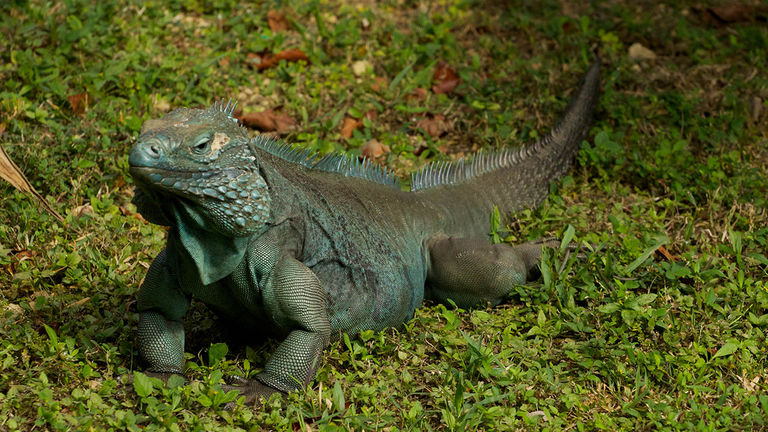 See the Grand Cayman blue iguana at the Queen Elizabeth II Botanic Park on Grand Cayman.
Credit: 2019 Creative Commons user mike_mileyVisitors can stroll through the Floral Garden to view a wide variety of tropical and subtropical plants, such as green caladiums and Anderson Crepe hibiscus. Meanwhile, the Heritage Garden features the historic Rankin Home, a quaint cottage that represents traditional Caymanian culture. Clients can explore the surrounding flora and fauna at their own pace.
www.botanic-park.ky
Salt Water Pond Walk (Cayman Brac)
The mile-long Salt Water Pond Walk takes travelers from the south coast to the north coast of Cayman Brac. This is a fairly strenuous hike, so participants are advised to prepare accordingly. At the south end of the trail, they can relax by Salt Water Pond and explore Rebecca’s Cave, a locale for the island’s fauna and the historic site of a memorial for Rebecca Boden, an infant victim of the 1932 hurricane.
www.caribya.com
