Accompanying me on my sailing to the Islands of Tahiti was Christina Thompson’s captivating book, “Sea People: The Puzzle of Polynesia.” Onboard Aranui 5 — a distinct hybrid cargo vessel and cruise ship — my fellow passengers and I became just that: sea people. Not every client will want to follow suit, but hardier customers seeking authentic adventure will.
I’d long wanted to try Aranui Cruises, and its flagship sailing from Papeete to the Marquesas Islands, with a brief stop in the Tuamotu Islands, was a revelation.
Sailing Onboard a Hybrid Vessel
Setting the sailing apart is the ship itself, with the forward half of Aranui 5 reserved for freight and the back half reserved for leisure cruisers. For gear heads, regularly witnessing the offloading of dry and refrigerated containers and other hefty pallets was a highlight. They held produce, racing canoes, building materials and a ladder-rack-equipped truck that would have made my late father, a carpenter, proud. With a dazzling dance of crane and forklift (and barge when at anchor), cargo deliveries to every isle unfolded with effortless choreography.
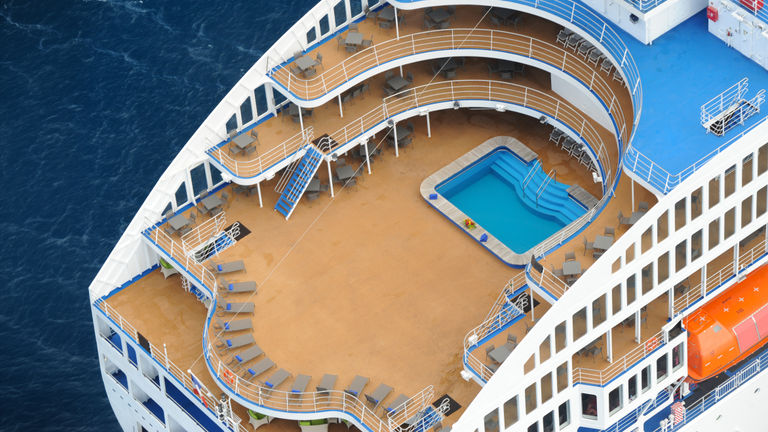 The ship offers a pool, a spa and a tattoo parlor.
Credit: 2026 Aranui CruisesThe vessel comes with a major caveat: It lacks stabilizers, catching some passengers unaware. It rolls and pitches significantly during the crossing, and in the roughest waters, the pool is drained and elevators shut down.
Dining and Hospitality
Passengers were never an afterthought, though, thanks to the French Polynesian crew. Staff member Moana almost convinced me to get a Polynesian tattoo from the in-house artist, but fear of pain kept me at bay. Truly, you would be hard pressed to find a more congenial atmosphere on another cruise ship, complete with extras rarely offered on the ocean. Included are Wi-Fi access during daily morning and evening windows (fixed-data packages are available outside those times), and laundry service twice per cruise (excluding underwear and socks).
Dining is a social affair, with shared banquet tables bringing together international guests (roughly a 60-30-10 breakdown of French, English and German speakers). Seafood features prominently, and full-service cuisine is good, albeit from fixed menus. Occasional buffets of Polynesian fare are where the cuisine really shines. I indulged in enough helpings of poisson cru — Tahitian-style ceviche — to last a lifetime. For an added cost, the poolside Mokai Nui grill offers worthy a la carte alternatives.
The ship consists of 103 cabins, including 32 suites. My 205-square-foot Premium Suite combined generous bedroom and living areas with handsome wood finishes and soft-close cabinetry, but it lacked bedside USB charging ports and electrical outlets (aside from European varieties along the vanity). The ensuite bathroom was on the smaller side, with ample space around the sink basin, toilet and drying area, but not in the shower, which felt a bit cramped.
Fun Onshore and Onboard
Cargo first drew me to Aranui, but the remote islands filled my travels with surprises. Excursions in the Marquesas showcased mountains, cultural demonstrations, museums, archaeological gems, regional lunches and expert guides, all included in the cost.
On Rangiroa in the Tuamotus, I paid for an optional tour of French Polynesia’s only working vineyard, its coral terroir presenting pleasant minerality. Diving is a popular activity in the Marquesas, though swimming and snorkeling are better around Tahiti itself.
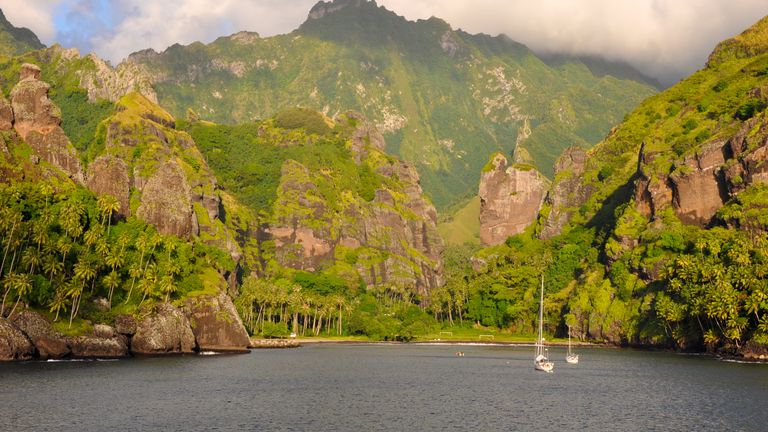 The sailing visits Hanavave Bay, also known as the Bay of Virgins.
Credit: 2026 Aranui CruisesOne wrinkle in my experience was an uneven approach to communication. Not enough itinerary detail was conveyed in printed programs for my preference, while I found public announcements to be rather excessive. To best understand all available activities, it’s necessary to attend briefings, as on an expedition cruise.
Onboard, guests can learn ukulele and traditional dances. I joined trivia with the staff and enjoyed live music while the once-exotic destination and its inviting sea people became familiar. What Aranui 5 lacks in polish and stabilizers, it more than makes up for in container loads of joie de vivre.
Calling to me next is the line’s upcoming Aranoa, launching in 2027 as another hybrid cargo experience — this time, thankfully, with stabilizers to support its journeys to the Austral Islands. I couldn’t be more curious to see where the line goes from here.
