Every year, hundreds of Polynesian outrigger canoes –– called va’a — take to the seas for Hawaiki Nui Va’a, a riveting, grueling marathon race that spans 80 miles of open ocean around the western Society Islands of French Polynesia.
Athletes climb onboard six-man va’a, and row in mesmerizing synchronization across turquoise waters as they compete for a coveted spot on the prestigious podium.
In his newest PBS special, “Hidden Tahiti,” CBS News travel editor and host Peter Greenberg proves he can keep up with the islands’ world-class rowers — even at the age of 76.
Va’a, the national sport of French Polynesia, is just one of the lesser-known experiences Greenberg explores in the hour-long documentary special, which is scheduled for PBS syndication this November and will also be available on YouTube, AppleTV, and Amazon Prime Video.
On Sept. 15, “Hidden Tahiti” premiered in Los Angeles to an audience of travel advisors, Tahiti tourism officials and industry partners.
The special is emblematic of French Polynesia’s overarching tourism strategy: “encourage travelers to stay longer, explore more islands and engage deeply with Polynesian culture and local experiences,” said Hironui Johnston, chief international operations officer for Tahiti Tourisme.
A Focus on Longer Stays and Island Hopping
Greenberg exemplifies this very ethos in “Hidden Tahiti.” In the special, the host travels to the remote Marquesas, situated 930 miles northeast of Tahiti, where he learns a traditional warrior dance.
Encouraging travelers to explore the islands beyond Bora Bora, Moorea and Tahiti — three of French Polynesia’s most popular destinations — is crucial to increasing tourism sales in the region.
The territory’s official tourism strategy, called Fari’ira’a Manihini 2027 (FM27), delineates revenue goals, with a target of 85 billion Pacific francs ($809 million) in tourism benefits by 2027. This target figure was met in 2023 and, since then, revenue has continued to increase. In 2024, approximately $951 million in tourism revenue was generated, with 2025 figures estimated within the $951-$999 million range, according to Tahiti Tourisme.
The challenge, however, lies within increasing tourism dollars while ensuring that volume growth — the number of incoming tourists — doesn’t overwhelm the region. To help, the Islands of Tahiti launched the Sustainable Tourism Plan 2030.
A focus on longer stays is key.
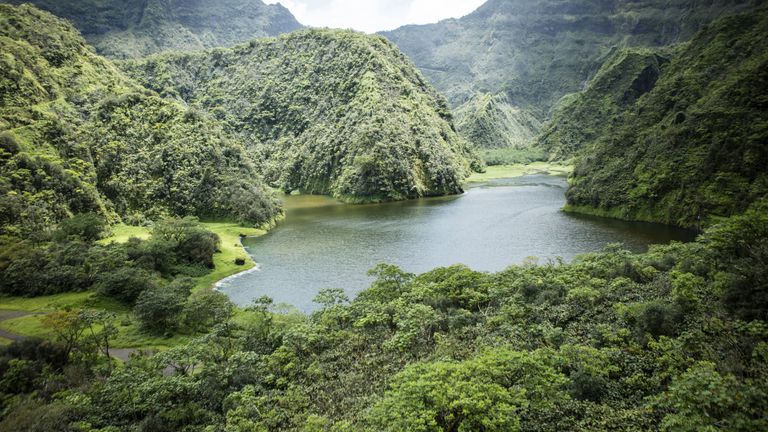 Although the island of Tahiti is among French Polynesia's most popular destinations, tourism officials encourage island-hopping itineraries as part of the region's overall tourism strategy.
Credit: 2026 Tahiti Tourisme“[It’s about] creating more value from each visit rather than simply pursuing volume,” Johnston said. “Our objective is to encourage travelers to stay longer [and] explore more islands. When travelers stay longer, visit several islands and purchase experiences locally, the economic benefits of tourism can be distributed more broadly across communities and archipelagos.”
Advisors and clients can look to “Hidden Tahiti” for experiences that go off the beaten path. Greenberg joined locals in net fishing, harvesting Tahiti’s famous black pearls and snorkeling; he also met with a traditional healer.
Infrastructure Is Key
In the coming years, renovations and new constructions will help support longer stays. Tahiti Lagoon Resort and Hotel Reva Tahiti are just two recently opened properties.
There are also new constructions planned in locales such as Fakarava, Raiatea, Faa’a and Tahiti Iti.
We’re seeing investment across multiple islands and accommodation types, giving visitors even more opportunities to experience different sides of the Islands of Tahiti.
“What’s particularly exciting is that growth is happening beyond the iconic overwater bungalow experience,” Johnston said, in reference to Bora Bora’s famous accommodations. “We’re seeing investment across multiple islands and accommodation types, giving visitors even more opportunities to experience different sides of the Islands of Tahiti.”
Aside from new resorts, major renovations at reopening properties will fuel much of the islands’ near-term growth, Johnston notes.
Banking on Smaller Cruises
Cruises, particularly on small- and medium- sized ships, are another key part of Tahiti Tourisme’s growth strategy.
With 118 islands across five archipelagos and easy access to the vast, open ocean, French Polynesia is the perfect destination for smaller sailings.
“Smaller ships can reach islands, lagoons, harbors and anchorages that are simply not accessible to the largest cruise vessels,” Johnston said. “That allows cruise passengers to experience much more of the destination — not only Tahiti, Moorea and Bora Bora, but also islands in the Tuamotu, Marquesas and other archipelagos.”
Variety Cruises, Aranui Cruises and Windstar Cruises all offer small-ship sailings in the region.
Greenberg himself climbed onboard Paul Gauguin Cruises’ m/s Paul Gauguin ship. On the 330-passenger ship, guests can expect to be fully immersed in Polynesian culture, thanks to the Tahitian hosts who live onboard for the duration of each voyage.
Traditional dance, lei-making, private beaches, paddle boarding and PADI-certified scuba programs are just a few of the offerings guests can enjoy.
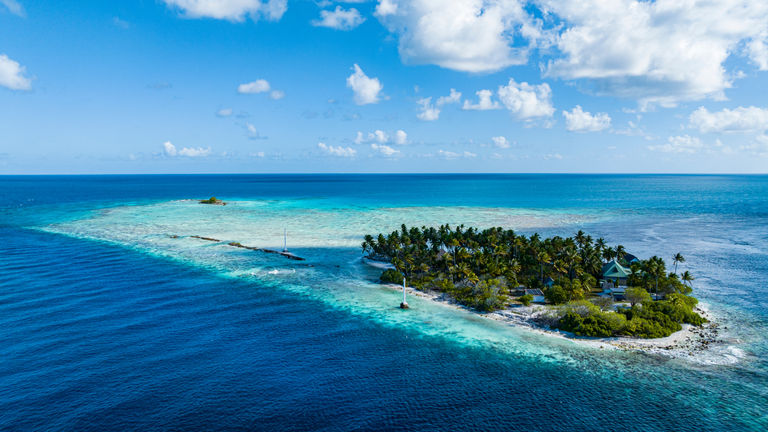 Paul Gauguin Cruises offers several itineraries within French Polynesia, including sailings to the Tuamotu islands.
Credit: 2026 Tahiti TourismePaul Gauguin itineraries span seven to 25 nights, allowing for full immersion within the islands of French Polynesia. Sailings in the region include Tahiti and the Society Islands, as well as the Marquesas, Tuamotus and Society Islands itinerary.
“[Smaller cruises] align with the kind of tourism we want to develop,” Johnston said. “Rather than concentrating large numbers of visitors in a limited number of places for a few hours, smaller-scale cruising can facilitate longer stays, visits to multiple islands and more meaningful interaction with local communities.”
Diversifying Markets
More than 351,000 visitors traveled to the Tahitian islands in 2025, and approximately 42% were from North America. While North America remains the region’s top source market, this number has steadily declined in recent years; in 2021, 51.2% of tourists and visitors to Tahiti were from North America, and in 2024, this figure was 42.8%.
“North America remains a fundamental market for the Islands of Tahiti, but like many long-haul destinations, we operate within a broader international environment shaped by economic uncertainty, changes in consumer confidence and geopolitical concerns,” Johnston said of North American arrivals. “Those factors can influence when people book, how much they spend and, sometimes, whether they postpone a major international trip.”
While the region greatly benefits from North American arrivals, Tahiti Tourisme is also working to diversify its source markets, with a particular focus on Asia to help reduce seasonality.
“Different international markets travel at different times of the year, so developing Asia-Pacific and other source markets can help reduce seasonality, strengthen year-round demand and ultimately support better air connectivity and healthier business conditions for our tour operators,” Johnston said.
Beyond Asia-Pacific, diversifying within the U.S. is another key growth strategy. Currently, Southern California, in particular, is a major source for Tahiti tourism and has been so historically.
For American advisors, diversification should be viewed less as increased competition and more as an opportunity to grow the overall market. There is still significant untapped potential in the United States, both geographically and across different traveler segments.
“There is considerable opportunity to grow awareness and distribution beyond our traditional West Coast base,” Johnston said. “Following the Los Angeles premiere of ‘Hidden Tahiti,’ for example, we continued our engagement with the trade through advisor training, networking and events, including outreach markets such as Salt Lake City, Dallas, Chicago and the San Francisco Bay Area. So, for American advisors, diversification should be viewed less as increased competition and more as an opportunity to grow the overall market. There is still significant untapped potential in the United States, both geographically and across different traveler segments.”
