Clouds of red dust billowed around our van as we made our way toward Uganda’s Bwindi Impenetrable National Park. The paved highway gave way to a narrow dirt road that wound through lush countryside and small, rural villages. Finally, we spotted a bold black structure slicing sharply through the leafy forest canopy; we had reached our destination — Silverback Lodge.
Like most people who visit the East African country, we were here to go gorilla trekking. There are only three places in the world where travelers can see gorillas in their natural habitat: Rwanda, Uganda and the Democratic Republic of Congo. Until recently, clients who wanted a luxe experience had to choose Rwanda, where ultra-exclusive hospitality brands such as One&Only and Singita have welcomed guests for almost a decade.
Now, Uganda is positioning itself as a premium destination, and Silverback is the newest in its luxury offerings.
Redefining Ugandan Luxury
Silverback is part of a portfolio of high-end properties owned by Marasa Africa, which is expanding its footprint in Uganda and Kenya. When exploring potential opportunities near Bwindi, instead of building new, the company zeroed in on an existing resort perched on the edge of the forest to remodel and relaunch.
The original Silverback opened in 2008 and showcased the simple, organic style typical of Uganda’s tourism accommodations: timber-framed architecture, beige abode walls, muted colors and the prevalent use of eucalyptus, banana leaf and thatch.
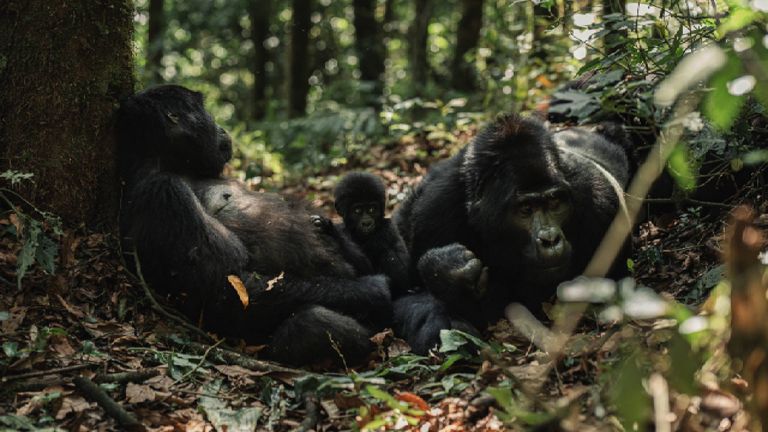 Bwindi Impenetrable National Park in Uganda is one of the only places in the world where travelers can see gorillas in the wild.
Credit: 2026 Marasa AfricaAward-winning South African architecture and interior design firm HesseKleinloog — the same studio behind Rwanda’s renowned Kwitonda Lodge and Kataza House by Singita — was brought onboard to transform Silverback from an average accommodation into a one-of-a-kind paradise. The studio broke ground on the total remodel in 2024, and the transformed property recently reopened its doors.
“From the outset, we wanted to defy expectations of what an ‘African lodge’ should look like,” said Andrea Kleinloog, co-founder of and interior designer for HesseKleinloog.
As I stepped inside, I was immediately enveloped by the dark and moody ambience. The open-concept main building, which features a cozy vestibule, a lounge and a dining area, is anchored on one end by a gleaming mirrored bar and a burnished industrial-style fireplace on the other. Local black slate and black granite; polished plaster walls; and concrete floors, steel and black glass framed breathtaking views.
While the sleek, contemporary interiors and inky color palette would be at home in a modern urban setting, they also blend seamlessly with the untamed surroundings, allowing the structure to recede into the forest, creating an intentional, immersive connection.
"The simple reason for this is because these materials and colors exist in the area; they’ve just traditionally not been used,” Kleinloog explained. “A giant success of Silverback was bucking the trend of ‘imported’ meaning ‘important.' As much as was possible was made from Ugandan resources or manipulated in Uganda.”
Large diaphanous textile banners embroidered with poetic African messages are made by women of The Milaya Project, a nonprofit that supports South Sudanese refugees in Uganda. A series of cloudlike wire sculptures that hang above the long central hallway comes from Snares to Wares, which recovers deadly poaching snares and turns them into works of art. And raffia baskets of all sizes are made by Ride 4 A Woman, a Bwindi initiative that provides local women with jobs, education, healthcare and more.
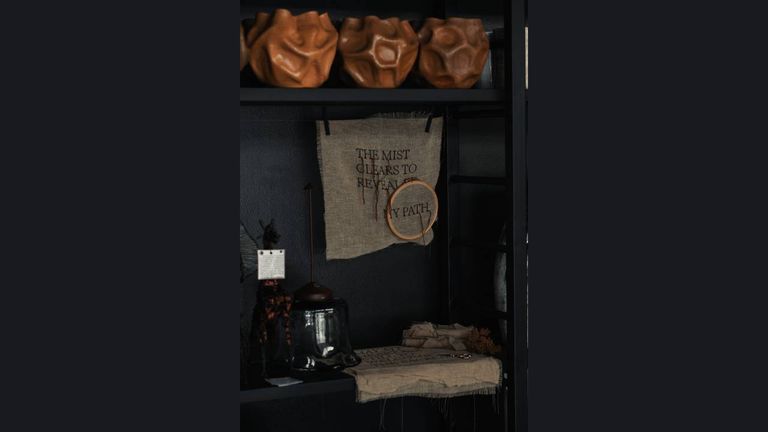 Silverback Lodge supports a variety of local artists and community initiatives.
Credit: 2026 Marasa Africa“In the past, these kinds of properties existed in isolation and not really as part of the community,” said Adielah Misbach, general manager for Silverback. “Silverback is about the people. It’s about the community, and it’s about showcasing the location and the destination.”
A Personalized Experience
Every lodger is assigned a private butler, who assists with client needs — from ensuring a guest has all the necessary equipment for gorilla trekking to scheduling spa services and cultural activities. From the lobby, my butler, Joakim, grabbed my bags and led me outside to my room.
Prior to remodeling, the guestrooms extended from the main building, all connected by a singular long covered patio with front doors that opened to the valley below. HesseKleinloog flipped the layout, maximizing the views and creating intimate, outdoor spaces.
The 12 identical “nests,” as guestrooms are called, are now in a separate building and accessed via a pathway carved into the mountainside. The same black slate, granite and plaster seen in the main building are also used in the rooms, which are warmed by cool taupe walls and sumptuous linens. My bed faced a floor-to-ceiling wall of glass that looked out over the primeval landscape.
I could hardly contain my excitement when Joakim drew open the drapes to reveal a private balcony with a personal hot tub. It was the perfect spot to relax and recuperate with a glass of wine after a strenuous hike through dense, muddy forests in search of the great apes for which the lodge is named.
Local Flavor With an Elevated Twist
Because we were a large group, our meals were served family-style. The cuisine was continental with a touch of Ugandan fusion flair.
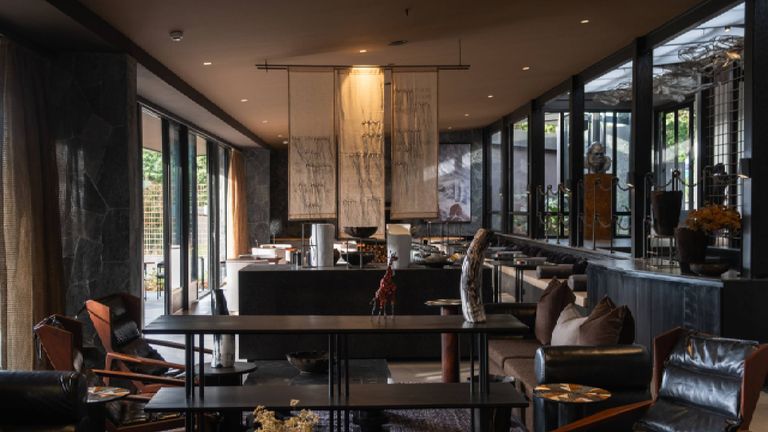 The open-concept main building includes a large dining area and plenty of casual seating arrangements.
Credit: 2026 Marasa Africa“A lot of guests are here to experience everything about Uganda, including the cuisine,” said Eleonor Roux, executive chef for the lodge. “We do have a beef luwombo (a traditional Ugandan stew) and a lovely barbecue chicken kebab that we serve with matoke (mashed green bananas) and black-eyed pea salad.”
The menu changes daily based on available ingredients and can range from beef and veggie burgers, stir-fry and arrabbiata pasta to chickpea-and-squash soup and roasted butternut and feta salad.
“My job is to take the products I can get locally from our farmers and turn it into something that guests can enjoy,” Roux said.
All drinks and meals, except for premium imported beverages, are included in the lodge rate. The bar is stocked with local beers such as Nile and Club, as well as vodka, rum and gin from Kakira Distillery, while pint-size versions of the spirits are found in the in-room minibars.
On my final morning at Silverback, I woke early to watch the sun rise from the privacy of my personal hot tub. The sky grew brighter, and the heavy mist hanging over the verdant canopy lifted. As I gazed into the valley below, I imagined the gorillas beginning to stir after a deep slumber. The forest came alive slowly, but my stay at Silverback ended far too soon.
