I walked into AmaDara’s dining room for breakfast, mentally lowering my expectations. I love Asian food, but I always fear that meals created for Americans will be watered down beyond recognition. And, unfortunately, my worst fears are often realized.
So although I was in Vietnam, sailing AmaWaterways’ Mekong River cruise, I told myself that if I didn’t expect much — no Asian options at all, or dishes that bore little resemblance to their namesakes — I wouldn’t be disappointed.
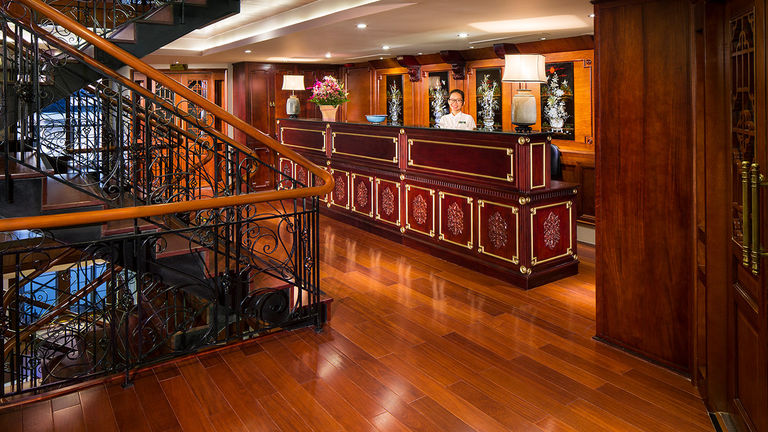 Clients will find French Colonial decor onboard AmaDara.
Credit: 2019 AmaWaterways
The waitress took my coffee order.
“Can I have a Vietnamese iced coffee?” I asked, steeling myself for the answer.
“Of course,” she said, smiling.
Relieved, I walked up to the buffet. In the first few chafing dishes were bacon, hash browns and pancakes. Just as I was starting to frown, the chef lifted the lid off a steamer basket to reveal stunning purple taro dumplings and delicate pink shrimp dumplings. The next chafing dish held vegetable fried rice and crisp spring rolls wrapped in blistered rice paper.
As I reached for the tongs, the chef leaned in.
“You don’t want to miss the noodles today,” he suggested, pointing to the right of the buffet, where another chef was layering rice noodles and herbs with thin slices of beef in steaming pho broth.
The scent of star anise was intoxicating.
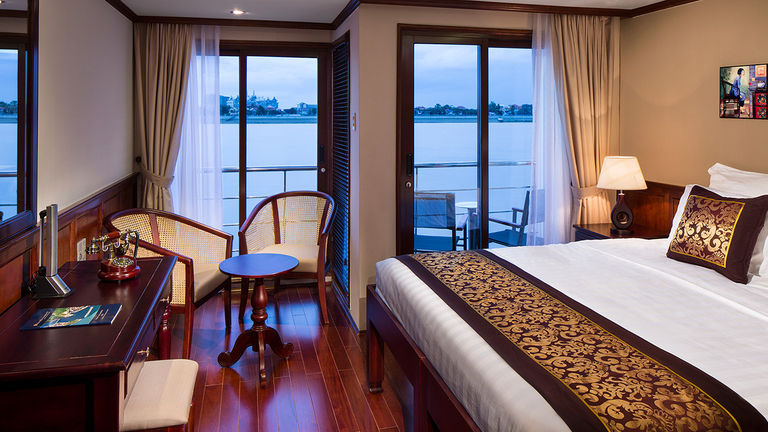 A Category A stateroom features a French and outside balcony.
Credit: 2019 AmaWaterwaysAs I sat down with my finds, I smiled. Sure, on the streets of Ho Chi Minh City, the soup would be more heavily spiced, but onboard AmaDara, it hit all the right notes, and the fresh chilies I added amped up the heat. I took a sip of my iced coffee — strong, with plenty of sweetened condensed milk — and felt my eyes begin to open. My first morning on the Mekong was off to a great start.
I’ve cruised with AmaWaterways on the Danube River, and I was pleased to find that the 124-passenger AmaDara looks nothing like the line’s vessels in Europe. Staterooms feature gleaming wood floors and polished wooden panels on the walls, and the French Colonial decor includes writing desks topped with vintage-inspired phones.
As we sailed up the river from My Tho, Vietnam (just two hours outside Ho Chi Minh City), toward Prek Kdam, Cambodia (five hours from Siem Reap), I discovered that the East-meets-West breakfast was emblematic of how AmaDara handles everything, straddling the line between Western-style comforts and regional authenticity.
 Dining venues feature regionally inspired dishes.
Credit: 2019 AmaWaterwaysEach day, we explored temples and markets, and we were invited into the homes and schools of friendly locals, who were happy to tell us about their lives. Our guides shared their experiences with Pol Pot’s regime, as well as their thoughts on everything from history to education. We received blessings with jasmine flowers from Buddhist monks and learned how to tie scarves the Cambodian way. One afternoon, we sat on AmaDara’s deck while the chef introduced us to more than 20 strange and beautiful local fruits, then carved them all up so we could compare the floral sweetness of mangosteens to the funk of durian and the creaminess of custard apples.
It takes some 20 hours of travel to reach the Mekong from the U.S., so it’s no surprise that many passengers choose to add extensions to Hanoi and Ha Long Bay or take a layover in a connection city. But during my journey on the Mekong, I discovered a love of lush snake fruit, saw fine Cambodian silk made by hand then bought a silk scarf to wear for a family wedding, tried a different noodle soup each morning and walked through the haunting ruins of Angkor Wat — the world’s largest temple, where tree roots entwine with monastic stonework as the jungle takes back the land. And now, I can say for certain that I got what I came for.
The Details
AmaWaterways
www.amawaterways.com
