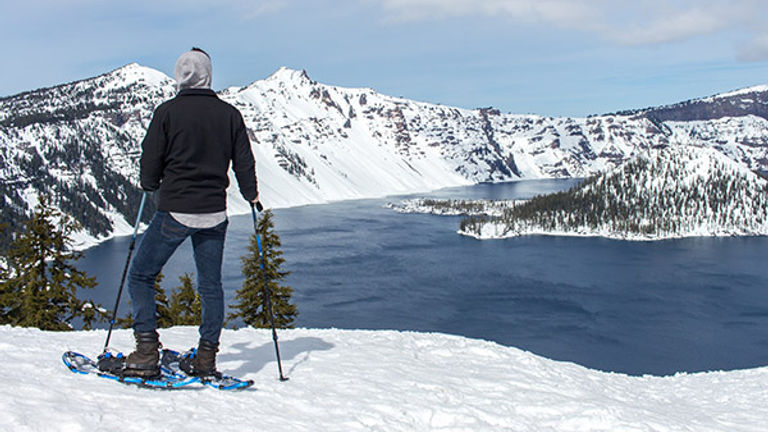
Snowshoeing __ it's like strapping on clown shoes for a stroll through a winter wonderland. It's a workout, it's amusing and it supposedly makes walking in the snow easier. If you're going to give it a go, as my family and I decided, you might as well strap in at a place that rewards your effort with stunning beauty, such as Crater Lake National Park.
I grew up only an hour's drive from Oregon's only national park, but somehow never managed to cross snowshoeing around its rim off my bucket list. So, when I returned home for a visit in March, I was determined to see what it was all about.
Every Saturday and Sunday (plus holidays) from late November to the end of April, free, ranger-led snowshoe walks are offered in the park. Equipment is provided, too; visitors only need to purchase the $10 per vehicle entry fee and make reservations ahead of time. These educational tours begin at 1:00 p.m. and cover 1 to 2 miles of terrain. Along the way, participants will learn how plants, animals and people survive the cold.
Alas, the good-weather window had us heading up to the mountains on a Monday, so we elected for a self-guided trip. Though Crater Lake park services does rent equipment for $16, a little research revealed that Union Creek Lodge, a charming stop on our way, loans snowshoes for only $8.
Soon enough, we were geared up and heading east from the Rim Village Visitor Center. Our destination? Discovery Point, a lookout where the trees open up to frame the cinder cone slopes of Wizard Island __ a vestige of a violent past. Some 7,700 years ago, Mount Mazama blew its top and collapsed in on itself, forming a caldera that eventually filled with water. Things are a little more serene now.
Annually, about 80 cross country skiers and 40 snowshoers make the 33-mile circuitous trip around the rim. I was perfectly satisfied with a shorter journey. Working up a sweat racing (and beating) my brother, while laughing at the awkwardness of relearning how to walk made for quite a memorable snowshoeing expedition.
