Groups of bears, bobcats and coyotes shoot the breeze near cabins in a seldom silent Yosemite National Park. Residents of Jalandhar, India, are overcome with awe upon seeing the Himalayas from their homes for the first time in decades. An extraordinary number of endangered leatherback sea turtle nests are found on Thailand’s long stretches of sand, which usually swarm with tourists. Los Angeles — where a thick smog is known to cloak the downtown skyline — is now home to some of the cleanest air of any major city.
These are the few of the headlines grabbing the attention of once-frequent travelers confined to their homes. Scientific data has highlighted additional good news: March saw a 30% decrease in average nitrogen dioxide levels over the northeastern U.S., according to NASA. Meanwhile, Paris-based inter-governmental organization International Energy Agency reports that the world’s carbon dioxide emissions are predicted to plunge 8% this year.
The COVID-19 pandemic’s immense blow upon societies and economies worldwide is devastating, but nature’s response to the crisis is sparking thoughtful consideration of its more positive outcomes. But before anyone breathes a sigh of relief at nature seemingly restoring itself, they also should face the facts of what has long been happening — and the unmistakable need for a paradigm shift.
Gregory Miller, executive director for the Center for Responsible Travel (CREST), says that unpolluted waterways and clear skies are short-term changes without substantial effects on long-term climate issues. He compares the Earth’s atmosphere to a bathtub that’s three-quarters full of greenhouse gases. Though no one is putting in more “water,” none of the previously added water was drained out of the bath, either.
“We need to reduce emissions over time,” he said. “Currently, it’s a trickle relative to the bigger impact. Over a longer period, we’ll see a sustained reduction. It’ll be a slow drain in the bathtub.”
According to Miller, the ramifications of COVID-19 are roughly an accelerated view of what humankind will face with climate change in the long run. Compressed into a small time frame, the pandemic’s impact on populations is enormous — especially for the vulnerable, such as those without a stable income or whose health is already at risk.
Given this glimpse into a plausible and less-than-ideal future, the question then arises: How can the tourism industry take lessons learned from the pandemic to retool travel to be more sustainable?
Shannon Guihan, chief TreadRight and sustainability officer at The Travel Corporation, believes that businesses should take advantage of this unanticipated hiatus to re-evaluate their operations.
“We’ve been carrying on in our industry for the past decade with multiple elephants in the room,” she said. “There’s overtourism, climate change, air travel and poor behavior of guests in destinations. Yet, our industry has never had the time to sit back, look around and have a think.”
We’ve been carrying on in our industry for the past decade with multiple elephants in the room. There’s overtourism, climate change, air travel and poor behavior of guests in destinations. Yet, our industry has never had the time to sit back, look around and have a think.
Jessica Hall Upchurch, vice-chair and sustainability strategist at Virtuoso, says that with every tragedy comes the opportunity to learn from it, and companies not already supporting eco-friendly practices should take note.
“While there’s no doubt that just getting back to work is front of mind for everyone, looking ahead at how we protect the planet, its people and their cultures and economies, as well as wildlife, is a way to ensure tourism remains a viable industry for future generations,” she said.
CREST is one nonprofit research organization striving to promote the concept of a responsible recovery versus simply returning to the status quo once travel restrictions are lifted.
“We want to keep the good behaviors in place and start back up slowly,” Miller said. “We are all defined by our choices: the choices of what we do, where we go and what kind of experience we want.”
And following the tumultuous ordeals that consumers experienced during the outbreak — canceled flights, unanswered calls and refused refunds among them — a travel advisor will be more in demand than ever before.
“Consumers will gravitate to advisors who can steer them in the right direction and give them confidence that, should something like this happen again, they’ll be well taken care of,” said Mike Salvadore, owner of 58 Stars Travel, a Seattle-based travel agency.
Here are predictions from travel experts on how tourism will change in the wake of the coronavirus, in addition to how advisors can encourage a conscious-minded comeback.
Travelers Will Go Local and Natural
Immediately coming out of the COVID-19 pandemic, clients will proceed with caution.
Megan Peri, director of leisure for Plaza Travel in Los Angeles, takes into consideration the financial impact that the first wave of the virus has caused for clients, as well as the fear of getting stuck somewhere during a potential second wave.
“Many people will choose to stay closer to home to save money and to return quickly if needed,” she said.
 Once tourism reopens, local destinations will come back first.
Credit: 2020 Getty ImagesLikewise, Erin Green, a travel designer at Pique Travel Design in Minneapolis, expects that destinations accessible by car or by short, nonstop domestic flights will be extremely popular early on.
Fortunately, local travel will provide many benefits, says Court Whelan, director of sustainability and conservation travel for Natural Habitat Adventures.
“It incentivizes community, it helps the industries closest to you, and it gets people to love and appreciate their own backyard,” he said.
CREST’s Miller also underlines the importance of taking advantage of travel experiences within easy reach, which perhaps weren’t prioritized before. He calls these places “the nearby new.”
“It’s critical that we encourage this,” Miller said. “It will contribute to the economic recovery of a consumer’s own community and adjacent communities.”
According to Whelan, this is particularly important as natural areas in the U.S. are being threatened by development and resource extraction. He uses the example of Utah’s Grand Staircase-Escalante, whose acreage was cut in about half in December 2017. (And in early February this year, the Trump Administration finalized plans to allow mining and energy drilling on the once-protected lands.) Destinations facing such looming threats increasingly need the support of tourism revenue.
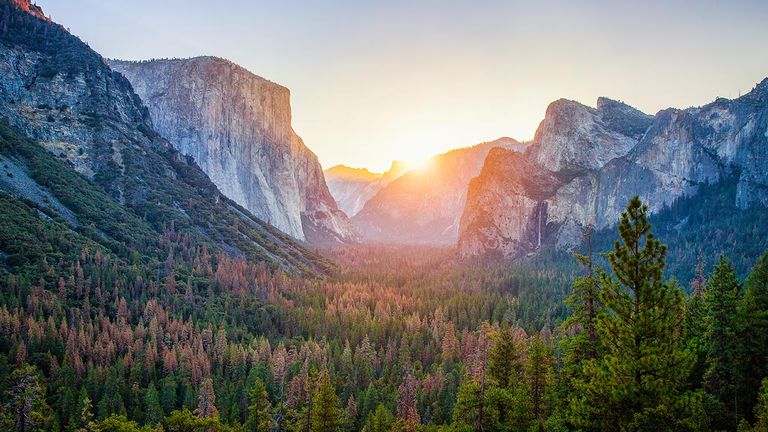 National parks, such as Yosemite, will see increased interest.
Credit: 2020 Getty ImagesOutdoor experiences also tend to provide a better space-to-visitor ratio. Plaza Travel’s Peri says that consumers will want to avoid closed-in, crowded areas, and privacy will be high in demand.
“Tourism and even corporate travel to urban destinations and densely populated spots are going to take more time to recuperate,” she said. “But our desire to interact with one another is human instinct; it will come back, and interesting travel opportunities will be a leading driver of that.”
But our desire to interact with one another is human instinct; it will come back, and interesting travel opportunities will be a leading driver of that.
Of course, some individuals will remain hesitant to return to travel, regardless if the destination in question is local or not. Casey Hanisko, president of the Adventure Travel Trade Association (ATTA), suggests that they donate to businesses in need, if financially able.
“Put that 10% or so of your income that you used to spend on travel toward nonprofits,” she said. “That way, those organizations can continue to do the good work that they do.”
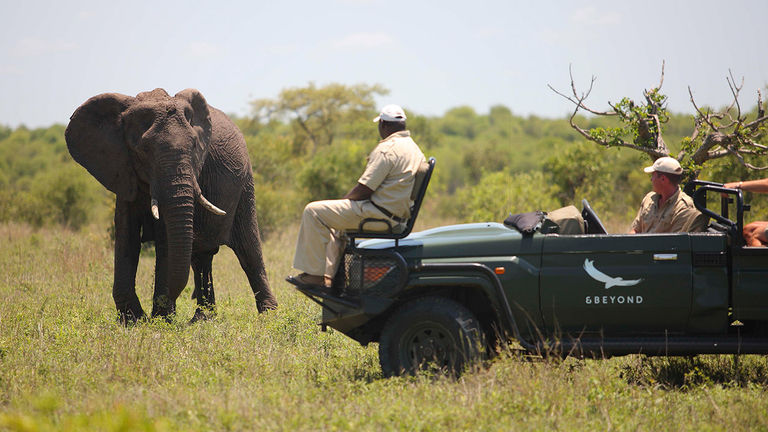 AndBeyond is dedicated to wildlife preservation.
Credit: 2020 AndBeyondTourism Is Still Needed on a Global Scale
Green at Pique Travel Design is confident that clients will have pent-up desire to explore internationally — and will do so once the world stabilizes.
“As soon as the airlines and governments make it possible, people will be interested in longer-haul trips,” she said. “Remote beaches, scenic countryside and other destinations that are not exceedingly crowded will still be attractive.”
Advisors should be prepared for new challenges, especially in situations where their expertise will be irreplaceable. For example, tourism opening back up for local travel is one thing, but international travel is harder to predict, says Nicole Robinson, chief marketing officer for AndBeyond.
“There are so many variables involved, ranging from international air availability and pricing, visa requirements and quarantine procedures to implementation of health and safety protocols,” she said.
Eventually returning to international travel is crucial for robust economies and ecosystems the world over. According to Whelan, a key goal for Natural Habitat Adventures and conservation travel groups is that international nature travel rebounds alongside local tourism. The reality is that developing nations don’t have the ability for local tourism at scale.
“For example, it’s international tourists who are those commonly found paying for gorilla trekking, not Ugandans,” he said. “If we do not continue to incentivize such biological treasures through tourism, I fear for the state of our natural world.”
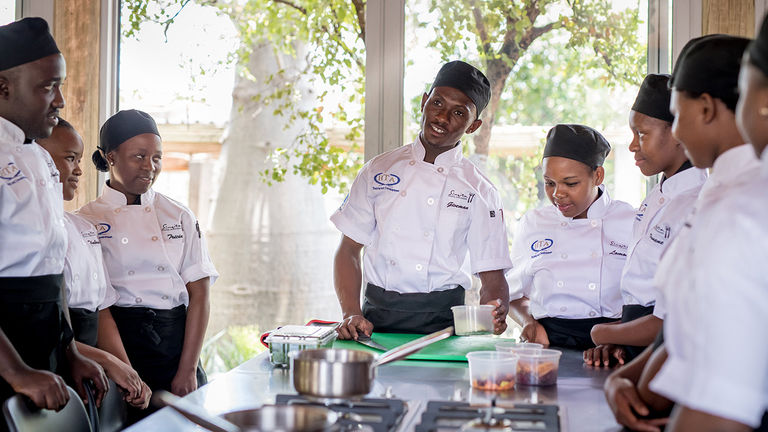 Singita works closely with local communities.
Credit: 2020 SingitaIndeed, many environmental preservation efforts greatly depend on the funding of tourism businesses. Lindy Rousseau, chief marketing officer for Singita, a portfolio of luxury lodges and camps in Africa, says tourism represents one of the most viable methods to raise awareness and attract resources to save wildlife, as well as to benefit local communities.
And the pandemic is putting that conservation and job market under enormous pressure, Rousseau says.
“If tourism collapses, the ripple effect could threaten to wipe out decades of proactive conservation work on the continent,” she said. “If ecotourism stops funding the conservation work of nonprofit partners, the likelihood of illegal hunting and poaching increases.”
AndBeyond’s Robinson does acknowledge a silver lining from the current crisis, however.
“Being in the same storm together is a definite catalyst for collaboration,” she said. “Our hope is that the partnerships formed during this time will see increased innovation and conversation resulting in streamlined efforts for the future.”
All Parties Will Be Held Accountable
A united industry after COVID-19 will call for all hands on deck. At the same time, the stakes will be much higher.
Miller says there will be a profound shift in the competitive landscape. Suppliers will have to demonstrate they have implemented better risk management; they have adapted to the new reality and changed their infrastructure, services and behavior; and they are embodying a holistic approach to sustainability.
“It may be a slower recovery, but it’ll be a more impactful recovery,” said Hanisko of the ATTA.
Despite the current loss of revenue, some destinations are already looking toward rebuilding with an environmentally friendly approach. Banff & Lake Louise Tourism in Canada is working on a plan that is two-fold: supporting the rebound of the local economy, in addition to creating a foundation for long-term viability of tourism in Banff National Park. (In 2018 to 2019, the park saw more than 4 million visitors.)
Hotels and restaurants will have to address major changes post-pandemic, too — and that pressure will likely come from both consumers and governing agencies, says Peri of Plaza Travel.
“From an inventory standpoint, investors in hotels and restaurants are largely driven by revenue per available room, and how many meals they can sell in one service,” she said. “Each room key and table is incredibly valuable, as is quick turnover. To decrease their value in order to provide more space per guest, and extra time in between for deeper cleaning, is going to be painful.”
Peri says that smaller-scale hotels will have an advantage to carry out such changes. What’s more, such properties are often further woven into the community, hire locally and are sensitive to the environment.
The cruise industry has also taken a huge hit during COVID-19. While in recovery mode, however, cruise lines can seek solutions that encourage confidence in health and safety, as well as sustainability.
Sheila Gallant-Halloran, owner of Lush Life Travel in Ottawa, Canada, applauds Lindblad Expeditions in particular. In February, the carbon-neutral expedition cruise line became the first self-disinfecting fleet in the industry. It uses a photocatalytic process that breaks down unwanted microbes including bacteria and viruses; the implementation also significantly eliminates use of water and cleaning products in plastic containers.
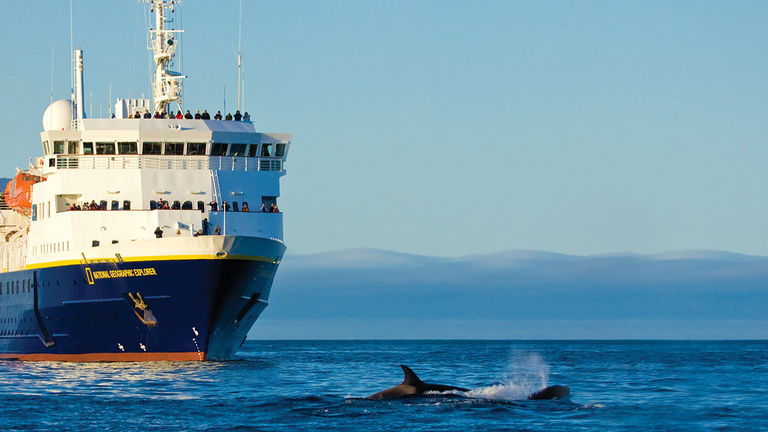 Lindblad Expeditions recently became the first self-disinfecting fleet in the cruise industry.
Credit: 2020 Lindblad ExpeditionsSalvadore of 58 Stars Travel foresees travel being dependent upon the ability to maintain and control personal space.
“Airlines, cruise lines, hotels and tour operators will have to do a much better job at making sure consumers feel comfortable and safe throughout their journey with enhanced safety measures,” he said. “Large-group travel experiences are going to need to be rethought.”
All in all, Salvadore believes that clients will focus on reputation, longevity and word of mouth when selecting a travel provider.
“Fortunately, the most reputable suppliers already have begun to emphasize sustainable travel,” he said. “Gone are the days of jam-packed experiences, and the future will feature more impactful, meaningful and responsible travel.”
Guihan of The Travel Corporation expects a 50/50 dance between provider and traveler.
“As a provider, I can make changes at scale, but the personal responsibility that exists amongst all of us cannot be discounted,” she said. “Consumers should ask more of their providers as well as travel differently. They should behave with respect when in someone else’s home — in the same way they expect of their own home.”
But with sanitation and personal health top of mind, there will be additional obstacles to confront. For example, single-use items such as face masks and gloves will be ubiquitous, and the purchasing of long-condemned plastic water bottles will see a spike.
ATTA’s Hanisko encourages that, in order to avoid extraneous stops to buy single-use supplies, more travelers should pack what they’ll need on the road, including these protective items.
“I hope that during this pause in travel, we prepare for new modes of going about in the world,” she said. “That might include, ‘Where do I put my mask when I’m done with it?’ and ‘How do I wash it?’ — new habits that we should create mindfully.”
The Future Looks Bright
All in all, travel experts are hopeful that COVID-19’s impact won’t undermine sustainability progress from recent years.
“Companies that engage in sustainable tourism have been waiting for consumers to catch up, and this pandemic will lead to a tipping point where the heightened level of awareness makes sustainability not just good practice, but good business as well,” Virtuoso’s Upchurch said.
Companies that engage in sustainable tourism have been waiting for consumers to catch up, and this pandemic will lead to a tipping point where the heightened level of awareness makes sustainability not just good practice, but good business as well.
Peri says she has learned a lot while working from home and studying with her 4-year-old son. One takeaway is that humans are but a blip in history compared to creatures such as dinosaurs, which roamed the Earth for tens of millions of years.
 During the COVID-19 pandemic, nature has shown its ability to rebound.
Credit: 2020 Getty Images“Life in some form or another on Earth will go on with or without us, but if we destroy the parts of the Earth we depend on, such as oceans, forests and water reserves, our lives won’t,” she said. “Everyone talks about essential workers in our society — my husband is a resident physician on the front line — but the truth is, on a larger scale, we as humans are not essential to the planet.”
Scientific journal New Phytologist published a recent study on how flowers reorient themselves after suffering an injury. (A later article by news website Vox compares that process to how humans confront catastrophic events such as COVID-19 — they also adapt in order to survive.) Whelan of Natural Habitat Adventures says that the ability for nature to rebound during this has been fascinating, and he is sure that forthcoming research will likely add to the industry’s overall understanding of conservation.
“There is incredible momentum now with sustainability,” he said. “There will be new markets, new products and new ways of thinking that permeate all that we do — even in the times of crisis.”
