Since 1950, nearly 500 “coup d’etats” (a sudden, often-violent and illegal seizure of governmental power) have occurred globally. These political takeovers — often led by a country’s military — have the potential to turn a destination’s entire regime on its head.
When I visited Zimbabwe for its 10th-annual Sanganai tourism conference in October 2017 — one month before Zimbabwe’s military pushed out president Robert Mugabe after his tumultuous 37-year rule — I saw no signs of an impending revolution (in fact, international conference attendees had been invited and hosted by Zimbabwe Tourism Authority, a leg of Mugabe’s administration).
But only one month later, on Nov. 21, 2017, the day of Mugabe’s official resignation, I received a voicemail from my Zimbabwe-based tour guide.
“The mood is overwhelming,” she said excitedly. “People are all over Harare with flags, people are chanting, they are happy, and they are seeing a new Zimbabwe and a better life. Zimbabwe is going to be the breadbasket of Africa.”
Although I was pleased to hear the optimism in her voice, I remained skeptical. Oftentimes, even if a change in government is welcomed by a country’s citizens, it may be months — or even years — before full stability is restored.
And what happens to a nation’s tourism in the aftermath of a coup?
I reached out to U.S.-based suppliers and travel agents — all fellow attendees of the 2017 Sanganai conference in Zimbabwe — to find out.
Confidence in the Destination Is High
As the coup unfolded, Jay Parmar, owner of Asheville, N.C.-based safari company Wander Africa, said he worked to stay abreast of the news by reaching out to individuals he met on the ground as the events unfolded.
Now, months later, he said that he doesn’t’ feel “any fear or uneasiness” about sending clients should they request an itinerary there. (He is currently working on several with fixed departure dates later this year.
“The general consensus on the coup was that of excitement and a hope for change,” he said. “Naturally, a client’s general view of Zimbabwe isn’t the greatest, but despite this, they seem to be quite welcoming to the idea to visit.”
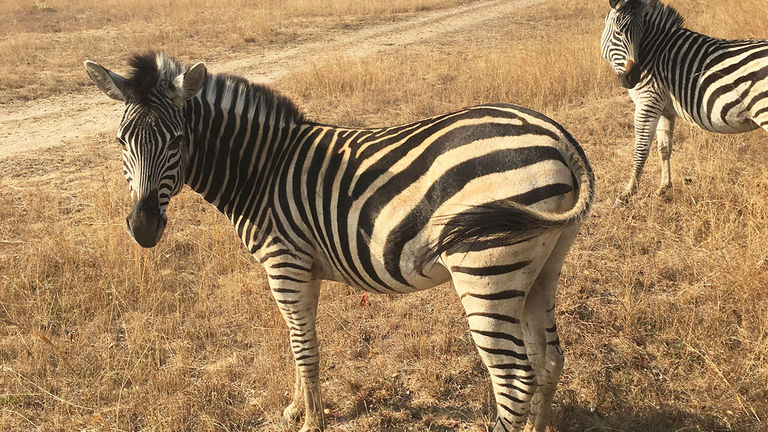 In the coup’s immediate aftermath, Zimbabwe remained a popular destination for safari-goers.
Credit: 2018 Emma WeissmannAnother tour operator, Denver-based Africa Adventure Consultants, has sold seven trips to Zimbabwe since the coup. Diana Lopez-Ruiz, the company’s office administrator, says the organization remains confident in selling tours there.
“Things have been quiet in Zimbabwe, and we feel it’s still safe to travel there — or, at least, not any less safe than before the coup,” she said. “Clients who have traveled there since the coup have had zero issues and have loved their time in the country.”
Laguna Beach, Calif.-based travel consultant Ed Postal agrees, noting that short-run U.S. media coverage of the coup placed the event in an optimistic light — with images of happy and cheering citizens, rather than fights and riots. He’s currently promoting a trip for first-time travelers to Africa, and is including Zimbabwe in the itinerary.
“Zimbabwe, in my mind, is like Jamaica,” he said. “Most tourists don't go there to just travel around the country and go to cities — they go primarily to an all-inclusive resort and never leave the resort. With Zimbabwe, they would most likely go to Victoria Falls, and then to one or two lodges.”
Popular Tourist Spots Remain in High Demand
Indeed, Zimbabwe’s main lures for Americans are its wildlife and safari lodges, which draw big game lovers to areas of the country that are far from its political center.
Stephanie Levy, a safari specialist at Los Angeles-based tour operator Anastasia’s Africa, remarks that it’s been “business as usual” in the months following the coup, because, she says, the coup took place in Harare, which doesn’t generally attract visitors.
Victoria Falls and Hwange National Park, in particular, have not seen a decline in interest, Levy says.
“We rarely include Harare in itineraries,” she said. “Many clients are going to Victoria Falls, and Hwange is always a harder sell due to logistics, but we are proposing it when we think it makes sense.
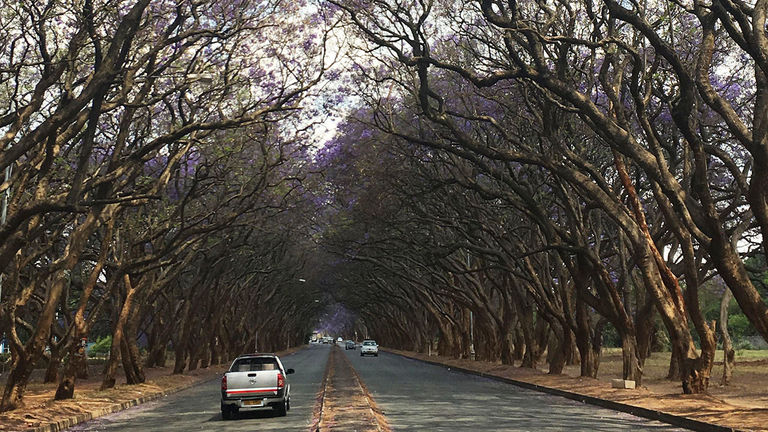 The coup took place in the country’s capital, Harare, which isn’t as popular for tourism.
Credit: 2018 Emma WeissmannAnother selling point is the destination’s affordability, Wander Africa’s Parmar said.
“The price of a safari in Zimbabwe is very favorable, especially considering the level of quality you get in accommodations and service, so it definitely has a ‘bang for your buck’ bonus to it,” he said.
And when it comes down to it, sellers of travel are main contributors to the hospitality and the tourism industry, which, in turn, supports the nation’s people, he added.
“I would like to contribute to the growth and sustainability of all the people involved in the industry,” he said. “And, as I was able to see during my visit, they are the ones affected most by the political discourse there.”
The Details
Zimbabwe Tourism Authority
www.zimbabwetourism.net
