Fifteen years ago, Japan National Tourism Organization (JNTO) launched the Visit Japan campaign, a multiyear, international marketing initiative designed to grow Japan’s inbound tourism arrivals from 5.2 million visitors in 2003 to 10 million by 2010.
Back then, JNTO touted the plan as a way to “change the image of Japan as a travel destination,” with the hope of visitors seeing Japan as an “affordable, value-added and comfortable” destination to visit, according to a press release outlining the effort.
Although the Land of the Rising Sun didn’t quite reach its 2010 goal — in part due to factors such as the global financial crisis of 2008 and an outbreak of bird influenza in 2009 — the Asian nation has certainly seen a change in tourism: In the past six years, international arrivals has greatly increased, reaching a record-breaking 28.69 million visitors last year.
The country has solidified itself as a top tourism destination, with a wide appeal for both corporate and leisure clients. New digital marketing and public relations initiatives — including the 2018 “Enjoy My Japan” global campaign targeting the American, European and Australian markets — have been put in place this year, and the country will soon host several international events, including the Rugby World Cup (2019); the G20 Global Summit in Osaka (2019); the Olympics in Tokyo (2020); and the Kansai World Masters Games (2021), among others.
“It’s really been in the last 10 years that Japan has put a big focus on promoting tourism,” said Kay Allen, senior marketing specialist for Japan National Tourism Organization’s (JNTO) Los Angeles office. “Local sellers have started to recognize how much tourism can do for the economy. So now, there’s been a lot more emphasis on tourism promotion, which is why you see destination management companies sprouting up everywhere — from every region, every prefecture and every city.”
Hundreds of these local sellers were present at last month’s JNTO-organized Visit Japan Travel and MICE Mart (VJTM), an annual international tourism conference that was held Sept. 20-22 at Tokyo Big Sight convention center. (The event was held in conjunction with Tourism Expo Japan, an outbound tourism event that welcomed 130 exhibitors from around the world to showcase attractions and tourism offerings to Japanese travelers.)
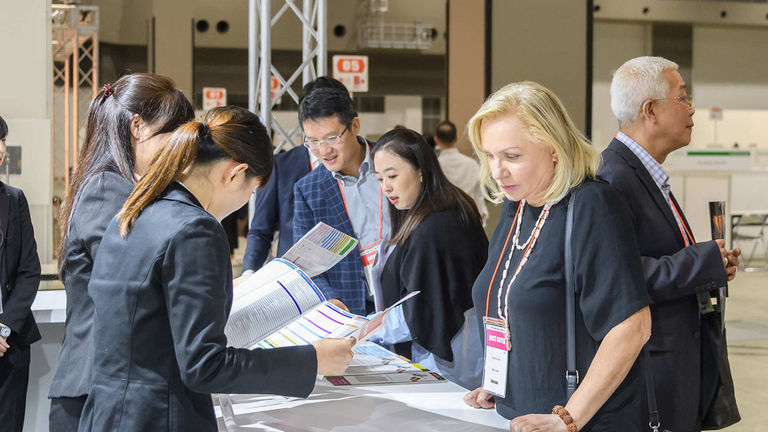 International buyers met with local suppliers for two days of one-on-one appointments.
Credit: 2018 Japan National Tourism OrganizationAllen said the main purpose of VJTM is for local Japanese sellers to interact with buyers from a wide variety of international markets, and for them to come face-to-face with some of the biggest “decision-makers” in the industry.
“It’s really easy to go on a supplier’s website and look at their products, but what suppliers want to do here is forge connections,” she said. “They want to speak to the people who can really get them the best for their clients.”
Local sellers have started to recognize how much tourism can do for the economy … which is why you see destination management companies sprouting up everywhere — from every region, every prefecture and every city.
Of Japan’s top tourism markets, the U.S. ranks fifth in the volume of visitors brought to Japan, trailing behind the Asian nations of China, Korea, Taiwan and Hong Kong. Twenty-eight U.S.-based companies were present at VJTM to conduct one-on-one appointments with local tour operators, agencies, destination bureaus, attractions and more.
Janelle Cook, director for Asia at Bellevue, Wash.-based Asia Answers (a division of Down Under Answers), was one such U.S.-based buyer. This year is the third that Asia Answers has traveled to the event.
“Japan is still in the early stages of developing their tourism industry, and I’m interested in seeing how it develops,” she said. “We believe (in the power of) travel shows; the networking is invaluable, and coming here is a way to keep on top of where the industry is going.”
This curiosity goes both ways, according to Allen. Just as the American market is eager to see the developments in Japan’s tourism strategy, Japan is attempting to understand the tastes of American travelers, whose preferences are a far cry from the tourists coming from neighboring countries in Asia.
“Previously, Japan’s biggest customer base was Japanese people who were traveling domestically within Japan,” Allen said. “But Japanese people travel very differently, and in a way that Americans can’t relate to.”
Although the U.S. market increasingly leans toward off-the-beaten-path experiential travel, a strong component of Japan’s tourism strategy has traditionally put a heavy emphasis on the country’s history, with tour guides spouting off facts and figures and expecting international visitors to recognize their significance, Allen says.
“It can be an impossible ask,” she said. “We Americans have a hard time grasping our own history. I tell local suppliers that if they are going to go with a historical tour, they should put less of an emphasis on the facts, and more emphasis on the ‘story’ of what happened — it becomes much easier to digest for American travelers.”
Another trend Allen tries to emphasize to Japanese sellers is the desire for unique, one-off experiences. In the past, U.S. tour operators and travel agencies focused on sending clients along Japan’s “Golden Route,” of Tokyo, Hakone/Mount Fuji, Kyoto/Osaka and Hiroshima. Today’s clients are now demanding one-of-a-kind experiences such as seasonal festivals or time-sensitive attractions like the annual cherry blossom season.
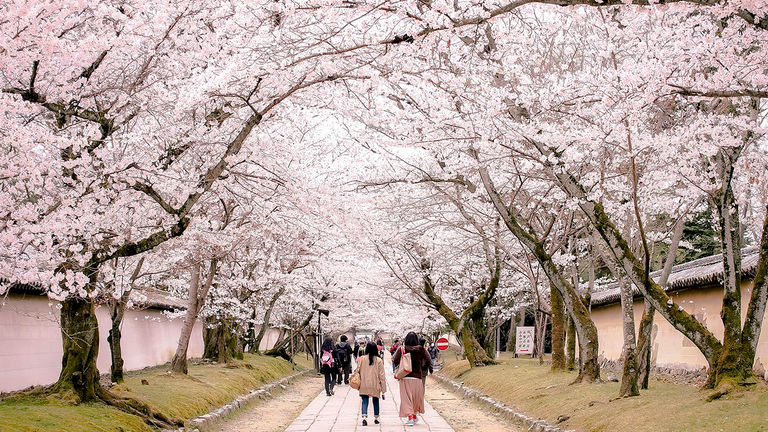 Cherry blossom season is a time-sensitive event in Japan that is popular with tourists and locals alike.
Credit: 2018 Creative Commons user _torne“Were not interested in things, and we are not interested in material possessions,” she said. “We want unique local experiences and a feeling of authenticity.”
Both Allen and Cook encourage travel advisors to consider attending VJTM next year; it will be held in Osaka from Oct. 24-27, 2019.
“I think it would be invaluable for travel agents to come,” Cook said. “They’ll get a better understanding of the industry, and they will learn what makes Japan different. It’s a very different market, and it has a unique selling style. You have to be here to understand it.”
The Details
Visit Japan Travel Mart
www.vjtm.jp
