Heralded for its happiness even on gloomy days (we're talking five hours of sunlight during the winter solstice), Denmark was put to the ultimate personality test throughout the COV1D-19 pandemic.
But with the Danish Ministry of Foreign Affairs’ June 5 announcement of reopening to fully vaccinated Americans, a metaphorical and literal light emerged at the end of the tunnel, aligning with the celebrated summer solstice.
While Denmark's economy may not rely on tourism as heavily as other European countries —tourism accounted for 1.7% of the Danish economy in 2019, compared to 6.8% in Greece, for example — the 15 months without travelers still yielded a significant impact. After a somewhat "normal" summer and autumn in 2020, discovering the more transmissible Alpha strand of COVID-19 in Denmark propelled a strict half-year lockdown, with hotels and restaurants bearing much of the burden.
As normalcy cautiously returns to Denmark, how will its tourism industry not only rebound, but flourish?
Americans Return to Denmark
June's announcement means that American tourists with European Commission-approved vaccines (Moderna, Pfizer, AstraZeneca or Johnson & Johnson) can enter Denmark without testing or quarantine requirements if they present proof of vaccination and are at least two weeks past the final dose. Tourists not yet fully vaccinated must show a negative test taken no more than 72 hours (for PCR tests) or 42 hours (for antigen tests) before entry.
"Once they've arrived, travelers must show a 'corona passport' as either proof of vaccination or a negative test to visit many cultural institutions or to enjoy indoor dining," said Katinka Friis, the public relations and press manager of Visit Denmark. "While my experience is that most places are happy to accept the American vaccination card as proof, you can be sure by calling in advance or having a free test done."
Reviving Tourism in Denmark
Denmark reached a milestone in the year leading up to the pandemic: The country registered the highest number of overnight stays in its history at 56.1 million, with approximately half coming from international visitors. While the onslaught of COVID-19 reversed this trend, Denmark, often praised for innovation and sustainability, is reigniting tourism with a similar approach.
"In recent years, chefs, hotels and attractions have contributed to making Denmark a destination for travelers with interest especially in gastronomy, design and green living," Friis said. "Coming out of the pandemic strong will hopefully mean these places not only survive, but also that the ideas born during COVID-19 will thrive and add new life into the destination."
For example, many of Denmark's top restaurants made their food more accessible throughout 2020. Noma, often hailed as the world's greatest restaurant, created burger bar Popl as a more affordable gastronomic experience.
"We have also seen a continuation of the 'urban farming' trend post-COVID-19,” Friis said. “Amass was a pioneer in this, and Noma is also a great example."
And the Danish tendency toward compliance may lead to a quicker recovery.
"I believe Denmark has a strong position for an early comeback because the pandemic has been managed well nationally, and the Danish population gives great trust to the vaccine program," said Christina Thostrup, head of international sales for Copenhagen's d'Angleterre Hotel.
Coming out of the pandemic strong will hopefully mean these places not only survive, but also that the ideas born during COVID-19 will thrive and add new life into the destination.
Where to Stay in Copenhagen
Denmark won't disappoint clients seeking "revenge travel" opportunities to indulge more lavishly following prolonged confinement and restrictions. American travelers can now experience the reimagined Villa Copenhagen, which opened in June 2020. This city-center hotel boasts one of the most luxurious suites in Denmark, designed by Danish fine jewelry brand Shamballa, with precious stone and jewelry elements.
Meanwhile, Hotel d'Angleterre is an urban oasis that has always attracted the upscale U.S. market as Copenhagen's poshest stay.
"We have always had a very healthy percentage of American guests staying with us, especially before Baltic cruises departing from [Copenhagen]," Thostrup said.
One of the first deluxe hotels globally, this neoclassical property astounds even the most discerning travelers with its Michelin-starred restaurant, a lavish spa and royal portraits donning public walls — an obvious choice for revenge seekers.
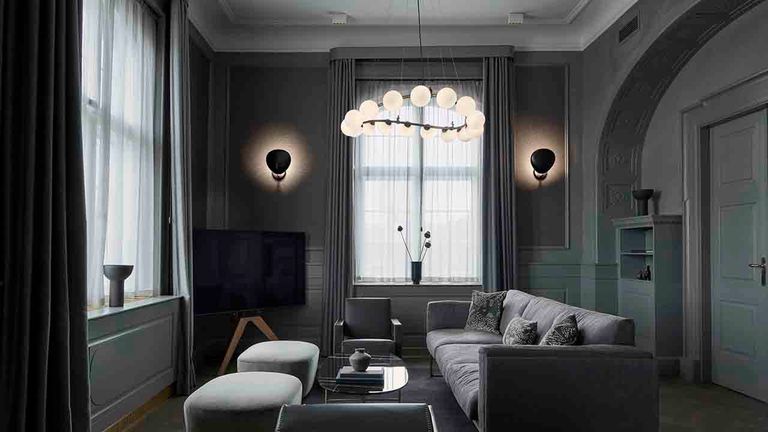 A Shamballa-designed Master Suite at Villa Copenhagen
Credit: 2021 Villa CopenhagenTraveling to Aarhus, Odense and More Destinations Outside of Copenhagen
When outsiders picture Denmark, they likely envision the brightly colored houses of Nyhavn harbor, the Little Mermaid statue and the iconic 17th-century Round Tower in Copenhagen's buzzing pedestrian shopping area, Stroget. However, Visit Denmark anticipates that second cities and more remote sanctuaries will attract U.S. tourists post-pandemic, especially those who are escaping crowds and discovering authentic experiences.
"We love to see international travelers explore beyond the classic sightseeing, [or] top 10 [places]," Friis said. "The trend toward more hidden-gem destinations will continue when more travelers return to Denmark and seek out new experiences."
She adds that Denmark makes exploring straightforward with one of the world's most efficient transportation systems.
"Compared to American distances, everything in Denmark is within easy reach, and it is even possible to fly out from the airports in West Denmark with a stopover," she said.
Aarhus, Denmark's second-largest city, is a vibrant hub for the arts and gastronomy. The ARoS Aarhus Art Museum is one of the largest in Northern Europe, presenting artists from all over the globe across its 10 floors. The 2021 calendar ranges from immersive Icelandic installations to contemporary African artwork. The rooftop rainbow is a must-see attraction that provides panoramic, multicolored views of the entire city.
Odense, Denmark's third-largest city, is home to the country's most significant opening for 2021: The H.C. Andersen House. Opened on June 30, this artistic experience reimagines Andersen's fairy tales, merging architecture, sound, light and a stream of images.
And though relatively compact geographically, Denmark boasts a surprising diversity of natural havens, including Jaegersborg Dyrehave, a wooded recluse of oak trees just north of Copenhagen, and the dramatic rock formations of Bornholm Island, floating in the Baltic Sea. Bornholm leads in sustainability and will open a climate-positive hotel wing of Green Solution House this autumn.
Following a gloomy — literally, and figuratively — 18 months, Denmark welcomes international tourists again, this time to a country even more resilient.
"I have been thrilled to see that the pandemic has not left the industry disheartened, but instead has been an opportunity to strengthen the community spirit — 'samfundssind' in Danish, and the Danish word of the year in 2020," Friis said. "Now that we are open again, everyone has hit the ground running with new energy and innovative initiatives that hopefully make the destination more relevant than ever."
The Details
Visit Denmark
