Kauai was the first of the Hawaiian islands to take a committed step toward resort bubble vacations, but now that the Aloha State intends to welcome visitors back with a COVID-19 pretesting program starting Oct. 15, are those bubbles still a tourism option the Garden Isle intends to seriously pursue?
On Tuesday, Hawaii Governor David Ige signed an emergency rule that clears the way for an Enhanced Movement Quarantine (or resort bubble program) on Kauai. That rule would permit visitors at participating Kauai resorts to leave their hotel rooms and make use of the property — including pools and on-site restaurants — during their mandatory 14-day quarantine.
Those guests would, however, be required to wear an electronic monitoring bracelet tracked by resort officials. Guests violating the arrangement and caught off-property could face a fine of as much as $5,000 or serve up to a year in jail — or both.
A launch date for the program has not yet been announced, and a number of details still need to be ironed out, according to Kauai Mayor Derek Kawakami, including whether COVID-19 testing would be required at properties. But discussions are ongoing with tourism stakeholders, and several resorts and hotels there have expressed interest in participating, the mayor said.
It’s not in our expertise to be able to forecast what sort of demand these resort bubbles are going to have. That’s for the industry to decide, and whether or not they take us up on the offer is entirely up to them.
Home to just over 72,000 residents, Kauai welcomed 1.3 million visitors last year, generating nearly $2 billion in tourism revenue, according to the Hawaii Tourism Authority. But during the month of July this year, the Garden Isle’s visitor total was just under 1,400 people, a 99% plunge in year-over-year arrivals.
We caught up with Kawakami on Thursday — the day after Gov. Ige announced his pre-travel COVID-19 testing plan that would allow for trans-Pacific travelers to visit Hawaii without the 14-day quarantine, starting Oct. 15. Here, he gives us an update on the Garden Isle, along with his thoughts on resort bubbles on Kauai.
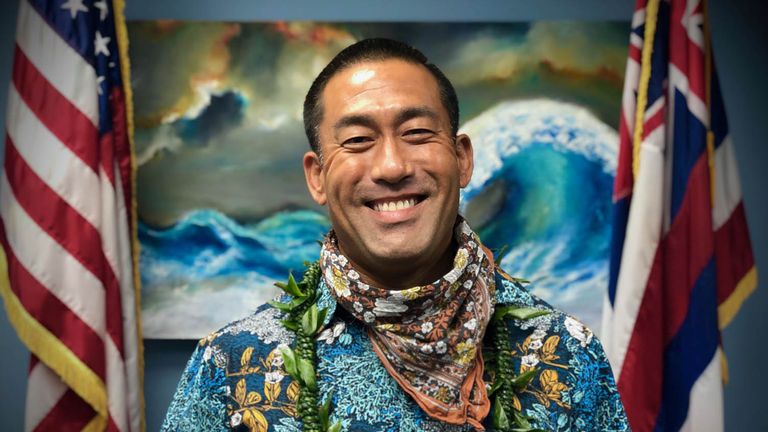 Kauai County Mayor Derek Kawakami said the island is pushing forward with a resort bubble plan despite the Hawaii governor’s recent announcement of an Oct. 15 COVID-19 pretesting restart.
Credit: 2020 Kauai County Mayor’s officeWhat impact has the 14-day mandatory quarantine for arriving trans-Pacific travelers had on Kauai’s residents and economy?
One, it’s been very successful as far as keeping this island safe. Now, the whole pandemic in and of itself has just been extremely damaging to our economy, but I would say without the 14-day quarantine, we would still have an economic crisis. That wouldn’t go away, but we’d also be dealing with a health and safety crisis. It’s always best to manage one crisis at a time, so I don’t have any regrets with the 14-day quarantine that we’ve had to [implement] to keep this island safe.
Is Kauai ready to welcome visitors back?
I think there are a lot of people that have some level of anxiety about travel restarting again, and, of course, there are people who have been out of work who are trying desperately to get back to work so they can start providing for their families. Then, there are people who are seeing Kauai as it has not been seen in a long time. It sort of reminds me of the Kauai I knew when I was growing up. We don’t have the traffic jams in the middle of the day. There are a lot less cars on the road. You can actually find parking at some of our popular beach parks that are frequented by visitors. So, like anything else, there’s going to be an adjustment period.
Is Kauai’s economy sustainable without visitors?
Absolutely not. There is no way you can sustain and meet everybody’s needs if there isn’t a staged recovery of our visitor industry. That being said, it is an eye-opener for our policymakers — and myself as mayor — to make the necessary changes so we don’t put all of our eggs in the visitor industry basket. But no, I don’t think it’s feasible to go much longer without a staged return and having arrivals come back to Kauai. There are just too many jobs tied to the visitor industry, and the government has been very reliant on the revenue stream the visitor industry brings to our government system, and the resources are running out.
There is no way you can sustain and meet everybody’s needs if there isn’t a staged recovery of our visitor industry. That being said, it is an eye opener for our policymakers — and myself as mayor — to make the necessary changes, so we don’t put all of our eggs in the visitor industry basket.
Why is the Enhanced Movement Quarantine, or the resort bubble plan, a good fit for Kauai, particularly after Gov. Ige announced that the state’s pre-testing plan for trans-Pacific travelers will begin Oct. 15?
The resort bubble is just a plan B, because we’ve seen before how the master plan has been pushed back and pushed back. In a sense, it’s been pushed back again until the middle of October. And we don’t know what lies ahead. Nobody has a crystal ball. So what happens if, for example, all goes fine and dandy, and we open up on Oct. 15, and then we get hit with a second wave or a second surge [of COVID-19]? What we want to avoid doing is having to shut the economy down once again, so this would be a good model for resorts to be able to fall back on as a contingency plan.
RELATED: Hawaii Postpones Pre-Travel COVID-19 Testing Program to October 15
Would visitors participating in the resort bubble program be able to access the beach and ocean at properties fronting the ocean?
It’s an ongoing conversation we’re having with individual resorts. We won’t create a private beach for a resort that our residents won’t be able to access. But we’re working with resorts to, make sure they have safety plans in place. We’re also taking a look at seeing if it is possible to allow some of these guests to access the beach. Everything is open for a conversation moving forward.
If participating guests show symptoms of COVID-19 and eventually test positive for the virus, would they quarantine at the participating resort?
Yes. One of the requirements is that resorts and hotels would be responsible for guests if they become sick — up until the point that they need medical attention. As soon as an individual requires medical attention, our team would be deployed to get in front of the situation and take care of that individual.
That also goes for anybody in close contact with the positive case. They would be required to quarantine on the property. The county of Kauai doesn’t have the resources to isolate all the sick people who come in or quarantine anybody that may have come in close contact, so we’re putting that responsibility on the resorts until the point the guests need medical attention.
One of the requirements is that resorts and hotels would be responsible for guests if they become sick — up until the point that they need medical attention.
Do you think there is a market among travelers for Kauai resort bubbles?
I don’t know. It’s hard to predict how many people will want to travel during a pandemic. All I can tell you is this is the reality: People are coming to Kauai every single day to get away from where they’re at right now. We get people from Oregon, Maryland, all across the U.S. People are still deciding to come to Kauai — of course, not in the volume we saw before. But it’s hard to say, and that’s why this is all voluntary.
All we’re telling resorts is, ‘Hey, it’s a good idea for you folks to have a plan B and be ready just in case, because if things need to get scaled back, at least you have this.’ It’s not in our expertise to be able to forecast what sort of demand these resort bubbles are going to have. That’s for the industry to decide, and whether they take us up on the offer is entirely up to them.
Could this resort bubble approach work at the same time as the governor’s pretesting plan?
It very well could. It all depends on the resort, because there are going to be travelers who get a test, receive their results, come to Kauai and can enjoy the island. But there are going to be travelers who live in locations where tests may not be readily available, and so instead of quarantining in a room for 14 days, staring at the wall, you could have a resort that allows you to use the resort property and their amenities.
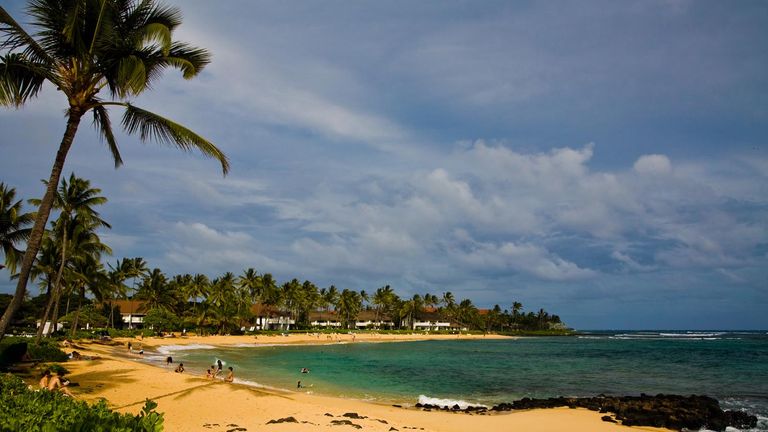 Some Kauai oceanfront properties are in discussions with the island’s mayor about making beach access a component of the destination’s proposed resort bubble plan.
Credit: 2020 Hawaii Tourism Authority/ Tor Johnson
There are so many different scenarios that could play out. So it very well could be working in parallel with the governor’s pretesting program, because there are going to be places where perhaps tests are not readily available, and there isn’t a CVS or a Walgreens (the two organizations that are working with the state to administer these tests).
Is there a rough estimate for when the resort bubble program might begin on Kauai?
I’m anticipating we’re going to have a resort ready to go prior to Oct. 15. We’ve had one resort say, ‘Whether or not Oct. 15 is the date, we want to give this a try. We want to see how it works.’ So, we’re anticipating that there are still a number of resorts that want to give this a try, and we’re assuming we’ll probably see a resort, or a couple of resorts, try this out prior to Oct. 15.
Given the three delays already this summer, how confident are you that the governor’s pretesting program will actually begin Oct. 15?
Fairly confident. I will say that I think it’s going to happen, but you never know.
The Details
Kauai Visitors Bureau
www.gohawaii.com/islands/kauai
Kauai Mayor’s Office
www.kauai.gov/mayor
