Author’s note: Since this article’s publish date, the situation in Hawaii has changed. Due to the spread of the coronavirus, it is not recommended to travel to Hawaii at ths time. Hawaii Governor David Ige is strongly urging that travelers postpone trips to Hawaii and is mandating a 14-day quarantine for all visitors and residents entering the state. For the latest updates, click here.
Without question, COVID-19 (coronavirus disease 2019) is disrupting Hawaii’s visitor industry. Arrivals are dropping, events are being shelved, and hotel occupancies are slumping. All of this impacts a destination that relies heavily on tourism to drive its economic engine.
But the message out of Hawaii sounds loud and clear: The islands are continuing to welcome visitors.
“Despite recent news of the cancellation of some festivals and events, there have been no closures of any attractions or points of interest across the state due to the coronavirus,” said John Monahan, president of Hawaii Visitors & Convention Bureau. “It remains business as usual across the Hawaiian Islands.”
As of press time, the Hawaii State Department of Health had identified only two positive cases of the coronavirus on the islands, making it extremely low-risk compared to other popular destinations.
Now more than ever, clients should work with trusted travel agents who are vigilant about checking advisories and keeping on top of Hawaii’s news. With the right approach, advisors can create Hawaii vacations that are rewarding — and safe — for their clients, today and in the future.
Here are the latest updates on Hawaii, including tips for selling it in the age of the coronavirus.
Air Travel
During the first 11 days of March, the number of passengers heading to Hawaii decreased by more than 8%, according to the State of Hawaii’s Department of Business, Economic Development & Tourism.
In response, many airlines are lowering their fares to offset cancellations, with roundtrip tickets under $200 per passenger between the U.S. West Coast and Hawaii.
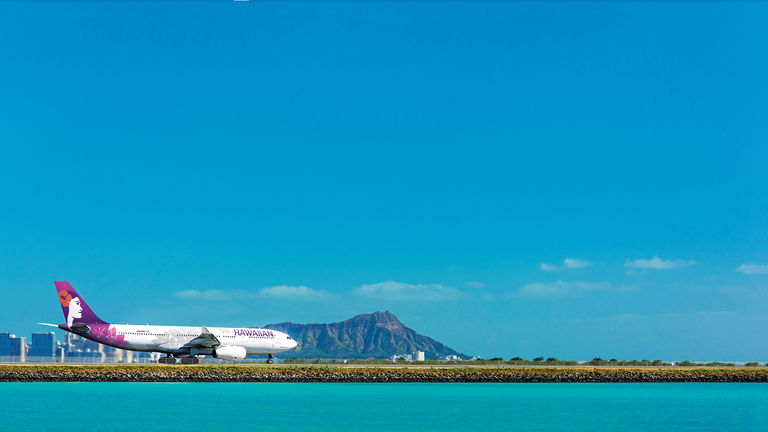 Airlines serving Hawaii are waiving change fees and, in some cases, providing refunds in light of the coronavirus pandemic.
Credit: 2020 Hawaiian AirlinesAirlines are allowing clients to change their flight dates at no cost and, in certain cases, get a refund.
At the same time, Hawaii carriers are being proactive about reducing the spread of the coronavirus onboard.
“Our aircraft are disinfected by a team of cleaners after each flight, using products that effectively kill most viruses, including the coronavirus,” said Tara Shimooka, a spokesperson for Hawaiian Airlines.
Hawaii’s government airports are also doing their part, such as restricting visitors from high-risk international countries.
During my own Hawaii travels last week, I saw numerous hand sanitizer dispensers on the walls of airports in Honolulu; Kahului, Maui; and Lihue, Kauai. I also noticed airline personnel cleaning check-in counters and self-service kiosks at Daniel K. Inouye International Airport in Honolulu.
Events
Currently, all Hawaii visitor attractions, activities and tours are up and running around the islands.
However, the coronavirus has interrupted several notable events. As of press time, they include the following. (Note: Tourism officials expect to see more event cancellations moving forward.)
- Honolulu Festival, an annual March celebration, is called off for 2020.
- Merrie Monarch Festival, which was slated for April and is arguably the world’s most prestigious showcase of hula, is postponed until 2021.
- The Hapalua Half Marathon, which draws thousands of runners to Honolulu, has been moved from April to September.
- The Festival of the Pacific Arts & Culture, originally set for June, will instead take place in June 2021.
- The Los Angeles Clippers will not make their August preseason appearance in Hawaii, as they have in years past.
Hotels
Hotel occupancies are decreasing statewide due to the coronavirus. While some properties on the islands haven’t been hit too hard, others are feeling the effects — especially in Waikiki, which attracts the lion’s share of international travelers.
To stimulate business, certain accommodations are encouraging bookings by reducing rates. More deals are anticipated.
Hilton Hawaiian Village Waikiki Beach Resort, for instance, is cutting rates by 30% for bookings made through March 20 (valid for stays through Dec. 15, 2020).
“Hotel rates have declined 5-10% over the past two weeks, and we’re seeing added values such as free upgrades and spa discounts,” said Jack Richards, president of Pleasant Holidays.
Hotels are also offering flexible change and cancellation policies, Richards says.
What’s more, they are dedicated to high levels of sanitation.
“Our current cleaning practices are above health department standards and provide the best-known defense against the spread of influenza and the coronavirus,” said Duke Ah Moo, vice president and commercial director for Hilton Hawaii.
Wholesaler Advice
Classic Vacations and Pleasant Holidays are among the wholesalers reporting Hawaii cancellations, primarily for travel in March and April.
That said, Hawaii is faring much better than international destinations, according to Pleasant Holidays’ Richards.
“As part of the U.S., the Hawaiian Islands are perceived by many travelers to be very safe, with excellent medical testing facilities,” Richards said.
That in mind, there’s no better time for advisors to practice smart marketing in the right context, says David Bistrin, Classic’s product development manager for Hawaii.
“Advisors need to encourage clients not to cancel, but instead to postpone,” he said. “They can do long-term planning for when things are back to normal.”
For clients who choose to proceed with their current trips, agents can promise them a chance to experience Hawaii without the crowds, Bistrin says.
“Advisors should speak to the real value that travel brings to people: dreaming, experiencing and enjoying the memories,” he said.
Travel insurance is a no-brainer, especially now when events are fluid, and things are changing quickly.
“Vacations are an investment,” Richards said. “Travelers should protect their investment as they would normally do for homes and autos.”
