More than 20 countries are now reporting cases of the Omicron COVID-19 variant, and governments around the globe are tightening border entry policies and implementing new travel restrictions — but the prevailing message from tourism industry stakeholders and U.S. President Joseph Biden generally seems to be: Let’s not overreact.
“This variant is a cause for concern, not a cause for panic,” Biden said during a White House press briefing Monday.
How to precisely define an overreaction does not, however, appear to be something everybody in the U.S. tourism industry and the President can agree on.
Country-specific travel bans are too blunt an instrument and often create unintended but substantial economic and societal damage.
Biden’s Monday comments, urging Americans not to panic about news of the Omicron variant identified Nov. 14 by South African officials, came just days after he announced a travel ban on foreign nationals arriving from South Africa, Zimbabwe, Namibia, Botswana, Lesotho, Eswatini, Mozambique and Malawi.
How Do Travel Bans Affect Travel Industry Recovery?
Those new U.S. travel restrictions were promptly criticized by the World Health Organization, and on Tuesday, American Society of Travel Agents (ASTA) officials said the new bans are “inflicting additional economic damage on the already-crippled travel industry.”
“Country-specific travel bans are too blunt an instrument and often create unintended but substantial economic and societal damage,” said Zane Kerby, president and CEO of ASTA, in a statement Tuesday. “This swing back to country-specific bans, coming just weeks after the U.S. reopened its borders to fully vaccinated travelers, is deeply frustrating and comes just as the industry’s recovery was gaining steam.”
Steve Born, chief marketing officer for the Globus Family of Brands, said Tuesday he agreed that travel has been unfairly cast as a symbol of COVID-19 transmission, a misrepresentation he said is “taking focus away from the real solution, which is a concentration on vaccinations and boosters.”
But Born was a little less critical of the Biden administration’s recent southern Africa travel bans.
“My personal read on these new restrictions is they’re in place with the goal of a speedy return to safe and confident travel,” Born said. “While extreme in the short term, if they can be used to buy a few weeks to better assess the nature of the variant while actively promoting increases in vaccinations and boosters in countries like South Africa, we’ll all be better off very soon and can help restore the travel industry quickly in these destinations.”
CDC Considers 24 Hour COVID-19 Test
On Wednesday, meanwhile, several national media outlets were reporting that the Biden administration is now considering requiring all travelers visiting the U.S. to provide a negative COVID-19 test result taken no more than 24 hours before their departure.
Although the Centers for Disease Control (CDC) has yet to officially announce any changes — currently all travelers to the U.S. must show proof of a negative COVID-19 test taken 72 hours prior to departure — CDC director Rochelle Walensky said in a White House press briefing Tuesday that her agency is considering new measures.
“As we have done throughout the pandemic, CDC is evaluating how to make international travel as safe as possible, including pre-departure testing closer to the time of flight and considerations around additional post-arrival testing and self-quarantine,” Walensky said.
Tour Operators Report Limited Africa Cancellations
Although the Omicron variant has certainly stirred up a frenzy of recent media coverage, Globus’ Born said the impact on his company’s Africa business has been relatively minimal, in part because Morocco was the only destination on the continent where the tour operator was sending visitors this month.
“With the Moroccan government lockdown late last week, we were able to contact all guests and their advisors with options to rebook to a later date or make alternate arrangements,” Born said. “All other destinations in Africa, including Egypt cruises with Avalon, and Kenya, Tanzania and South Africa for touring, begin again in the first quarter of 2022.”
Stefanie Schmudde, vice president of product development and operations for Abercrombie & Kent (A&K), said Tuesday the tour operator is still running its South and East Africa products and currently has clients on the ground in South Africa, who were given the option to return home early but chose to continue their visit as planned.
“I’m only aware of one cancellation at this point,” Schmudde said. “All of the other guests have been comfortable to wait and see until we get a better sense of exactly what is happening in the destination.”
Schmudde noted that Africa was one of A&K’s top performing destinations prior to the Omicron variant’s emergence, but she hasn’t seen any sign of a drop in demand for Africa.
We’ve taken new bookings to both east and southern Africa since news broke over the weekend. And I think part of that is due to our book with confidence policy, which allows guests to change or cancel up to 15 days prior to departure.
“It’s only been a couple of days, but there haven’t been any concerning trends,” Schmudde said. “We’ve taken new bookings to both east and southern Africa since news broke over the weekend. And I think part of that is due to our book with confidence policy, which allows guests to change or cancel up to 15 days prior to departure.”
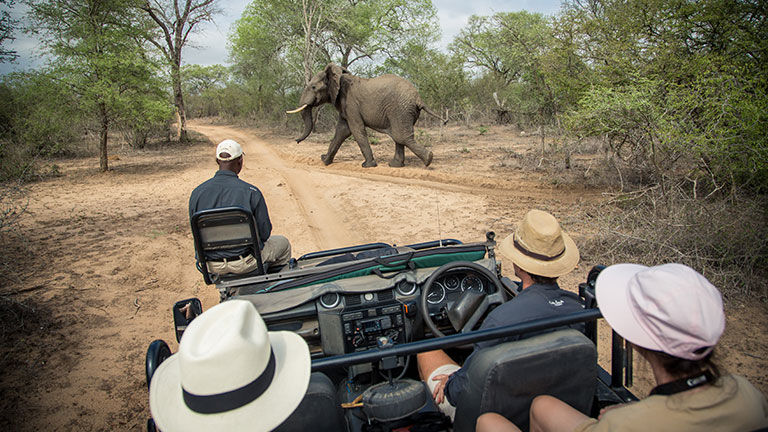 Abercrombie & Kent continues to operate tours in South Africa, and officials there say they’ve seen no drop in demand since the Omicron variant news broke.
Credit: 2021 Abercrombie & KentJeff Roy, executive vice president of revenue management for Collette, said his company also canceled one departure in Morocco, but the tour operator’s products currently running in Egypt and Kenya haven’t been impacted. Collette had been planning to start up tours in South Africa in January, however, and that timing is now being reconsidered, according to Roy.
“Due to the variant and the pending travel restrictions, we’re putting off those South Africa plans a little bit, and we’re not going to run our January departures,” he said. “We’re going to start to look out to February and March to see if we want to start operating down there at that time. Otherwise, we may be putting that off until later in the year.”
But Roy agreed with A&K’s Schmudde about demand for Africa remaining strong.
“When people think about going to Africa, they think about doing the safaris,” he said. “It’s outdoors; it’s wilderness. It’s not like it’s a close-contact environment. … It’s a place people really, really want to go, and as soon as they’re able to, they’re going to flock right over there.”
Travel Advisors Help Clients Avoid Rushed Decisions
Linda Jelencovich, co-founder of Travel Leaders affiliate Super Travel in Palm Beach, Fla., said she has several South Africa bookings impacted by the recent Omicron variant developments, and she’s been busy with concerned clients in recent days.
“It’s impacted our business big time,” Jelencovich said. “They’re high-ticket items, and it takes so much to plan it. There’s so much involved. … We spent a lot of time putting these trips together, and hopefully, we’ll be able to save them and move them later into 2022 or 2023.”
Jelencovich had several couples booked on vacations to South Africa in January next year.
“It’s such a shame because they really need the tourism, so this has hurt them terribly,” she said. “But the suppliers are being very, very gracious and trying to work with us and not charging a penalty for cancellation or moving dates.”
David Waldes, a New York-based independent Tzell affiliate, had clients in South Africa last week who considered flying home early, but decided to return as planned on Sunday and didn’t encounter any difficulties.
“That was, of course, a risk because if United had cancelled Sunday’s flight, then they wouldn’t have been able to get home very easily,” Waldes said. “The flights out of South Africa are a little full right now.”
Waldes said he’s already rerouted other clients who were headed to South Africa this month onto a new itinerary instead to East Africa, and he’s been fielding phone calls from other worried clients booked to Africa in June and August of next year. Waldes said his message for those concerned folks has been: “Let’s wait and see.”
If you start kneejerk reacting then it all just gets out of control.
“At this point, anything past a month, let’s just breathe for a minute because you can’t really do much else,” he explained. “If you start kneejerk reacting then it all just gets out of control.”
Todd Neuman, North America executive vice president of South African Airlines, said the carrier didn’t have plans to restart its international routes between Johannesburg and New York City and Washington, D.C., until late in 2022, but the carrier has continued to operate domestic and regional flights, segments he said have been popular with North American vacationers in recent weeks.
“It’s frustrating because even though we are not offering international service out of the U.S., North America continues to be the second-largest source market for tourism to South Africa and southern Africa,” Neuman explained. “The signs of a tourism recovery were really starting to look quite positive, and now this has really put a damper on those recovery efforts.”
