Located along the coast of the Sea of Japan, the prefecture of Tottori — located in the country’s Chugoku region — seems largely untouched by modern growth and development. And, like many of Japan’s other prefectures, it maintains longstanding cultural traditions.
But what makes this western part of Japan stand out even more is its impressive, nature-rich surroundings and its seasonal foods, such as massively sized crabs fished from the sea or ripe pears plucked from a tree.
Here are the five top things to do during a visit to Tottori, Japan.
Hakuto Shrine
This Shinto shrine is allegedly the setting for an ancient Japanese myth about the white rabbit of Inaba.
According to legend, this hare tricks sea creatures — referred to as sharks or dragons — into serving as a bridge for him to get across the ocean from Oki Island to Japan’s mainland. Cocky about his deed, the mythological rabbit brags about his trickery and, in return, is injured by one of the creatures. The rabbit eventually gets help from two brothers who bathe him in freshwater. As a thank you, the hare assists one of the brothers in winning a princess’ hand in marriage.
Because of this, Hakuto Shrine is now considered to be a shrine for lovers. As visitors walk up a hill lined with rabbit statues, they’ll also find various amulets in the shape of a rabbit.
Karoich Fish Market and Kaiyoutei
Locals come to the Karoich Fish Market to shop for snow crab, eel and various fish that come from Tottori Port, in addition to produce, specialty foods and other cooking ingredients. The market also offers souvenirs.
 Browse Karoich Fish Market for the area’s freshest catches.
Credit: 2019 Michele HerrmannSuggest clients also check out Kaiyoutei, a restaurant adjacent to the market that features a private dining area and a stocked fish tank. Here, visitors can taste in-season crab or other freshly caught seafood.
www.karoichi.jp
Misasa Onsen and Misasa Onsen Misasakan
The town of Misasa is known for its hot springs, which are renowned for highly regarded therapeutic properties and high levels of naturally occurring radon. At Misasa Onsen Misasakan, a ryokan (traditional Japanese inn), guests can experience a Japanese onsen (hot springs) during their stay.
The Japanese bathing custom involves soaking in a natural hot spring inside communal areas separated by gender. Misasa Onsen Misasakan features a Japanese garden setting and tatami-matted rooms, where hotel staff prepares futons, a traditional style of bedding. Dining options include kaiseki (a multicourse banquet feast), and guests can wear a provided yukata (traditional Japanese casual kimono) throughout their stay.
www.spa-misasa.jp
Mount Daisen
Mount Daisen, a massive volcanic mountain within the western part of the Tottori Prefecture, is recognized not only for its grand size — the highest in the region — and its sheer beauty, but also for its significance as a sacred place.
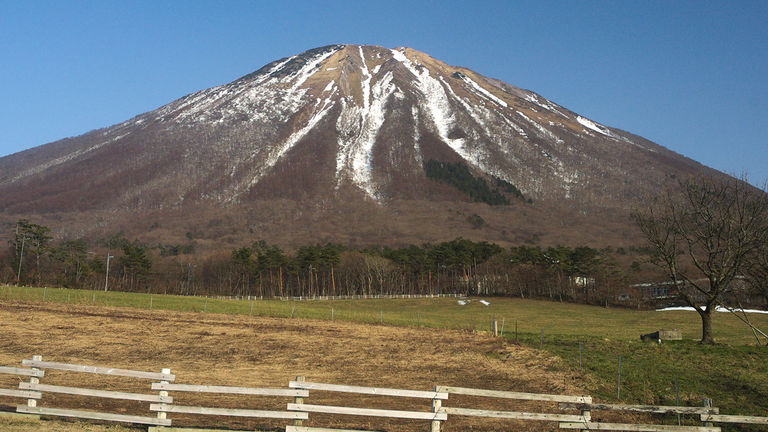 Mount Daisen is the highest volcanic mountain in the region.
Credit: 2019 Creative Commons user TheNotoriousGoriestDuring a visit to Mount Daisen, visitors will find Daisen-ji, a Buddhist temple within the town of Daisen that has served as training center for the syncretic Shugendo religion. It also marks a popular trailhead that goes up Mount Daisen to an area known as Misen Peak.
Pro tip: Go a little farther on this trail to find Ogamiyama Shrine, a Shinto shrine complex. Active travelers should note that Mount Daisen also has a separate network of hiking trails of different lengths for varying abilities.
www.japan.travel
Tottori Sand Dunes
Tottori has miles of sand dunes that visitors can walk, hike or sprint up for panoramic views. Formed more than 100,000 years ago, the Tottori Sand Dunes resulted from the elements gradually removing bits of sediment from the nearby Chugoku Mountains and out to the Sea of Japan, with the deposits eventually making their way back onshore.
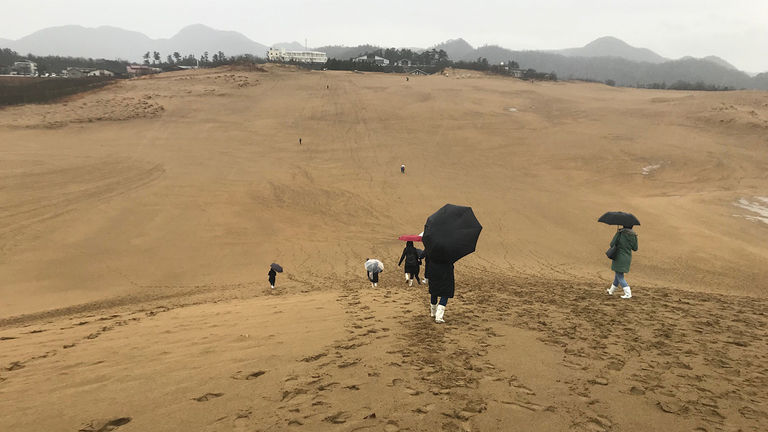 The Tottori Sand Dunes
Credit: 2019 Michele HerrmannA visitor’s center across the way from the dunes tells more about the area’s history, geology and typography through exhibits and a brief video presentation. Near the dunes, the Sand Dunes Museum displays impressively detailed sand sculptures crafted by artisans from around the world. It is open seasonally.
In addition to walking up the dunes, try sand-boarding, biking or — weather-permitting — a camel ride.
www.japan.travel
Travel to and Within Tottori
Tottori has two airports: Tottori Sand Dunes Conan Airport (also known as Tottori Airport and based in Tottori City) on the eastern side of the prefecture, and Yonago Kitaro Airport, which is in Sakaiminato on the western side. All Nippon Airways flies to Tottori Airport from Toyko’s Haneda Airport and Osaka’s Kansai International Airport.
If traveling by rail, head to Tottori from Osaka, Tokyo or Kyoto via the bullet train or a limited-express train to stations in Tottori City or Yonago.
In Tottori, get around with a rental car or via Kururi or Kirin Jishi Loop buses. The latter operates only on weekends and national holidays, then daily from July 20 through Aug. 31.
