Northeast Thailand’s Isaan cuisine has spread across Asia — and even the U.S. — over the past few years, with dishes such as minced pork laap and nom tok (meat salads) or papaya salad as popular menu items. However, many Northern Thailand culinary staples remain comparatively obscure and, frankly, not so well-done outside the region.
I chatted with Austin Bush, a Bangkok-based expat from Oregon and the photographer and author of “The Food of Northern Thailand” cookbook, to get his take.
“Northern Thailand cuisine is unique and tasty, but doesn't really travel, even within Thailand,” he said. “If you want to try these dishes, you need to go to the source, and I think foreign visitors will be pleased to find that they're relatively mild, with not as much chili heat as the dishes of Thailand's south or northeast.”
To get a start on a Northern Thailand foodie itinerary, here are six distinctive regional dishes, along with some recommended spots to find them. (But, whatever you do, don’t forget to add the sticky rice.)
Khao Soi
What is it? A great hit in Northern Thailand, this rich, slurpy wheat-noodle soup is distinguished by a special, locally sourced dry curry powder blend; coconut milk or cream; fall-apart chicken or beef; pickled vegetables; and fried noodles for texture and crunch.
Where to Eat It: Bush recommends that clients head to Khao Soi Prince, which is located about 20 minutes north of Chiang Mai’s city center by car. The restaurant makes egg noodles in-house, and Andy Ricker, part-time Chiang Mai resident and the owner of Pok Pok restaurant company in the U.S., considers the establishment to serve the world’s best khao soi.
Laap Kai
What is it? Using (quite often, raw) minced meat as its main ingredient, laap comes in many forms. Laap kai is a great beginning laap for newcomers — especially those who are turned off by raw meat — as it is chicken-based, cooked and loaded with fragrant lemongrass, shallots, cilantro and garlic.
Where to Eat It: Bush considers Chiang Rai’s Lung Eed the gold standard, thanks to its crispy deep-fried shallot and garlic garnish.
Muu Phan Pii
What is it? Also known as “thousand-year pork,” this high-maintenance, decadent dish sees pork belly steamed with oolong tea leaves and pickled vegetables during a day-long process. Succulent and fragrant, this dish also represents the culinary fusion created by North Thailand’s Chinese immigrant population, who eventually settled here in the aftermath of China’s Civil War.
Where to Eat It: The Chiang Rai province’s Sue Hai restaurant is located within the ethnically Chinese mountaintop village of Doi Mae Salong. While visiting, clients should check out the area’s tea plantations, too.
Sue Hai
288 Route 1130
Doi Mae Salong
Nam Phrik Num
What is it? There are numerous varieties of nam phrik (a paste or sauce used for dipping vegetables, crunchy fried pork rinds and other proteins). Most popular and easily found is the savory, green-toned nam phrik num, made with tender roasted chilis, shallots and garlic.
Where to Eat It: Hidden on the side of a narrow road outside Chiang Mai’s city center, Charoen Suan Aek is an aluminum-roofed, open-front beer hall-style venue that serves a deliciously moist nam phrik num, plus a bevy of other varieties and downright adventurous Northern Thai delicacies, including grilled bee larvae. Alas, the dense menu is only available in Thai, so have a bilingual friend or the Google Translate app handy.
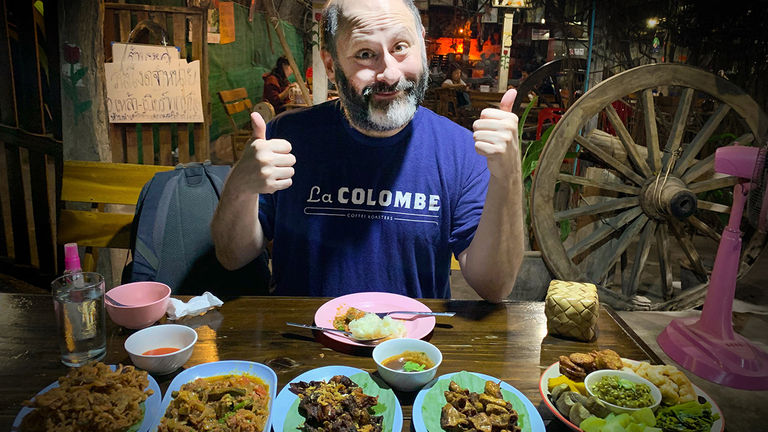 The writer at Charoen Suan Aek
Credit: 2019 Lawrence FerberSai Ua
What is it? As Germany does with wurst, Thailand boasts a diverse variety of regional sausages. Sai ua, a pork-based iteration, is particularly herbal, and locals can get into serious disagreements about whether deep-fried or grilled is best. My tip? Try both.
Where to Eat It: Everywhere, honestly, but a safe bet would be heading to the dedicated vendors at Chiang Mai’s Ton Payom Market and Warorot Market.
Tam Som Oh
What is it? Sour, sweet, spicy and some super Thai funkiness combine to create tam som oh, a salad made with sections of pulpy pomelo (a grapefruit-like citrus fruit), Northern Thai crab paste (made with baby crabs), eggplant and lemongrass.
Where to Eat It: Head to the open-air Laap Kao Cham Chaa, where the late Anthony Bourdain and Ricker visited and gorged during an episode of CNN’s “Parts Unknown.”
The Details
The Food of Northern Thailand
www.austinbushphotography.com
