Our group was all abuzz as we donned our beekeeping suits, from hats with face veils to pants with straps that stretched under our shoes. The occasion was Bee Mauna Kea, where guests of Mauna Kea Resort (MKR) received an engaging look at Hawaii Island’s world of bees.
The tours, which were introduced in 2018, take place at MKR’s two hotels: Mauna Kea Beach Hotel and The Westin Hapuna Beach Resort, both located on the Kohala Coast.
Before suiting up, the experience started with an indoor chat about all things apiary. Our guide for the day was Wendle Lesher, who clearly knew his way around a hive. His grandfather and father were beekeepers, and his two sons are learning the tricks of the trade; it’s a family affair.
“I’ve been bitten by the bug,” Lesher said. “I’m passionate about beekeeping, so I can get very geeky about it.”
He shared his vast knowledge in an upbeat and accessible way, seasoning the conversation with delightful trivia. We discovered, for instance, that bees are the only insects that provide food for humans, and that honey never goes bad on its own.
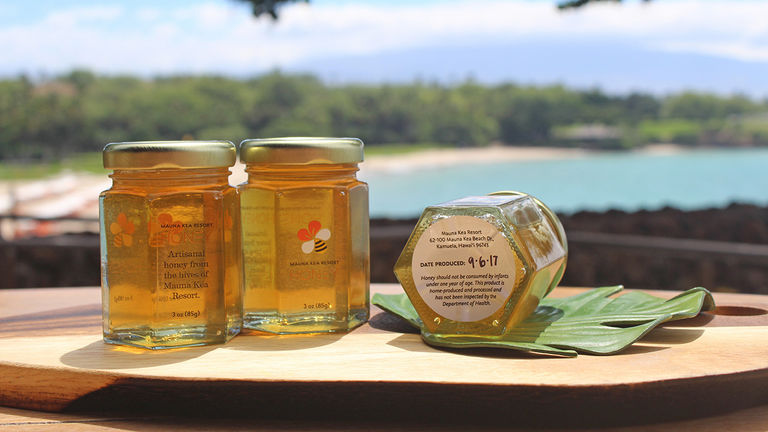 Mauna Kea's honey jars feature a clever variation on the resort's plumeria blossom logo.
Credit: 2019 Mauna Kea ResortCurrently, the resort lays claim to five hives, and plans call for expanding that number to eight. The bees source their nectar primarily from the blossoms of kiawe (mesquite) trees, which thrive around the 1,800-acre, oceanfront property. (Another fun fact: kiawe nectar produces some of the world’s most unique and flavorful honey.)
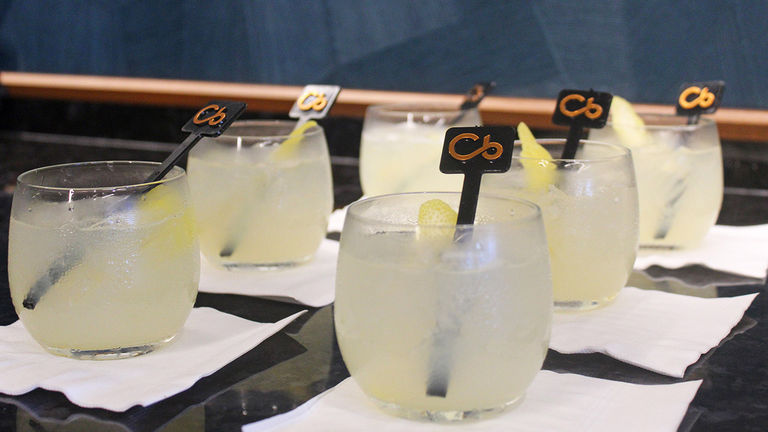 The resort's honey is an integral ingredient in the Bee's Knees cocktail, which tour guests can sample.
Credit: 2019 Mauna Kea ResortLesher showed us examples of the two basic types of hives. He described their residents: the drones, the workers and the all-powerful queen. Each hive acts like a monarchy (where the queen calls the shots), but it’s also a democracy, because the workers can kill an aging queen.
Next, it was time for us to put on our protective gear, (which we did, complete with laughs and selfies), followed by a short ride in golf carts to the hives. They are positioned near Mauna Kea Beach Hotel’s golf course, but since they’re tucked away in a quiet grove, passing players don’t even notice them.
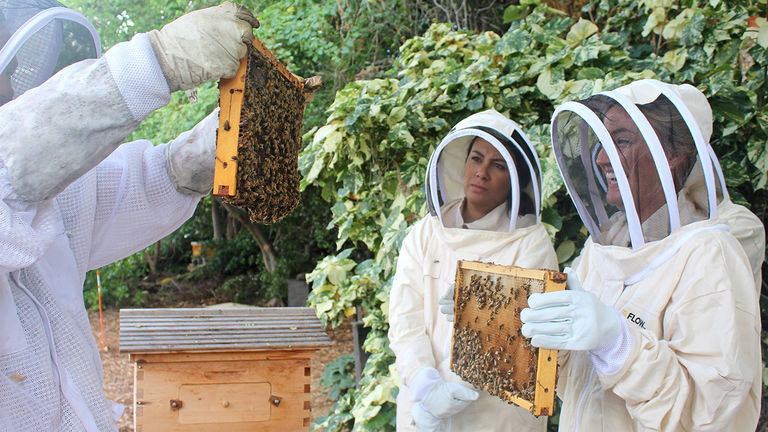 During a tour, guests get close to the hives and take turns holding panels swarming with bees.
Credit: 2019 Mauna Kea ResortAfter lighting a smoker to distract and relax the bees, Lesher pulled out a tray that was swarming with the busy creatures, and many of us took a turn holding it. We saw eggs, pollen and honey, and then we spotted the queen. Some members of our group were a bit nervous and stood back, but Lesher reassured everyone that the bees aren’t aggressive — they are simply curious about us.
If the timing is right during the hive visit, clients can watch the honey-extracting process, which happens roughly once per quarter.
When we returned to the hotel, we learned about the versatility of MKR’s homegrown honey. Clients can taste it in the dough of the resort’s brick-oven flatbreads and in the edible honeycomb that graces charcuterie and cheese platters. We sampled two treats from MKR’s menus: seared foie gras with local poha berry compote and honey gastrique; and the Bee’s Knees, a cocktail of gin, basil, lemon sour and honey.
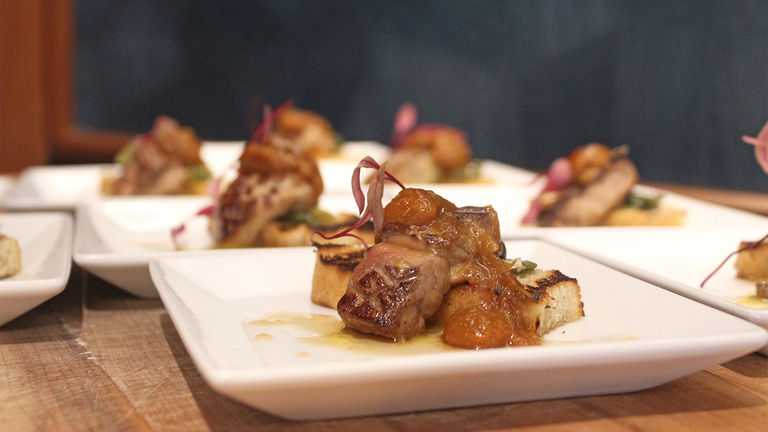 At the end of the tour, guests sample one of the resort's honey-infused specialties, seared foie gras.
Credit: 2019 Mauna Kea ResortAs our tour wrapped up, each participant received a keepsake jar of Mauna Kea honey. Its label features a clever reworking of MKR’s logo, which has been transformed from a plumeria blossom into a bee.
It’s a sweet ending to a buzzworthy activity.
Note: To arrange a tour, contact the MKR concierge at 808-882-5707 or [email protected].
The Details
Bee Mauna Kea
www.maunakeabeachhotel.com
