Most travelers know Mexico City, San Miguel de Allende and Guadalajara.
But some of Mexico’s most rewarding travel experiences are found in less-visited destinations. Queretaro is a perfect example.
I had spent time in this central Mexican state before, but during my most recent visit, I explored a wider array of its offerings. From colonial architecture, stunning natural scenery and cultural institutions to a wine and cheese scene, Queretaro provides lots of vacation inspiration — and it’s an easy side trip from larger cities nearby.
My husband and I took a double-decker ETN Turistar bus from Mexico City to arrive at the capital city of Santiago de Queretaro — which, like the state, is usually called just “Queretaro.” The first-class bus service is extremely comfortable and can also be used for visits from nearby San Miguel de Allende. Nonstop flights link Queretaro’s airport with major U.S. hubs, including Houston and Dallas/Fort Worth.
Staying in or near the historic city center is best for travelers looking for convenient access to the region’s most popular sites. The Historic Monuments Zone of Queretarto is a UNESCO World Heritage Site, so it’s not surprising that downtown Queretaro is an impressive place — and it’s even more appealing because of its relatively compact size, which makes it easy to explore on foot. Graceful plazas and pristinely manicured shrubbery and trees complement the stunning colonial architecture, and the city’s 18th-century aqueduct remains one of its most-photographed icons.
Exploring Queretaro’s Capital City
The city of Queretaro is home to several noteworthy museums and cultural institutions. An excellent place to start is Museo Regional de Queretaro (Queretaro Regional Museum). Set in a beautifully maintained former religious complex that dates to the 16th century, the facility houses a vast array of items representing the region’s pre-Hispanic, colonial-era and more recent history.
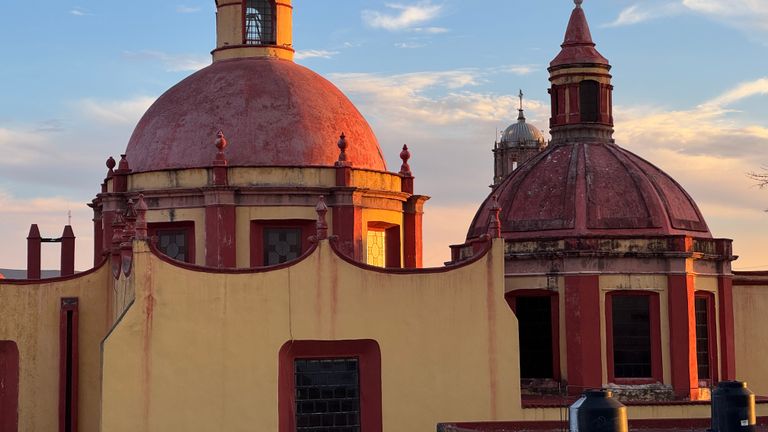 Queretaro is home to one of the largest wine-producing hot spots in central Mexico.
Credit: 2026 DepartureLevel.comMuseo de Arte de Queretaro (Queretaro Art Museum) is another standout, and one of my local favorites. Dramatic faces are carved into the borders of the stately courtyard, the central focal point of the 18th-century baroque building, which originally served as a monastery. Today, the museum exhibits a variety of artistic styles by established and trending creators. Art lovers should also make time for Museo de Arte Contemporaneo de Queretaro (Queretaro Contemporary Art Museum), which is also set in a historic former religious complex.
Even Museo del Calendario (Calendar Museum) is surprisingly interesting; its exhibits document the history of mass-market artistic traditions.
I fell even more in love with Queretaro after dark. The plazas of the historic downtown fill with local life and live music; one of my most memorable moments was watching groups of older night-owls dancing to live big-band music.
Queretaro’s culinary scene is another draw; I especially liked the enchiladas Queretanas (Queretaro enchiladas) at Chucho El Roto, a legendary restaurant with outdoor seating on one of the beautiful plazas, as well as the photo-worthy views from rooftop venues such as Terraza La Grupa and the gorgeous historic setting at Di Vino, an elegant Italian restaurant.
Accommodation options include noteworthy properties set in 18th-century mansions, such as Dona Urraca Hotel & Spa and Hotel La Casa de la Marquesa. Another interesting choice is Hacienda Jurica by Brisas, which is set in a 16th-century hacienda and features a spa, a swimming pool and tennis courts.
Queretaro’s Wine and Cheese Route
Mexico’s multiple wine regions have been attracting more attention in recent years, and Queretaro is home to one of the largest wine-producing hot spots in central Mexico — less than two hours from the capital.
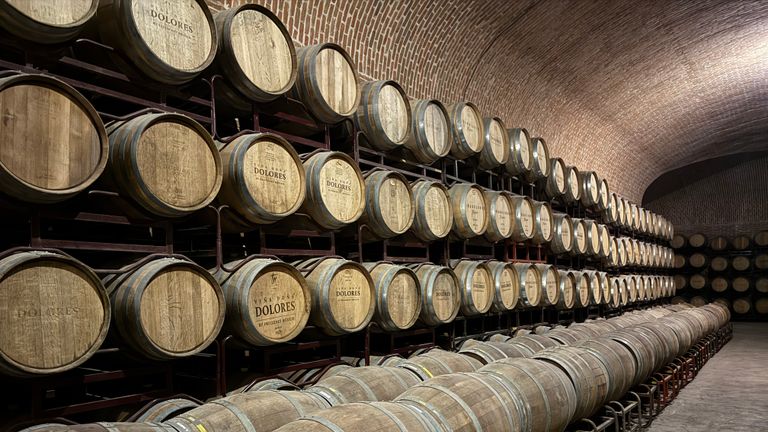 Sala Vive is a large winery facility that offers tours and a range of experiences.
Credit: 2026 DepartureLevel.comToursByLocals is among the travel advisor-friendly companies that offer guided tours of the region, but my husband and I decided to rent a car and explore on our own. Our first stop was Cava Bocanegra, which offers an interesting introduction to the region’s cheese production, complete with cheese tastings and wine pairings. Just a few yards away, Norte B offers wine and beer tastings amid a group of stylishly repurposed container structures.
When it comes to wineries, Sala Vive remains the state’s highest-profile player; I was impressed with the large facility, the quality of the tours and the range of experiences and features — including a gourmet food court. Nearby, Casa Vitivinicola De Cote offers a decidedly upscale setting for tastings and dining, and Vinedos La Redonda is home to a restaurant and hosts wine festivals.
Tiny Town, Giant Monolith
Not far from the wineries is San Sebastian Bernal, a designated Pueblo Magico (Magical Town) set against the backdrop of the Pena de Bernal, one of the world’s tallest free-standing monoliths. As soon as we arrived at this quaint town, my husband and I were struck by the contrast of the quaint traditional architecture with the soaring rock formation, which juts some 1,420 feet into the sky.
The town itself is easy to explore on foot, with narrow streets lined with shops and restaurants. Wherever we wandered, we were never far from a spectacular view of the stone mass in the distance. We quickly learned that rooftop dining was a great way to take in the view; our dinner at Tierracielo was one of the most memorable meals of the trip. Accommodations at Casa Mateo Boutique Hotel were comfy and reasonably priced; Hotel de Piedra is another option, with a variety of room categories and impressive views.
After a wonderful night’s sleep, we took a tiny taxi built in India to the foot of the Pena de Bernal. Unlike a similarly massive monolith near Guatape, Colombia, this geological attraction has no staircase — simply a path that begins gently and becomes more difficult as it rises. A variety of vendors sell souvenirs and refreshments in the lower parts of the trail. We didn’t have time to make it all the way to the top, but we were still rewarded with a stunning view. For travelers looking to go off the beaten path, this is a memorable region to wander.
