Like many animal lovers, I am rather obsessed with seeing wildlife when I travel. Some of my most memorable trips have been to South Africa, the Galapagos Islands, Antarctica and Australia’s Kangaroo Island, each of which delighted me with myriad chances to see rare animals in their natural habitats.
Data shows I’m not alone: A recent report from Grand View Research estimates the global wildlife tourism market generated more than $190 billion in 2025, and will reach nearly $381 billion by 2033. After all, who doesn’t want to be charmed watching penguins glide across ice on their bellies, or be thrilled by the sight of a cheetah sauntering casually past their safari truck?
That said, when wildlife experiences come up on a trip itinerary, my excitement is often tampered by a dose of concern, due to increasing awareness of the ethical considerations around how travelers interact with and impact wild animals — in both positive and negative ways.
“Tourism has the potential to be a powerful force for conservation when it supports local communities and protects natural habitats,” said Shannon Guihan, chief sustainability officer at The Travel Corporation, which follows a clear Animal Welfare Policy developed in partnership with World Animal Protection. “When communities benefit economically from safeguarding wildlife, it creates long-term incentives for conservation. It also plays an important role in education, helping travelers better understand both the value of wildlife and the impact tourism can have."
Grand View’s research supports this view. According to the report, visiting animals’ natural habitats can make tourists more aware of and sensitive to environmental issues. The data also shows that wildlife tourism plays an important role in funding conservation efforts, contributing to national park revenues and community-based tourism programs.
Unfortunately, not all the players in this space treat nature with the respect it deserves — and that’s a problem.
“The challenge comes when experiences are driven by the demand for entertainment rather than responsibility,” Guihan explained. “That’s when tourism can shift from supporting wildlife to putting it at risk.”
The challenge comes when experiences are driven by the demand for entertainment rather than responsibility. That’s when tourism can shift from supporting wildlife to putting it at risk.
And no matter how well-intentioned travel industry professionals may be, it can actually be quite challenging to tell the difference between experiences that help and those that harm.
“This topic is highly nuanced,” said John Sutherland, senior director of community impact at nonprofit organization Tourism Cares. “It can be very difficult for any consumer to see something and know whether it’s going to be appropriate for animal welfare or not. Even we struggle sometimes to evaluate suppliers. So, I think the travel advisor sits in this incredibly important role of being able to educate the consumer."
Here’s how advisors — and their clients — can be a force for good.
Some Basic Guidelines
Given how complex and diverse the landscape of wildlife tourism is, it’s helpful for advisors to understand some simple red flags, as well as positive signs, to be on the lookout for.
“As a general principle, wildlife should be observed in the wild,” Guihan said. “Experiences such as elephant rides or any opportunity for close physical interaction are strong indicators that animal welfare may be compromised.”
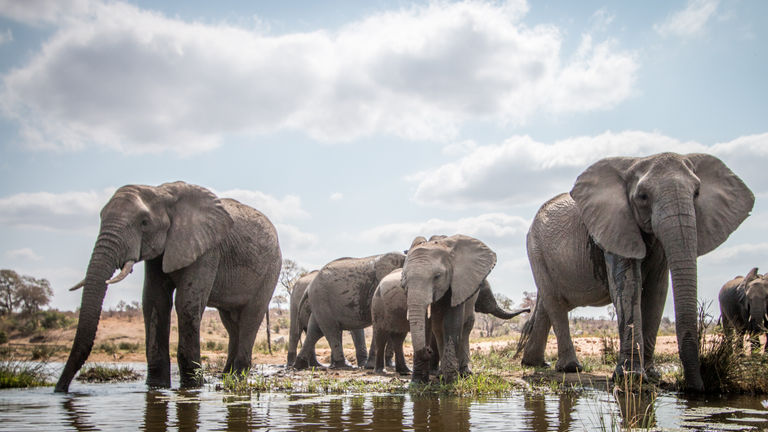 A good rule of thumb when it comes to wildlife is observation over interaction.
Credit: 2026 simoneemanphoto/stock.adobe.comCommon examples include touching, holding or posing with wild animals.
Avantika Krishna, founder and luxury travel advisor at Venture & Gain Travel (who is also a lawyer trained in environmental and sustainability issues) agrees that contact with animals should generally be avoided, or at the very least, critically evaluated.
In certain settings — such as vetted sanctuaries that might allow supervised assistance from visitors — questions she asks include what kind of contact is taking place, how long it lasts and if the interaction is forced.
I think the gold standard is that the animal is always free to leave. For the most part, we should just be observing.
“I think the gold standard is that the animal is always free to leave,” Krishna said. “For the most part, we should just be observing.”
Sutherland adds that guaranteed sightings should be an immediate warning sign.
“The behavior of the animals is [likely] not natural if we can guarantee that they are going to be where we want them to be, when we want them to be there,” he said.
When it comes to “rescued” or domesticated animals, Krishna’s simple test is to think about “what captivity looks like.” An obvious example is avoiding any situation where animals are caged, chained or otherwise trapped, but advisors — and travelers themselves — should also look out for signs of malnourishment or overwork, such as with camel or donkey rides.
“Just take a minute to observe the conditions,” she advised. “If you are struggling in 90-degree heat, an animal going up uneven stairs with blankets and extra weight [is going to struggle, too].”
Guihan adds that performances and “behaviors that suggest animals have been trained to act unnaturally” are easy-to-identify red flags along these same lines.
Diving Deeper
It’s important to remember that, in many cases, the warning signs and signals won’t be quite so obvious.
That’s why Claire Hanney, managing director of travel experiences at The Travel Corporation, says that advisors can’t be afraid to dig deeper.
“Advisors should feel empowered to ask direct questions,” she said. “Can animals behave naturally? Is there proper veterinary oversight? Is the experience rooted in conservation or designed purely for entertainment? If those answers aren’t clear, that’s often the answer in itself.”
Can animals behave naturally? Is there proper veterinary oversight? Is the experience rooted in conservation or designed purely for entertainment?
Sutherland also suggests taking a wider look at suppliers’ principles, noting that those with solid environmental and community standards are also likely to follow ethical practices when it comes to animals. Positive signs include educating guests on conservation, clearly communicating their policies, participating in biodiversity monitoring, rewilding animals or working with Indigenous communities.
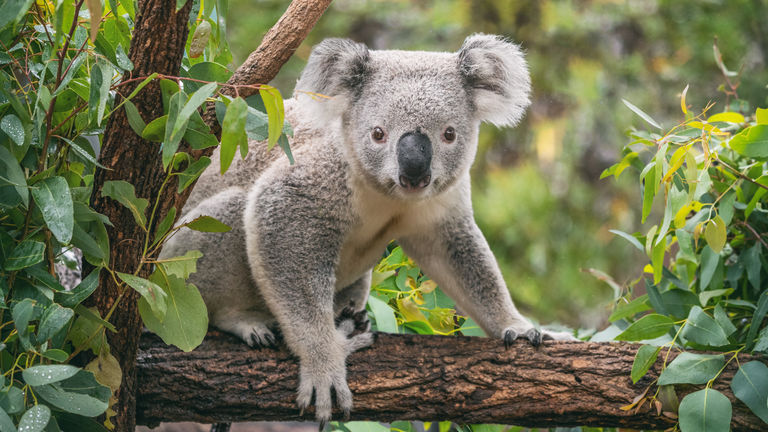 Animals should be able to roam freely and behave in natural ways, unaffected by human presence.
Credit: 2026 Maridav/stock.adobe.com
Cole Kirkpatrick, a travel advisor with Classic Travel Connection who has a strong book of safari business, likes to prioritize operators that support local communities and protect the environment, but adds that personally experiencing the products is key to vetting their everyday practices.
“Things I’m looking for in a supplier even come down to game drives,” he explained. “[I want to see] that you’re not getting too close to animals, that you’re respecting their space. I’ve seen drivers chase giraffes off the road in an effort to see a leopard. I don’t like the idea of putting an animal in a state of anxiety or nervousness."
The added danger of witnessing practices like this, says Kirkpatrick, is that travelers might then assume they are acceptable — an issue that extends to other wildlife experiences, too.
According to Krishna, the wide visibility of some wildlife encounters, such as swimming with dolphins in captivity or riding elephants, can lead travelers to draw incorrect conclusions.
“Generic booking platforms have so many unethical experiences,” she said. “As a consumer, you might think it’s ethical because it’s available and legal. But legal doesn’t mean ethical.”
As a consumer, you might think it’s ethical because it’s available and legal. But legal doesn’t mean ethical.
As an example of this distinction, she points to koala-holding in Australia, a practice that is illegal in some, but not all, states with koala populations.
“For the most part, [governments are] leaning toward not allowing that interaction,” Krishna said of the mixed tolerance for the activity. “So, should you really be doing it? Just because you can, doesn’t mean you should.”
Client Conversations
Encouraging clients to reflect on these kinds of experiences and explaining some of the considerations behind them has been a successful approach for Krishna when clients want to book something she doesn’t condone.
“I think most folks do care and just don’t know when something’s not okay,” she said. “And I have found that educating clients is really the game changer.”
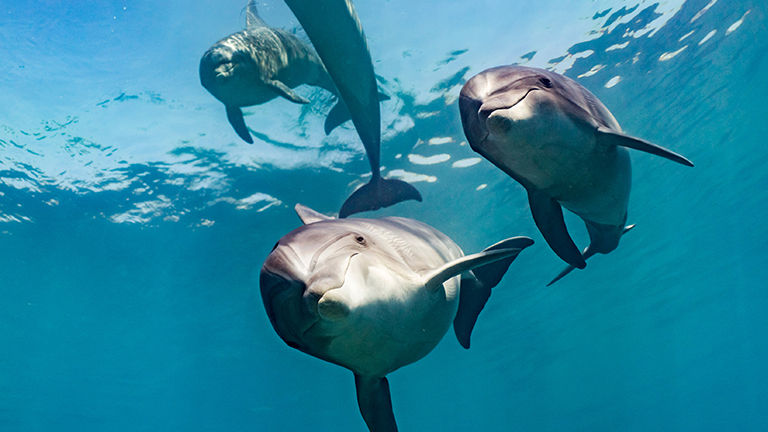 Most experts agree that dolphins and whales should not be in captivity.
Credit: 2026 Spoonbill Production/stock.adobe.comKirkpatrick agrees that most clients don’t knowingly make unethical wildlife requests, but when it comes up, he doesn’t shy away from a conversation.
“I mention where I can assist them and where I can’t,” he said. “I gently set that boundary and state my position."
Both advisors note that the best practice is often just to recommend an alternative. Typically, more ethical options result in greater satisfaction for clients, too, thanks to their intimate settings and greater meaning.
“You can often sell it as offering something different from the mass-market tourism angle,” Krishna said. “There are fewer people, you’ll have more proximity or more time and it’s actually more exclusive. I can get you that magic you’re looking for in a way that doesn’t negatively impact the animal or the overall trip.”
More Tools to Tap
Interested in learning more about ethical wildlife tourism? The following resources can help advisors educate themselves and their clients, as well as evaluate supplier partners.
- Tourism Cares: This nonprofit has an Animal Welfare Policy and a Meaningful Travel Map, with vetted suppliers in global destinations.
- The TreadRight Foundation: The organization’s wildlife pillar features projects and transformative travel experiences that leave a positive local impact.
- Animondial: This consultancy helps travel businesses improve animal welfare, stop biodiversity loss and restore nature; advisors can check out its blog, reports and more.
- The Tourism Reset: A favorite resource of advisor Avantika Krishna, this learning platform offers on-demand videos, expert interviews and more.
