During a September trip to Borneo with Intrepid Travel, I climbed Mount Kinabalu as part of the operator’s nine-day Borneo: Hike, Bike & Kayak itinerary. The trek is by far the highlight of any jaunt to Borneo, an island in Southeast Asia’s Malay Archipelago and the third-largest island in the world. But it’s also physically demanding and requires advance preparation.
Summiting the 13,435-foot Mount Kinabalu — located in Sabah, a Malaysian state in northern Borneo — is no easy feat, even for the most athletic of travelers. It features steep elevation gains, some technical climbing and a fair amount of exposure. But the views from the top — called Low’s Peak — are worth the sweat: Travelers from around the world convene here to take in the sunrise from Malaysia’s highest peak, which is also one of the highest mountains in Southeast Asia.
And the sights along the 11-mile roundtrip route are nothing to sneeze at, either: The UNESCO-protected Kinabalu Park features incredible biological diversity; of the nearly 6,000 species of plants, there are 1,000 orchid species, 78 species of ficus and 60 species of ferns. The park is considered among the most important biological sites in the world. Not to mention, it is home to 326 different birds and more than 100 mammal species.
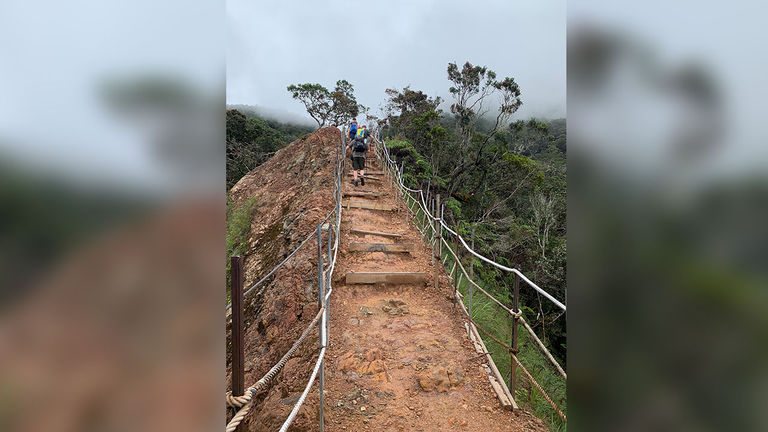 Much of the 11-mile roundtrip hike features stair-climbing and/or sharp elevation gains.
Credit: 2020 Michelle Juergen
Getting There
The climb takes a minimum of two days and one night, but hikers are encouraged to acclimatize in highland areas, such as Kinabalu Park or Kundasang town, prior to their trek. Travelers fly into Kota Kinabalu, the capital of Sabah that’s often referred to as “KK”; from there, a two-hour drive inland through the lush rainforests and mountains takes them to Kinabalu Park. Most trekkers begin from Timpohan Gate, which makes the total hike about 11 miles, with an elevation gain of about 7,000 feet. However, those looking for even more of a challenge can start at park headquarters for a nearly 14-mile roundtrip journey, with an elevation gain of nearly 8,500 feet.
The Hike
From Timpohan Gate, it takes about five to seven hours for most hikers to reach Panalaban Basecamp, which sits at about 10,600 feet. All travelers are required to overnight at one of the huts here; my group stayed at Pendant Hut, which had gorgeous views of the clouds below our lofty position. All accommodations at basecamp are basic, as porters must bring in supplies on their backs up the same trail that visitors take; the huts are generally unheated and feature bunk beds, shared bathroom facilities with cold showers and simple meal options. (The only heated spaces are three private rooms in Laban Rata Resthouse.) If their accommodations don’t include dinner, visitors can head to Laban Rata Resthouse for the buffet restaurant and grocery counter. Pro tip: Hot water is available for tea and coffee, so bring extra snacks such as dried ramen with you for a warm treat.
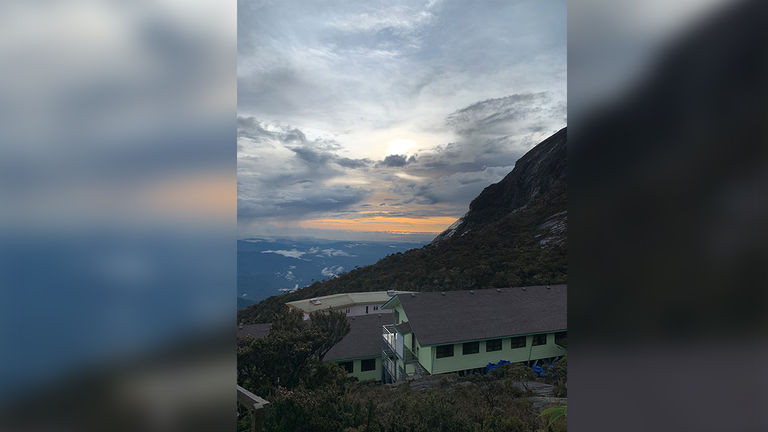 Stopping to rest at one of the huts at Panalaban Basecamp is mandatory before continuing to summit Mount Kinabalu.
Credit: 2020 Michelle JuergenI found the first portion of the hike to basecamp incredibly grueling, so I suggest pacing yourself and resting as much as you need. But don’t forget to look around: Kinabalu’s habitats include six vegetation zones, ranging from lowland rainforest to alpine scrub. Tropical lowland and hill rainforest make up 35% of the park, while tropical montane forest comprises 37%; most of the hike takes place in these habitats.
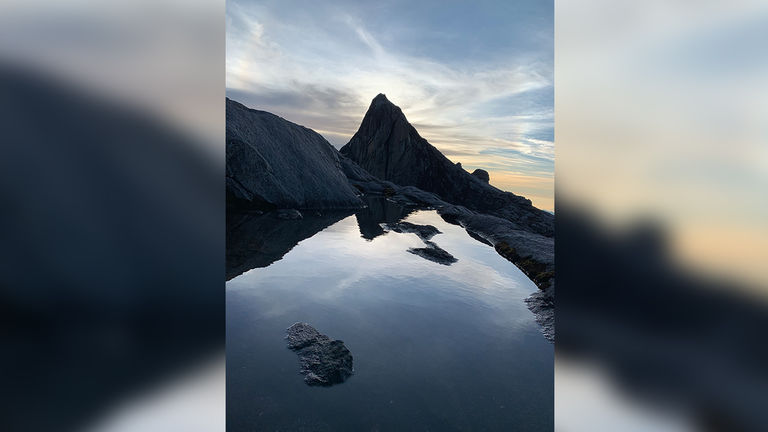 Most hikers aim to summit Low’s Peak by sunrise, which means awakening at around 2 a.m. to begin the final push upward from basecamp.
Credit: 2020 Michelle Juergen
After resting for a few hours at Panalaban, hikers rise around 2 a.m. to prepare for the summit climb. This is where gloves and a strong sense of adventure are a necessity: Some parts are nearly vertical up rock faces, and climbers must grip a rope to pull themselves upward. While traveling with a mountain guide is mandatory, and he or she will lead the way, the ropes also serve as a trail marker in the dark hours of early morning.
What to Pack and Wear
Weather and temperatures can, and do, change dramatically during this journey. The temperature at the summit of Mount Kinabalu can drop to freezing. Meanwhile, the Timpohon to Panalaban area ranges from 40 to 60 degrees Fahrenheit, and Kinabalu Park can hover between 60 and 80 degrees. Additionally, as much of the area is tropical rainforest, rain showers and heavy rain are common throughout the year. Therefore, it’s recommended to pack lots of layers, a waterproof jacket, sturdy hiking boots (preferably also waterproof) and waterproof gloves (for the ropes). A headlamp or flashlight is a must for the pre-sunrise summit, as is a waterproof backpack with ample water and snacks, sunscreen and toiletries for the overnight. I suggest earplugs and an eye mask for light sleepers, too, along with some money for tipping porters (if you choose to utilize them) and any snacks you want to purchase at Panalaban.
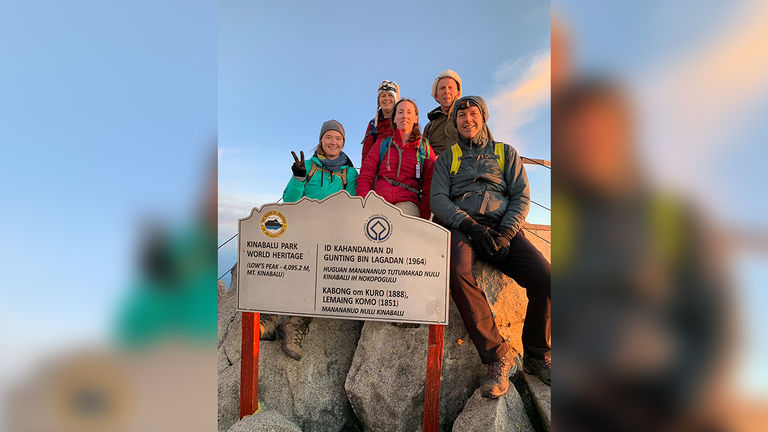 The park limits visitors to about 185 climbers per day, but the peak can still get crowded as travelers rush to take pictures of the rising sun (and themselves).
Credit: 2020 Michelle JuergenHow to Train
While this hike will turn your legs into jelly no matter how fit you are, I highly recommend preparing at least a month in advance — and more if you can muster the time. Because the route mostly consists of steps, training via stair climbing and leg-based cardio are the best exercises to get your body accustomed to the seemingly endless mountain ascent. As an avid hiker, I thought my frequent treks with big elevation gains would be adequate preparation, but the steps on Mount Kinabalu’s path used different muscles than I was used to, and by the time we completed our journey, my legs were toast.
At the very least, go for many long walks before your climb — and make sure to break in your hiking boots well before the trip.
The Details
Intrepid Travel
www.intrepidtravel.com
MountKinabalu.com
www.mountkinabalu.com
Sabah Tourism Board
www.sabahtourism.com
