Editor's Note: This story was originally published on June 15, and has been updated as of June 25. The COVID-19 policies and procedures listed below are up-to-date as of press time. However, we encourage all readers to head to each individual country’s governmental tourism website prior to travel to confirm the information regarding entry protocols.
According to a June 24 announcement from Hawaii Governor David Ige, Hawaii will eliminate its pre-travel COVID-19 testing/quarantine requirement for domestic travelers who have been fully vaccinated in the United States, beginning July 8.
Earlier in June, Hawaii’s Lieutenant Governor Josh Green, said he was confident Hawaii would likely hit a 60% statewide vaccination rate around the first of next month, reaching a threshold that Gov. Ige has said will trigger a quarantine and pretesting exemption for visitors immunized on the U.S. Mainland.
“In about three weeks, we should touch that 60% threshold,” Green said, noting at that time that 53% of Hawaii’s residents had been immunized against COVID-19. “We've had the Safe Travels program with the pretest, which has worked very well to keep case counts down, but we also want to honor people’s commitment to being vaccinated.”
More than 4 million people have taken part in Hawaii’s Safe Travels program since its launch last October, with 90% of them navigating the program effectively without having to quarantine.
Safe Travels requires transpacific Hawaii visitors looking to bypass an otherwise mandatory 10-day quarantine to register online and then upload proof of a negative COVID-19 test conducted no more than 72 hours before their departure by a sanctioned testing partner.
After the state reaches a 60% vaccination rate among residents, however, fully immunized travelers who received their shots on the mainland will instead be able to upload an image of their vaccination card online and later present it to state officials at the airport in the Islands to bypass quarantine, Green said.
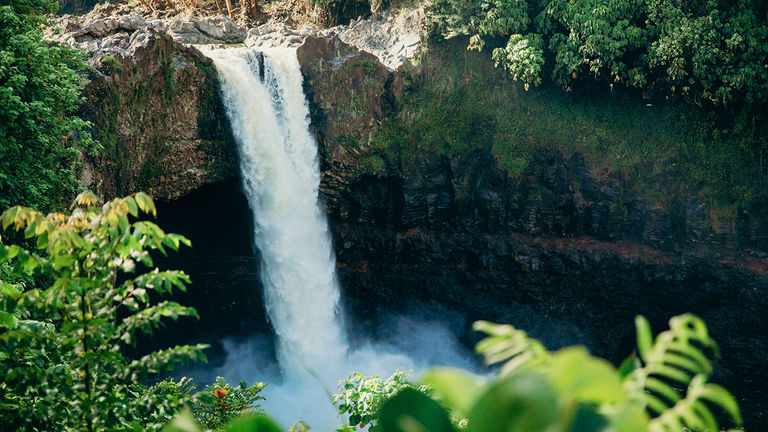 More than 4 million visitors have taken part in Hawaii’s Safe Travels pretest program since last October.
Credit: 2021 Ben Ono/Hawaii Tourism Authority“And then, given the current trajectory of our vaccination program, sometime in early August – when the state of Hawaii is 70% vaccinated – we're going to drop, it appears, all restrictions,” said Green, who is a practicing emergency room physician. “There won't be any testing requirements or even vaccination requirements for travelers.”
Gov. Ige made his initial announcement about the 60% and later 70% threshold earlier this month. He also said that the state was dropping all pretest requirements for interisland flights, allowing travelers who received their COVID-19 vaccinations in Hawaii to fly to the Islands on transpacific domestic flights and bypass quarantine without a pretest.
“The easing of travel restrictions is a direct result of our robust vaccination rate and a community that sacrificed,” Ige said in a June 4 statement. “We need to push hard now so we can get to the point where Safe Travels is no longer needed to keep the people of Hawaii safe.”
The easing of travel restrictions is a direct result of our robust vaccination rate and a community that sacrificed. We need to push hard now so we can get to the point where Safe Travels is no longer needed to keep the people of Hawaii safe.
Constraint Concerns Slow Down Bookings Momentum
Paulette Darensburg, a Protravel International-affiliated advisor in Beverly Hills, Calif., was quick to praise Hawaii’s plan to allow inoculated transpacific U.S. travelers to vacation in the islands without a pretest, noting that many of the Caribbean destinations she’s selling now have already enacted similar vaccine passport programs.
“I think that’s the way to go for any destination that really wants to draw people,” Darensburg said.
Although she’s long sold Hawaii to clients, Darensburg said she hasn’t been booking the Aloha State much recently, in part, because of the cost to vacation there.
“It’s so expensive,” she said. “People are taken back by the price of things.”
Darensburg has a family booked to Hawaii in August, honeymooners scheduled in September and a pair of families set to vacation in the Islands over the Christmas holidays. Even so, this advisor says she’s been much busier selling Mexico and the Caribbean. According to Darensburg, part of the challenge has been not only high occupancies at Hawaii hotels and resorts, but that excursions are also constrained, and car rental options remain limited and pricey.
“It’s not just Hawaii,” she explained. “I did Seattle yesterday for somebody for $900 dollars for four days for a mid-size car, and that was the least expensive. … So it’s across the board.”
Still, car rental challenges have become so pronounced in the Aloha State that John De Fries, CEO and president of the Hawaii Tourism Authority, issued a May 27 statement mentioning prices as high as $700 per day in the Islands and urging vacationers not to rent moving vans.
“This past weekend, there were several sightings of U-Haul trucks seen at popular visitor locations,” De Fries said in the statement, noting that Hawaii’s car rental fleet diminished by more than 40% during the pandemic. “These work vehicles are used frequently by Hawaii residents and businesses. … Having visitors rent these moving vehicles to use for leisure transportation is disrespectful and should not be encouraged by anyone in the travel industry.”
Melissa Backus, vice president of Supplier Engagement and Partnership Marketing for ALG Vacations, said the wholesaler has seen its car rental prices in Hawaii climb substantially over the 2019 rates, and she agreed with Protravel’s Darensburg about activity options in the islands filling up fast due not only to demand, but also to capacity restrictions.
Backus said those constraint challenges for summer in the Islands are expanding ALG’s Hawaii booking window, as consumers are not only looking for dates when they can actually book a car or an activity, but also land on a cheaper price.
“You’re not going to find those last-minute deals,” Backus said. “If you’re intention is still to travel close in, you’re going to pay for that capability. … The way to find the best package price is going to be to book further out and to really get back to planning ahead.”
Higher pricing and growing capacity challenges do not, however, appear to be hampering ALG’s overall business this year to Hawaii, a destination Backus said has been in high demand since earlier this spring when the Centers for Disease Control & Prevention announced its COVID-19 pretest mandate for anyone headed to the U.S. from overseas.
“We’ve exceeded our 2019 weekly booking volume for the past 15 weeks for Hawaii,” Backus said. “And we really anticipate closing 2021 pretty close to our 2019 volume, which certainly wasn’t the expected trend looking ahead six months ago.”
The Details
Hawaii Safe Travels Program
