I dipped my toes into the white, milky bath prepared for me, complete with tiny pink rose petals swirling on the surface. I had just finished a 90-minute Thai massage, and I didn’t think it was possible to get more relaxed than this.
Then, I submerged. I leaned back in the tub and took in my surroundings, for about the 100th time in only two days. I was on a balcony at Anantara Golden Triangle Elephant Camp & Spa in Thailand, and from my position, I could easily see Laos and Myanmar, just across a picturesque river.
Even better ... I could see elephants.
Anantara Golden Triangle is one of the Anantara Hotels, Resorts & Spas brand’s crown jewels, set in Chiang Rai in northern Thailand. The area where Thailand, Laos and Myanmar meet is known as the Golden Triangle, and it’s a region with a long, complicated history of opium trading; beautiful leafy green vistas; and a bustling culture thanks to the mix of people coming back and forth over the borders.
Boasting the utmost in luxury accommodations and a perfect location, Anantara Golden Triangle is special for yet another reason, one that more and more travelers are beginning to demand when booking at such a high-price point: an affirmative commitment to sustainability.
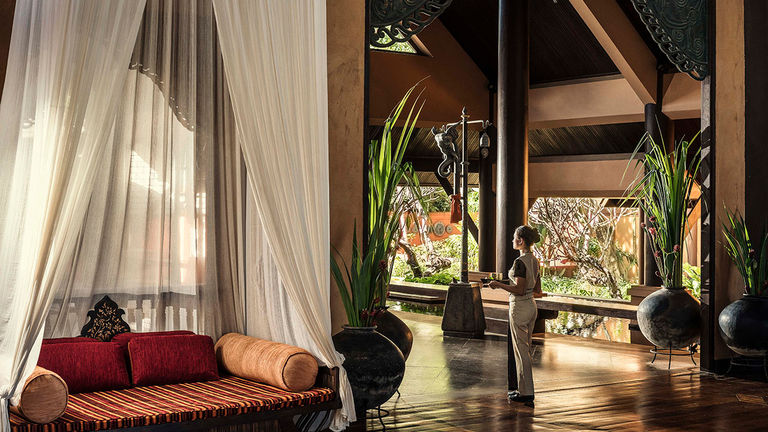 The lobby at Anantara Golden Triangle Elephant Camp & Resort
Credit: 2018 Anantara Golden Triangle Elephant Camp & Resort
Known as the “Elephant Camp” property, Anantara Golden Triangle has taken major efforts to disrupt the elephant trade that had begun to pervade Thailand and its tourism industry.
“Mahouts,” or elephant handlers, have long been a part of Thailand’s history. In earlier times, a mahout ate, slept and lived close to his elephant, which he would employ in farming or logging work. The two were inseparable, and the relationship a symbiotic one. However, as the economics and industries of Thailand began to change, so did the way that elephants were treated. Many mahouts, eager to make a higher or quicker wage, began abusing their elephants by overworking them or turning them over to tourism. This type of tourism led elephants into the busy city of Bangkok, where they burned their feet on hot pavement and earned coins for their handlers with cheap tricks.
The Thai elephant tourism quickly became known as an industry that no well-meaning traveler wanted to support. This meant that mahouts — and their elephants — had nowhere to turn. To disrupt this, Anantara Hotels, Resorts & Spas developed its Dara Elephant Camp, and invited both mahouts and their elephants to live and work at the 40-room, 15-suite Golden Triangle property.
Multiple guest experiences — such as the all-inclusive “Walking with Giants” excursion and the Elephant & Yoga Experience — put clients face to face with the gentle giants. Anantara’s elephant camp encourages a traditional way of life for the mahouts and their elephants.
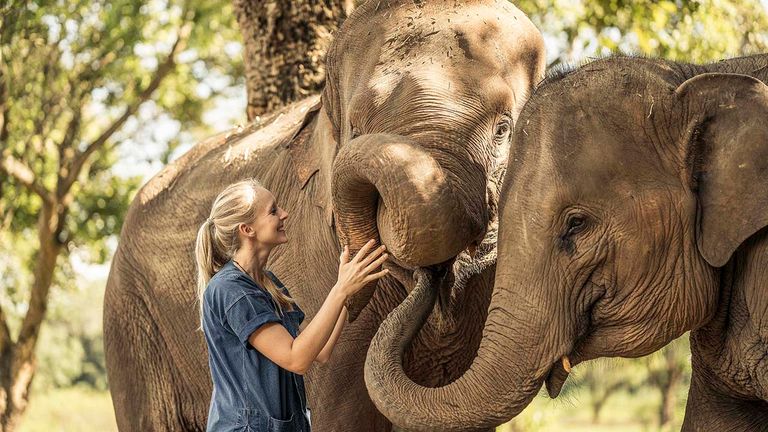 Guests at the property have opportunities to interact with elephants at the on-site Dara Elephant Camp.
Credit: 2018 Anantara Golden Triangle Elephant Camp & Resort
This commitment to sustainability and living peacefully with people, the planet and its animals is evident throughout the resort. The elephants are free to wander and eat from the lush grasses across the 160-acre property, and they’re visible from almost every place you may find yourself: on the balcony of the restaurant at brunch or dusk; splashing in the outdoor pool that overlooks the fields and river; or from the strategically built rooms that allow you to take a shower while simultaneously looking over your shoulder to watch an elephant graze in the fields below.
Additionally, the resort takes many steps to protect the land and culture of the Golden Triangle. As of Jan. 1, all Anantara resorts across Asia have eradicated single-use plastic straws in favor of bamboo or metal reusable ones.
The Details
Anantara Golden Triangle Elephant Camp & Resort
www.goldentriangle.anantara.com
