As Mexico’s most northwestern state, and the only one that shares borders with both California and Arizona, Baja California has long been a popular driving destination for vacationers from the western U.S. The pandemic-era closing of the U.S./Mexico land borders to nonessential travel may have cut off a major source of tourism, but it also gave the destination a chance to reposition itself for future growth.
This year, the state tourism office replaced its former Baja Norte branding with the more logical Baja California moniker, reflecting the actual name of the state itself. In this interview, we learned what’s behind the new strategy from Mario Escobedo Carignan, secretary of tourism and sustainable economic development for the state of Baja California.
Why did you feel the need to rebrand the destination?
We wanted to create a brand that reflects our history, and at the same time embraces our diverse attractions, activities and unique experiences. Not only does the rebrand allow us to finally move back to our original name and roots — it was changed to Baja Norte in 1974 to distinguish it from the southern state of Baja California Sur — the new branding also incorporates icons featuring quintessential elements that can be found throughout the region, including ocean, valley, woods, desert and sea. Each of the seven tourist destinations throughout Baja also have their own unique logos that highlight activities they are known for — for example, grape icons for Ensenada, which is home to the Valle de Guadalupe wine region, and waves for Rosarito, a popular surfing destination.
How would you describe Baja California's pandemic recovery?
[The year] 2019 was a spectacular year for Baja California’s travel industry, with 27.9 million visitors and $119 billion of annual visitor spending. When the pandemic hit, the economic turndown for the state's hospitality industry was devastating. As more people become vaccinated and COVID-19 numbers go down, we are optimistic that the industry´s outlook has started to change, and recovery is on the horizon. Re-establishing trust in travel has been a key step toward recovery, and over the past year, government agencies and tourism and hospitality industry supply chains have committed to jointly addressing the reactivation of tourism and making the sector a priority.
As more people become vaccinated and COVID-19 numbers go down, we are optimistic that the industry´s outlook has started to change, and recovery is on the horizon.
How has the closing of land borders affected Baja California's ability to attract travelers?
The land borders were closed to nonessential travelers in March 2020 [and travel remains limited]. However, essential travel is still permitted across the border, and we continue to see large numbers of people traveling for business, medical and education purposes. Because medical tourism is so important, we also have a medical lane at the border to help expedite the process for medical needs.
 Tijuana is located just across the border from the U.S. in Baja California.
Credit: 2021 Baja CaliforniaBorder closures do not affect air travel to and from the two countries, so we have been seeing more leisure travelers visit places in Mexico that require a flight. The Tijuana International Airport and facilities such as Cross Border Xpress (CBX) [in San Diego] have been successful in making it easier for visitors to feel safer while traveling.
While we have not been able to actively promote leisure travel due to the border closures, we are encouraging people to continue dreaming of Baja California and planning for future trips. We’ve used this time to pause and listen to what travelers are looking for. We developed a new digital campaign called “The Road Awaits,” not only to stay top of mind for future travel, but also to serve as an inspirational message highlighting better days ahead, when we can once again visit the people and places we love. In May of this year, we also launched a “Drive South” website, featuring comprehensive itineraries, activity recommendations and safety tips for travelers to begin planning future road trips across the border.
We’ve used this time to pause and listen to what travelers are looking for.
What kinds of travelers are most likely to enjoy a vacation in Baja California?
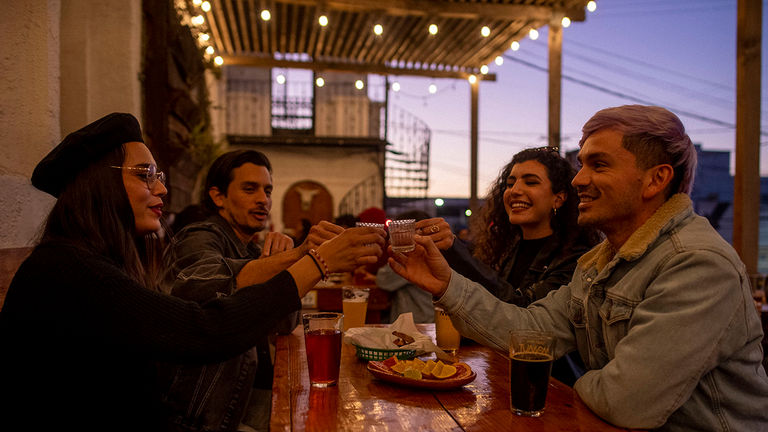
The Baja California Visitor Profile Study is conducted every other year to track the characteristics of the market and travelers. Based on those findings, we know that 58% of visitors are international travelers, with 84% coming from California. The study also indicates that an overwhelming majority of travelers visit the region for the growing gastronomy scene, including craft beer and wine. In addition to foodies, travelers who are interested in health and wellness, sports — surfing, off-road racing, etc. — and outdoor adventure activities are most likely to enjoy a vacation in Baja California.
Anything else that’s trending with visitors to Baja California?
Due to the pandemic, visitors are changing their preferences when visiting our state. Instead of visiting some of the larger city destinations, many are now opting for more off-the-beaten-path destinations, with more outdoor activities such as adventure or nature tourism. Luckily, Baja features some incredible outdoor dining, camping, hiking and more, which naturally makes it a great option for safely exploring the outdoors. We have also been seeing an increase of tourists in beach destinations, such as San Quintin, San Felipe and Ensenada.
The Details
Baja California
