As the world slowly emerges from the COVID-19 pandemic, Mexico’s tourism industry has clear advantages over many other destinations.
“The recovery has been different in different places,” said Alex Zozaya, chairman of Apple Leisure Group (ALG), during a panel discussion at the 20th Global Summit of the World Travel & Tourism Council (WTTC), which took place at Moon Palace Resort in Cancun last week. “I’d say that Mexico has been the fastest and most successful [destination] … because there were no restrictions, and there still are no restrictions.”
About 600 tourism officials and business leaders from around the world descended on Cancun in April for the conference, with the theme “uniting the world for recovery.” Given the host destination, it’s no surprise that some of the liveliest conversations concerned Mexico’s own tourism industry.
Zozaya explained that the fact that Mexico remained open to tourism during the pandemic, albeit with extensive pandemic-related protocols in place, allowed the nation to maintain a higher profile on the tourism map. The country also provided vacationers with a chance to experience and get comfortable with its new hygiene safety protocols.
In addition, Zozaya said that, in some ways, Mexico’s tourism industry has benefited from a lack of government support.
“Ironically, one of the reasons why Mexico recovered faster is because we’ve had zero help from the federal government,” he said. “In other countries where [there was] help from federal governments, we were not in such a rush to reopen because the government helped us to pay part of the payroll, and gave us a tax break and additional incentives. In Mexico, it was zero help, and we had to reopen quickly.”
Ironically, one of the reasons why Mexico recovered faster is because we’ve had zero help from the federal government.
While meeting and incentive groups, as well as weddings, may be slow to return to Mexico, ALG’s overall sales are impressive, Zozaya said.
“The numbers we’ve been having in the last month for future bookings from the U.S. to Mexico and the Caribbean are, for the remainder of this year and the winter of next year, better than this time in 2019,” he added.
Gibran Chapur, executive vice president of Palace Resorts, reported similarly positive growth. In the week before the conference, Chapur said his company sold 50% more than they had during the previous time period in 2019 — even as they were charging a higher average room rate.
“We’ve raised it 20% over 2019, so the demand is there,” he said. “The U.S. clientele is about to surpass [numbers] from January/February 2020, which was the peak of tourism before the pandemic.”
Chapur credits effective communication and consistent protocols for helping Mexico to bring international travelers back.
“The industry was very well-organized in having the same protocols, and this created a very great confidence in the client,” he said. “Clear communication is very important, and also word of mouth.”
The industry was very well-organized in having the same protocols, and this created a very great confidence in the client.
Still, Mexico’s early start on reactivating tourism doesn’t guarantee endless growth. Tourism destinations and suppliers must truly resonate with vacationers in order to compete effectively as other destinations reopen, according to Rodrigo Esponda, managing director of the Los Cabos Tourism Board.
“All the destinations are really going to be trying to grab that piece of the market in the U.S.,” he said. “There needs to be a meaningful connection that’s comprehensive from many angles, [so] you will really be understanding how your contribution is helping the local community.”
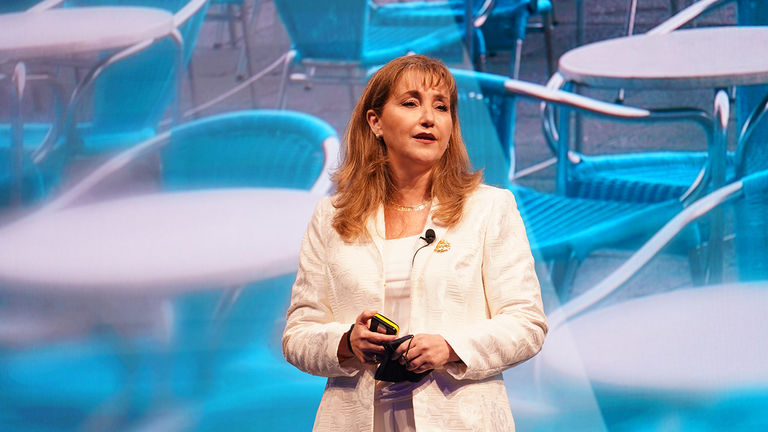 Gloria Guevara, president and CEO of WTTC
Credit: 2021 WTTCMexico Looking to the Future
Cancun’s experience as host city for the WTTC summit set a noteworthy example for the city of Merida, which is slated to host Tianguis Turistico, Mexico’s international tourism conference, later this year.
“We were doubting about [doing] Tianguis, but when we saw the summit, we understood that we need to commit to go forward with it,” said Michelle Fridman, minister of tourism for the state of Yucatan. “It’s important for the government, and it’s important for the tourism industry. The fact that we can see a tradeshow like this, a summit like this, is a sign of an industry that is resilient and strong.”
The fact that we can see a tradeshow like this, a summit like this, is a sign of an industry that is resilient and strong.
Some of the most unifying words at the convention came from Gloria Guevara, president and CEO of WTTC and a former secretary of tourism in Mexico. “This virus has not only changed how we engage with each other, but how we connect,” she told attendees. “It has changed our today and our tomorrow.”
“By turning this crisis into an opportunity, we can also make sure that we become more inclusive and more sustainable,” she said. In that vein, Guevara announced the Cancun Women’s Initiative Declaration Supporting Women in Travel & Tourism, a public/private partnership that aims to provide a more equal and just work environment for women in the industry.
The Details
World Travel & Tourism Council
