California’s Sequoia and Kings Canyon National Parks cover some impressive ground: Measuring nearly 866,000 acres, the two contiguous parks are larger than nearby Yosemite National Park. Yet Sequoia and Kings Canyon see far less visitation than their popular northern neighbor — a mystifying fact to all those who do venture into the parks to take in their stunning natural beauty and view some of the world’s largest trees.
Some 97 percent of the parks is wilderness — and backpackers can revel in the fact that they can hike to a spot that is farther from a road than any other place in the lower 48 states. But those who prefer a more comfortable experience need not feel daunted by the 800 miles of trails.
Sequoia and Kings Canyon offer a wide range of hikes for all skill levels and accessibility needs. From multiple trails that can accommodate wheelchairs and convenient parking to a free shuttle service in the summer and breathtaking highway turnouts, options abound for people with disabilities; family groups; or those simply looking to take in the scene from behind a car window while driving through the region.
Of course, for those who crave the R&R that a walk through the woods provides, getting out of the car and a little off the beaten path is a must. Here are six standout hikes in Sequoia and Kings Canyon National Parks. Pro tip: Visit in spring or fall, when the trees are at their boldest and crowds are few, and plan to stay at least overnight.
Big Baldy Ridge Trail, Sequoia National Park
4 to 5.5 miles; Out-and-back trail; Moderate
For a sweeping panorama of sequoias and Sierra Mountain peaks from an elevation of 8,209 feet, head for Big Baldy Ridge Trail. The trail winds through gorgeous pine forests, up rocky boulders and along a few narrow ridges and switchbacks.
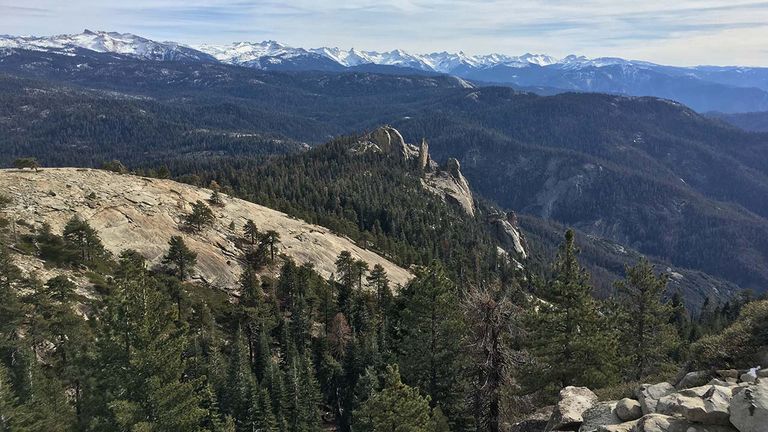 Those who hike Big Baldy Ridge Trail will be rewarded with far-reaching views.
Credit: 2018 Michelle JuergenMost people stop at mile 2 to take in the expansive vistas from Big Baldy, but head slightly farther up the trail and onto the wide ridge for a longer hike and even more views. There’s a little scrambling involved, but even kids can tackle it safely. (Those with a fear of heights may not prefer this portion of the hike, however, as there is some exposure.)
While the trail is doable for anyone in decent shape, it has an elevation gain of about 650 feet, so take it slow and bring plenty of water if you’re not used to hiking at higher altitudes.
Big Stump Trail, Kings Canyon National Park
2 miles; Loop trail; Easy
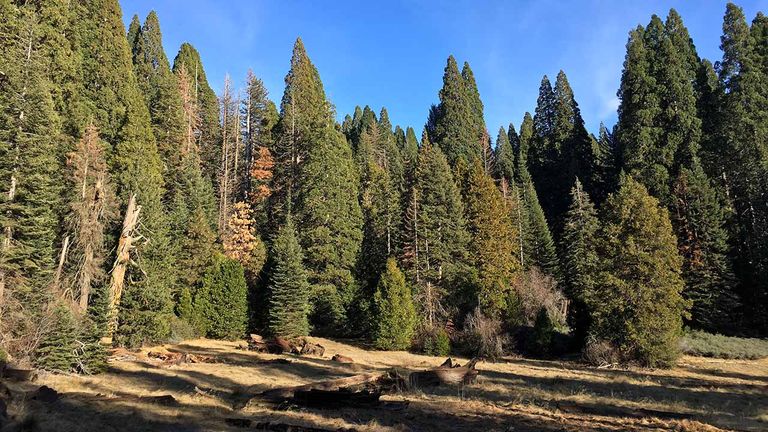 Big Stump Trail shows the results of logging in the late 1800s.
Credit: 2018 Michelle JuergenAlthough this mostly flat, leisurely trail is located just past the main entrance to Kings Canyon, it’s easy to miss. But don’t pass it by: The quiet loop trail features wildflowers, a grassy meadow straight out of a fairytale and many large sequoia stumps left over from logging that occurred in the forest in the late 1800s. The piece de resistance is the Mark Twain stump; the tree was felled in 1891 so that a slice of its 26-foot-wide trunk could be shown in museums in London and New York. Now, a small set of stairs allows travelers to walk on the stump and get a feel for just how wide sequoias grow.
There are many still-standing sequoias to get up close to along this trail, as well. Ever wondered what it feels like to get a hug from a tree? Squeeze through the small opening of the Burned Monarch, a dead sequoia that was struck by lightning, to find out.
Heather Lake via Watchtower Trail or Hump Trail, Sequoia National Park
8 miles; Out-and-back trail; Difficult
The elevation gain on this trail is serious — some 2,000 feet — but the postcard-worthy sight of Heather Lake makes the uphill slog all worth it. On a clear day, you’ll see the blue sky, rugged mountain peaks and tall pines reflected in the still water.
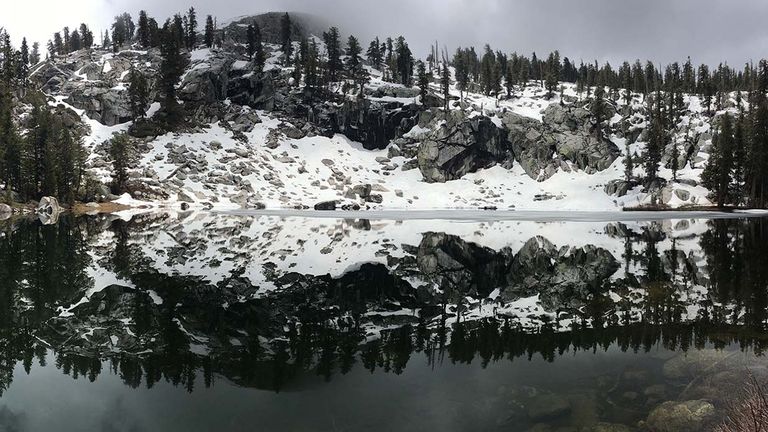 Heather Lake is located at an elevation of 9,280 feet.
Credit: 2018 Michelle JuergenWhile the scene is even more picturesque with snowfall, a hike in winter is not recommended unless you have the gear and expertise for icy conditions. But no matter what time of year you’re hiking, bring a jacket, as the lake is located at an elevation of 9,280 feet, and the weather can change dramatically from the start of the hike. Case in point: During a recent trip at the end of May, my hike began with sunshine, but once I neared the lake, I had to trek through some deep snowfall; my descent a few hours later featured heavy fog, but the sun was blazing back at the trailhead.
Note: After a few miles, the trail comes to a junction where hikers can continue via either the Watchtower Trail or Hump Trail. The Watchtower Trail offers breathtaking views but involves exposure and some scrambling, while the Hump Trail winds through forest and is more shaded (but has a slightly steeper elevation gain of about 200 feet).
Ladybug Camp Trail, Sequoia National Park
3.5 miles; Out-and-back trail; Moderate
If you’re looking for an out-of-the-way campsite and hike, South Fork Campground is just the spot. Located some 13 miles off State Route 198, down a rough, dusty and bumpy road, the primitive campground has just 10 sites and access to two park trailheads. One of these is Ladybug Camp Trail, a favorite hike for families.
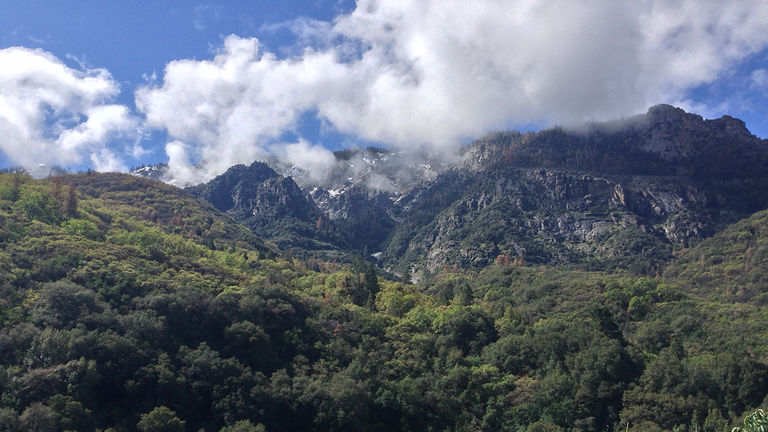 Ladybug Camp Trail is popular with families.
Credit: 2018 Michelle JuergenDepending on the time of year, you may spot some of the creatures for which the trail is named, but the true reward is wending through creeks, canyons, forests, rivers and sequoia groves, as well as spying multiple waterfalls.
Note: While not necessary, a four-wheel drive vehicle is recommended for the drive in (the potholes are no joke). Additionally, watch out for poison oak, and bring plenty of bug spray.
Redwood Mountain Loop, Kings Canyon National Park
10 miles; Loop trail; Moderate
This trail combines the Sugar Bowl Loop and Hart Tree Loop for a longer day hike or an overnight backpacking trip. It’s a way to get your sequoia fix (and feel immeasurably small): The high density of mature and young sequoias makes for a trek through what feels like prehistoric times. Two highlights include the Hart Tree, one of the world’s largest sequoias, and the enormous Fallen Goliath tree. Be aware there’s some 1,500 feet of elevation gain on this 10-mile hike, so bring enough water, snacks and stamina to complete the loop.
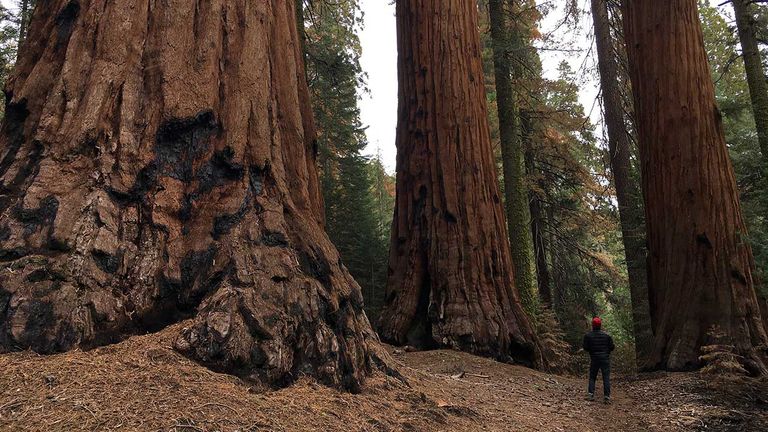 The Redwood Mountain Loop has a high density of mature and young sequoias.
Credit: 2018 Michelle JuergenZumwalt Meadow and Roaring River Falls, Kings Canyon National Park
4 miles; Loop and out-and-back trail: Easy
For a vista reminiscent of the Yosemite Valley, take State Route 180 nearly to its end to Zumwalt Meadow. The drive, which winds along the South Fork of Kings River, is quite picturesque. If you’re on a time crunch, the Zumwalt Meadow Loop is just under 1.5 miles and showcases cedar trees, the expansive meadow for which it’s named and views of the North Dome granite rock face. For a slightly longer trek, meander west along the peaceful river trail toward Roaring River Falls, where you’ll find a small waterfall and the opportunity to scramble over some boulders.
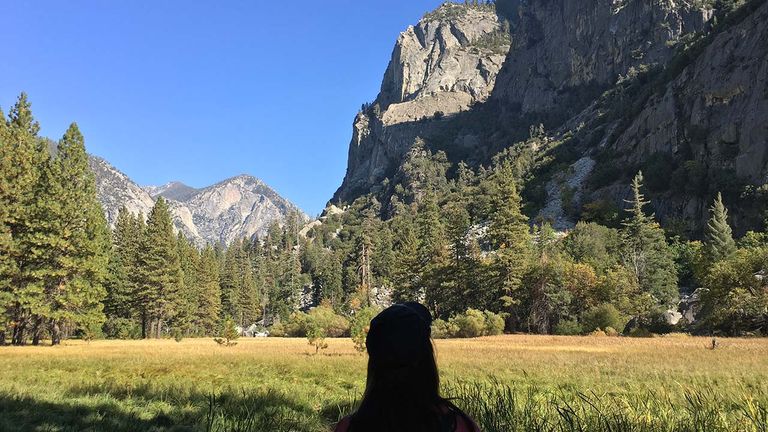 Zumwalt Meadow offers views like that of the Yosemite Valley.
Credit: 2018 Michelle JuergenThe Details
Sequoia and Kings Canyon National Parks
www.nps.gov/seki
