Twenty years ago, when Oahu resident Huy Vo was growing up in Honolulu, his parents owned and operated a restaurant in the city’s Chinatown neighborhood.
Back then, this 36-acre stretch of land — located just a mile from tourist hot spot Iolani Palace and a 20-minute drive from Waikiki Beach’s Luxury Row — could be described as, at the kindest, seedy. Bars, adult shops and illegal gambling casinos were tucked into the higher floors of historic buildings and, according to Vo, pedestrians generally avoided walking down the streets for fear of being accosted.
The Chinatown of today looks much different.
Vo, who is now director of public relations for The Ritz-Carlton Residences, Waikiki Beach, returned to Chinatown 10 years ago — and has never left. He has witnessed the area’s resurgence into an ultra-hip arts district with plenty to offer both tourists and Oahu residents.
As I strolled through the neighborhood for the first time, with Vo as my guide, I couldn’t help but agree that this area of Honolulu was a unique blend of old meets new: Historic buildings rub shoulders with trendy boutique shops and art galleries, and authentic Chinese restaurants and stalls sit adjacent to craft cocktail lounges and award-winning restaurants.
“The city is a big supporter of the arts scene, and it also did an exceptional job of cleaning up the area,” Vo explained to me. “One by one, as each illegal gambling casino and seedy establishment closed, a new and hip joint would open in its place.”
But despite this gentrification, the neighborhood still retains the unique characteristics of Chinatowns across the U.S.
Clients can stroll the streets — pork-filled manapua bun in hand — while marveling at the spreads on outdoor fruit stands (including giant avocados, star fruit and persimmons); pop into meat markets; and peruse the many souvenir shops and boutiques (many of which are operated by Hawaii residents of Chinese heritage).
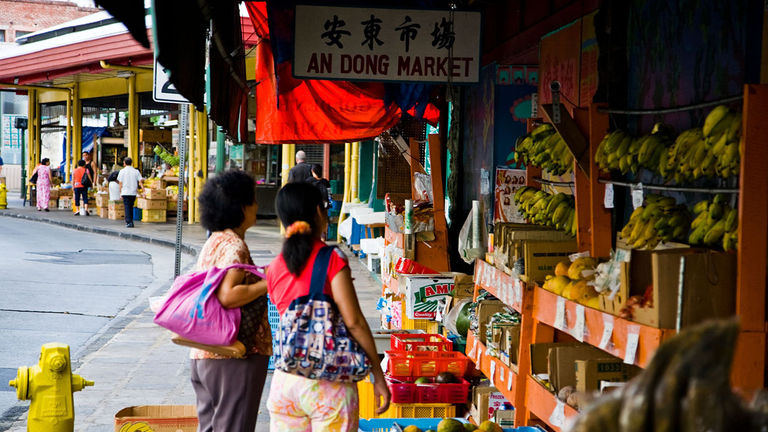 Chinatown's eclectic mix of shops reflects Hawaii's multicultural population.
Credit: 2019 HTA/Tor JohnsonAnd if clients want more structure to their neighborhood exploration, Vo suggests checking out the recently renovated historic Hawaii Theatre Center, also known as the Pride of the Pacific, which has musicals, concerts and more on offer. Additionally, on the first Friday of every month, the neighborhood takes part in the First Friday Downtown Honolulu Art Walk, where Chinatown’s art galleries, shops, bars and more open their doors for a night of events, food and entertainment.
Vo also recommends that foodie clients visiting Chinatown make a stop at Char Hung Sut, a Chinatown staple since 1945 and the source of the aforementioned manapua pork bun; The Pig and the Lady for Vietnamese food; and Restaurant Senia, which serves elevated Hawaiian and New American offerings in an upscale setting.
There is also no shortage of trendy bars and lounges for night owls; some of Vo’s favorites include Bar Leather Apron, a whiskey lounge run by mixologist Justin Park; Tchin Tchin, a second-floor wine and cocktail bar with an open-air patio that was formerly the site of an illegal gambling casino; and Manifest, which serves up fresh coffee brews during the day before transforming into a nightclub with lines stretching around the block.
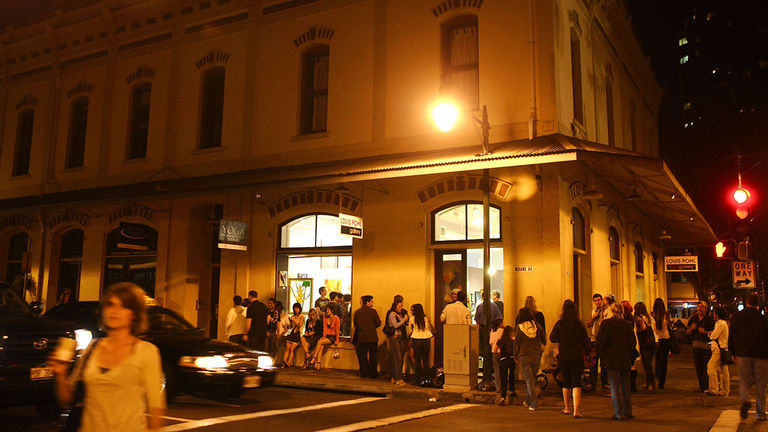 Chinatown has become a hip hub for evening cocktails, dining and shopping in Honolulu.
Credit: 2019 Oahu Visitors Bureau“The island of Oahu is known for being melting pot of different cultures, and Honolulu’s Chinatown certainly celebrates that characteristic, as it’s home to businesses and merchants of Chinese, Vietnamese, Korean, Thai, Laotian, Filipino and other Pan-Asian and Pacific Islander ancestries,” Vo said. “The sight of watching families, couples and friends enjoying the streets of Chinatown at night certainly warms my heart, as this is something you wouldn’t see 20 years ago.”
The Details
Oahu Visitors Bureau
www.gohawaii.com
The Ritz-Carlton Residences, Waikiki Beach
www.ritzcarlton.com
