As Hawaii nears a visitor industry reboot slated to begin later this month, the destination is preparing to welcome trans-Pacific travelers under new leadership at the state’s top tourism position.
John De Fries took over as president and CEO of the Hawaii Tourism Authority Sept. 16, becoming the first native Hawaiian to helm the visitor agency. De Fries replaced Chris Tatum, a longtime Marriott executive who started as the HTA’s top executive in 2018 but announced plans to retire earlier this summer.
A 40-year Hawaii tourism industry veteran, De Fries is a former executive director of the Native Hawaiian Hospitality Association and was recently president of hospitality consulting firm Native Sun Business Group.
De Fries faces a collection of unprecedented challenges as the new head of the HTA, an organization that oversees Hawaii’s global marketing and is funded by the state’s 10.25% accommodations tax. Chief among those hurdles is navigating the launch of Hawaii Governor David Ige’s pretesting plan for trans-Pacific travelers, a safety protocol set to begin Oct. 15 that allows visitors with proof of a negative COVID-19 test — taken no longer than 72 hours before departure — to bypass the state’s mandatory 14-day quarantine.
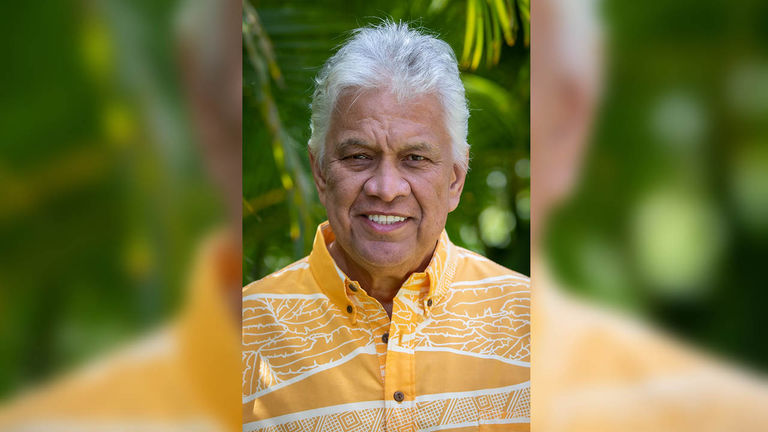 John De Fries is the first native Hawaiian president and CEO of the Hawaii Tourism Authority.
Credit: 2020 Hawaii Tourism AuthorityIge enacted the mandatory quarantine for trans-Pacific travelers March 26 this year, crippling a Hawaii visitor industry that welcomed 10.4 million visitors and generated more than $17.7 billion in tourism revenue in 2019.
RELATED: Will Hawaii Actually Accept Airline COVID-19 Tests?
Through the end of August this summer, visitor arrivals to the state plunged nearly 70% compared with the same eight-month period last year, according to Hawaii Tourism Authority data.
We caught up for the first time with De Fries on Friday, discussing immediate challenges for the Aloha State as well as some of his longer-term plans for the destination.
Is Hawaii ready to welcome back visitors?
We’re not ready today. But we’ve got 14 days to do it, to refine it. ... Until you go live and are operational, it’s like plumbing, right? I’ve got a section of pipe called airline. I’ve got a section of pipe called hotel. And when I start coupling this plumbing system, it looks great. But until I do a pressure test on it to see if it leaks, I don’t know. You cannot just proclaim the pipe is watertight until you pressure test it. ... And frankly, every day it’s going to be a refinement of the system, and everybody’s learning curve is vertical.
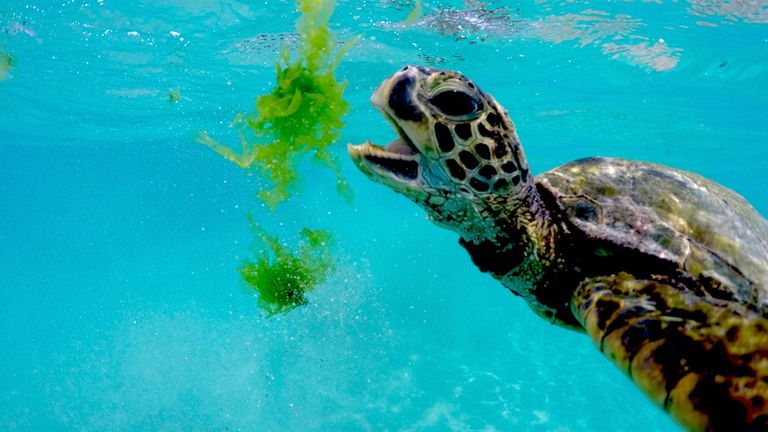 Hawaii is slated to reopen its visitor industry with a COVID-19 pretesting program for trans-Pacific travelers Oct. 15.
Credit: 2020 Island of Hawaii Visitors Bureau/Kawika SingsonAfter three postponements already this summer, are you confident Hawaii will launch the governor’s pretesting plan for trans-Pacific visitors Oct. 15?
I’m confident Oct. 15 will stand. ... Economic collapse is a lot like a building collapse, and thousands of families are trapped underneath, and we have to do something. We need to do what we can to lift it up. There’s just a different feel about Oct. 15. ... I don’t have the exact numbers to quantify it, but a range of businesses have thrown in the towel, and some of them were multigenerational — three, four generations of people who worked. ... Now, you’ve also got the fear of reopening, but you’ve also got the loss of hope about not reopening. ... And I do feel strongly that Oct. 15 is going to be greenlighted.
Economic collapse is a lot like a building collapse, and thousands of families are trapped underneath, and we have to do something.
What can visitors arriving to Hawaii on or after Oct. 15 expect? What will be open to them? What should they be planning for?
The visitor on the 15th, with circumstances not changing from where they are today, is going to be somewhat limited to the resort they’re staying in and sporadic shops open along the different resort lots. It’s going to be an incomplete experience. ... If you’re choosing to come to Hawaii on the 15th, or the month that follows, you have to be compelled for reasons other than the experience you had three years ago when you were here. It’s not going to be there. It’s going to feel inconsistent. There are going to be some voids. ... But the people who chose to visit feel something intangible about being here. And in the absence of tangible activities, or eating at their favorite restaurant, that kind of thing, they’ve got a deep connection with something else. And in most cases, that’s going to be intangible. It might just be: “I want to walk on Waikiki beach. I just want to walk on Mauna Kea beach.” Or it’s going to be something else.
RELATED: Hawaii Postpones Pre-Travel COVID-19 Testing Program to October 15
On Thursday, Hawaii Lieutenant Governor Josh Green said he anticipates between 5,000 and 8,000 daily visitor arrivals starting Oct. 15. Do you agree with that estimate?
My number is around 5,000. If you had a per day average last year, we were about 29,000 per day. So, at around 5,000, that’s roughly 17%. That’s where we’re going to end up. ... There are a number of factors — not just Hawaii’s readiness. Disposable income isn’t abundant for most people right now, so there are number of deterrents and challenges.
Do you have any concerns with the COVID-19 pretesting plan the lieutenant governor outlined Thursday?
The quality of the tests. The false positives, the false negative readings are a concern. This Abbott test is not showing well all the time. There are some inconsistencies being reported. I think in six to nine months, we’re going to look back to today and this is going to look like the beta max of testing. ... But we’re going to need reliable, rapid, affordable, scalable testing solutions. I’m not advocating any one product, but I am advocating those elements that we can count on. Right now, the reliability of these tests is a question, and that’s why you hear more people in the community wanting the second test on arrival, but the Lieutenant Governor has talked about not having the capacity to do that.
You are the first native Hawaiian to hold the position of president and CEO at the Hawaii Tourism Authority. Why is that important?
It’s important on a number of fronts and much more important than I initially was conscious of. As a Hawaiian, my life experience is driven by a framework of cultural values that I grew up with in my family, and my family was steeped in those cultural practices. Even though I’m not fluent in the Hawaiian language, the language was around me a lot. ... As a Hawaiian who can trace my roots back to the first canoe that got here, that connection was a big part of me deciding to compete for this position.
As a Hawaiian who can trace my roots back to the first canoe that got here, that connection was a big part of me deciding to compete for this position.
And at this particular time — and I’m using a voyaging canoe metaphor — I look at the reopening as a voyage of recovery and rediscovery, of Hawaii finding its authentic identity from a cultural perspective as well as a very contemporary perspective in trying to understand what it wants to be going forward. ... You’re stepping into a storm, right? And you’ve got to be clear about where you’re rooted. And you’ve got to be clear about who you are accountable to.
So, I’m accountable to a board of 12 members, and I’m attached to the Department of Business, Economic Development and Tourism, and ultimately the governor sits over that. But above these people are my ancestors. Above these people are the descendents of my family. And so, the hierarchy that I’m accountable to as a native Hawaiian is not always visible on an organizational chart. But they’re never out of my sight. ... A friend of mine, who is Hawaiian, said to me after I got the job, “Our children need to see you succeed,” and that was a moment when the native Hawaiian stuff really stopped and made me think.
And at this particular time — and I’m using a voyaging canoe metaphor — I look at the reopening as a voyage of recovery and rediscovery, of Hawaii finding its authentic identity from a cultural perspective as well as a very contemporary perspective in trying to understand what it wants to be going forward.
In 2019, Hawaii welcomed 10.4 million visitors. Is that number sustainable? What is your long-term outlook for tourism to the destination?
We went from 8 million visitors to 10.4 million without one additional hotel room in the inventory, and it’s obviously [because of] Airbnb and the growth of that business — some of it regulated and some of it not regulated. And where it’s not regulated, it’s created some conflicts in the community. Kailua [on Oahu] is one such place.
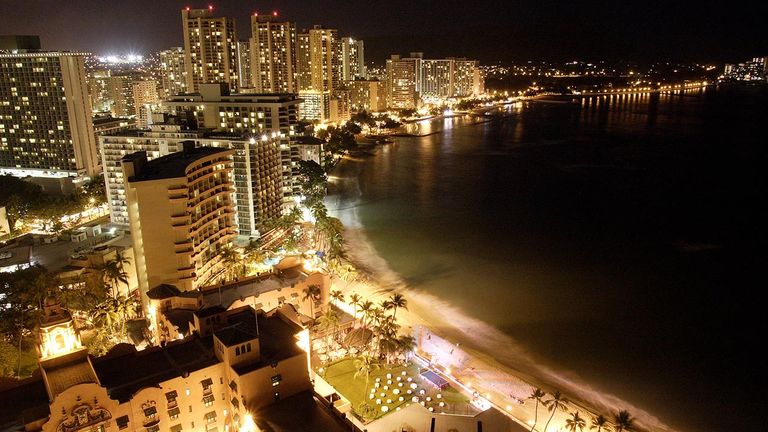 Hawaii welcomed 10.4 million visitors and generated more than $17.7 billion in tourism revenue during 2019.
Credit: 2020 Hawaii Tourism Authority/ Taku MiyazawaWe have a habit in Hawaii, right? Hanauma Bay was a problem, so we came up with a Hanauma Bay solution. Then 10 years later, we had a Diamond Head hiking problem, so then we had a Diamond Head solution, and then Haleakala. What’s happening is these hot spots are actually outpacing incremental solutions. So, the idea is we should take a look at how we can encourage communities to define what it is they believe is the best form of tourism for them, how they want it, when they want it and let them design it. I have a lot of confidence that you’re going to have a balance of those who are leaning toward commerce or culture and community and they’ll find a common place to agree.
At the moment, I’m not focused on the 10.4 million visitors. My sense is we belong some place closer to 8 or 7 million. But I’m not even preoccupied by a number right now as much as I am about ways in which we can manage these things, so we can avoid these collisions. ... If I live on the North Shore [of Oahu], and I feel like I have to absolutely do everything on Friday because I don’t want to leave my house because of the traffic on Saturday and Sunday, what kind of life is that? And what’s going to happen is the collision will become a conflict. It will start with very ugly signage of people protesting, and then if nothing is dealt with there, it will escalate into violence — some form of it.
How can Hawaii avoid some of these collisions you’re referring to between residents and visitors?
We’re going to have to be a lot more creative about how we do things and do it at scale with what the Hawaiians used to call the kapu system, where at certain times of the year you couldn’t harvest [a particular] fish or you cannot harvest this bird or this tree because it was time for that species to regenerate itself. And we’re going to have to think along those lines here. There may be trails that are closed for 30 days or 60 days to allow places to heal, or maybe coastal zones are closed.
When people come to Hawaii on vacation, every day is a weekend. But for the local people, everyday is not a weekend. So, in some of these hot spots, we’re going to have to encourage the communities themselves to take a serious look as to whether certain places on Saturday and Sunday are for local residents only. And if I’m a responsible visitor and I know that’s the rule, I’ll go on a Friday and a Monday. I don’t have to go on Saturday and Sunday. Now, that’s not a John De Fries decision. That’s not a governor decision. The communities are going to have to decide that because if you’re a retailer or a restaurant owner, you’re going to want that flow as much as you get it whenever you can get it. But your neighbor might not want that.
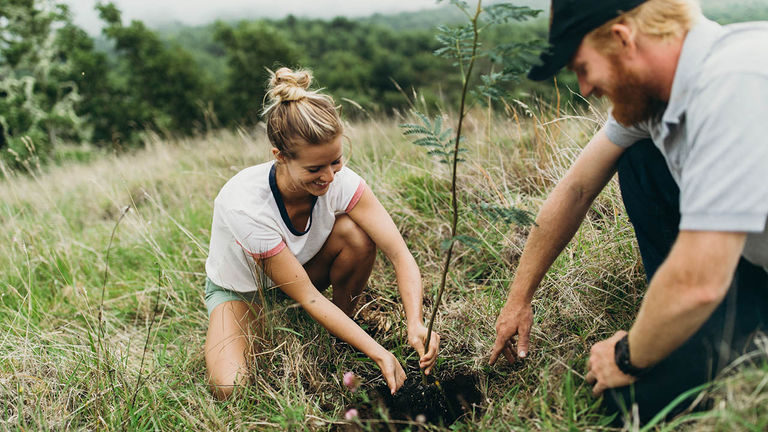 The Hawaii Visitors and Conventions Bureau is launching a Malama Hawaii promotion Oct. 15, offering visitors a free room night if they take part volunteer project — such as replanting native Koa trees — during their vacations.
Credit: 2020 Hawaii Tourism Authority /Heather GoodmanIf we don’t pay attention in tourism to the erosion of the emotional health and well-being of our people, then there will be no aloha. That tank will be drained. ... At the end of the day, contemplating places only local residents can go on Saturday and Sunday is important because they need a place to recharge and regenerate. So, when they return to the workplace, they can actually deliver on the aloha we’re wanting them to call on. That’s an example of a 21st century kapu system, where we begin to impose, out of respect, time for certain life forms — be it people, be it coastal zones, or maybe it’s forests — to regenerate.
If we don’t pay attention in tourism to the erosion of the emotional health and well-being of our people, then there will be no aloha. That tank will be drained.
You’ve spoken frequently about this idea of a malama mindset. Can you explain that concept?
When I applied for this job, Hawaii had some of the best COVID-19 statistics in America. By the time I got to my final interview, we were among the worst. We lost that edge, and it had zero or little to do with tourists. It was a local community that lost its focus and composure and got complacent and a little reckless. So, part of the brand’s story is going to be how we marched back up that hill. ... To do that, you’re going to see me invoking malama as a sister cultural value to aloha. Malama is a verb. You act to protect. You act to care for or to nurture. It’s an action-type word, and it requires a different mindset because it’s going to be painful over the next eight, nine months.
You’ve also talked about teaching visitors to malama. How do you plan to do that?
It’s going to come in the form of experiences that will be made available to visitors, allowing them to actually get into cultural, community settings where they’re working the land and the ocean, and they are actually elbow to elbow with residents in a post-pandemic setting. But there are ways to do this during the pandemic, too.
The Hawaii Visitors and Conventions Bureau is about to roll out Malama Hawaii, and it’s a promotional campaign [starting Oct. 15] where if you stay more than three or four nights, you’ll get an extra night free if you go malama something. And they’ll have a menu of activities you can select from with local organizations. So, that’s the beginning of something that we’ll learn how to scale. And we’ll build it slowly.
The Details
Hawaii Tourism Authority
www.hawaiitourismauthority.org
